

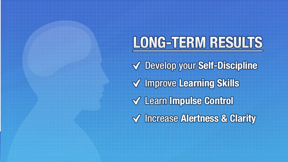

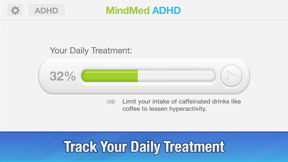
ADHD Treatment is a mobile neurocognitive therapy app providing brain-training exercises for children and adults on iOS and Android.
The App DNA
What makes this app unique?
Users hire this app to manage ADHD symptoms through non-stimulant, digital-first cognitive practice, seeking a natural alternative to medication.
For Children and adults seeking non-stimulant, digital-first interventions for ADHD symptoms and cognitive focus.
What does it look like?
Key features
Digital exercises designed to improve executive functions and attention control
Adjusts treatment difficulty based on user performance metrics
Suite of 15 distinct mini-games including multitasking, math, and memory challenges
How much does it cost?
Monetization bifurcated by platform: direct paid acquisition on iOS versus ad-supported volume on Android.
Velocity
Dormant developmentShow more...
5 versions in history. Development pace: zombie.
Who built it?
Kfirapps
10 apps tracked · Medical
 iSays Memory Game
 2048 Game
 iSays Memory Game (Lite)
 2048 6x6
 Gravity Free - Light Particles Manipulation App
 2048 5x5
 Impossible 7!
 Gravity - Light Particles Manipulation App
 צבעים וליצנים
User Sentiment
What do users think recently?
Recent user voice shows a mixed sentiment. Users appreciate daily focus training exercises provide measurable improvements in concentration for users with attention deficits.
How are ratings & reviews evolving?
What users say, by theme
- Daily focus training exercises provide measurable improvements in concentration for users with attention deficits
- Ambiguous and confusing instructions for specific training levels prevent users from progressing through the content
49 of 49 recent reviews analyzed · high confidence · Mixed overall
Read the full review analysisUnlock 1 user request, each backed by review evidence.
Access the full report for freeCompetition
Competitive landscape for ADHD Treatment - Brain Training
How's the Medical market?
The app maintains a niche presence in the medical category, though its 3.47 rating trails the high-velocity brain-training market leaders. The lack of recent feature updates on iOS compared to the Android build suggests a fragmented development focus.
Read the market outlookThe rivals identified

By Synaptikon GmbH
With over 470,000 ratings and a high-velocity release cadence, this app dominates the brain-training niche with a scale this app cannot match.
- Maintains a high-frequency release cycle of seven updates in six months to keep engagement fresh
- Offers a comprehensive, scientifically-backed suite of cognitive exercises that dwarfs this app's limited feature set
- Leverages a massive user base to refine personalized training algorithms far beyond this app's current capabilities


Unlock the head-to-head verdict: where this rival wins, and where it loses.
Access the full report for freeThe Analyst's Read
Key takeaways for ADHD Treatment - Brain Training
Where is it heading?
The brain-training market is consolidating around high-cadence competitors, leaving this app exposed due to its stagnant update cycle. The PM must transition from maintenance to active feature development to prevent further erosion of the user base.
- Technical instability and unresponsive interface elements disrupt training flow, which erodes the daily active habit and compounds rating drag.
- Ambiguous instructions for training levels block user progression, leading to high churn rates among new users who cannot complete basic tasks.
The SWOT
- Minimalist UI design reduces cognitive load during training sessions.
- Performance-based difficulty scaling maintains challenge alignment with user skill levels.
- Accessibility settings for colorblind users would expand the addressable market.
- Progress tracking dashboards would improve long-term retention metrics.
Next best moves
Rebuild level instructions because user complaints cite ambiguity as a primary progression blocker → increase session completion rate.
+ 1 more prioritized moveThe counter-intuitive read
The app's lack of aggressive gamification is a…
Read the full takeFeature gaps
Real-time competitive multiplayer (available in Brain Wars but absent here) +1
Since the last report: The report now incorporates detailed sentiment and competitive data, highlighting a stagnant product struggling with technical instability and instructional design flaws.
Bottom line
The app provides high-value cognitive training but suffers from poor instructional design and technical bugs, so the PM must prioritize usability fixes to prevent churn before expanding the feature set.
Unlock 3 critical frictions, 2 market threats, 1 more prioritized move and the analyst’s take.
Access the full report for freeReport last updated