


Afterlight: Concert Diary


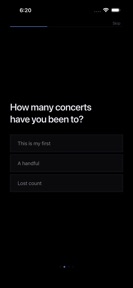


Afterlight is a local-first concert diary for music fans to archive live shows, setlists, and ticket stubs on iOS.
The App DNA
What makes this app unique?
The app removes the friction of account-based music tracking by keeping all concert data on the user's device, ensuring privacy and offline access.
For Frequent concert-goers who want a private, analog-inspired archive of their live music experiences.
What does it look like?
Key features
Diary entries reside on the device without requiring an account, ensuring data ownership.
On-device text recognition extracts show details from images to lower the barrier for building an archive.
Displays a digital ticket stub on the Lock Screen on the day of the concert.
How much does it cost?
The app operates on a free, no-ads model with no current paid tiers or subscriptions.
Velocity
Maintenance developmentUX improvementsShow more...
The app currently operates on a maintenance cadence, with only one release shipped in the last 47 days. Development is focused on refining existing utility features, specifically improving the reliability of concert imports and manual entry tools. The trend remains stable, with the developer prioritizing incremental UX improvements over rapid feature expansion. No live operations or recurring events are present in the recent release history.
Who built it?

User Sentiment
What do users think recently?
How are ratings & reviews evolving?
Not enough recent reviews to extract reliable themes yet.
Read the full review analysisCompetition
Competitive landscape for Afterlight: Concert Diary
How's the Music market?
Afterlight occupies a specialized niche in the Music category by prioritizing local-first data storage over the social-sharing models typical of concert-tracking apps.
Read the market outlookThe rivals identified
Unlock the deeper market read.
Access the full report for freeThe Analyst's Read
Key takeaways for Afterlight: Concert Diary
Where is it heading?
The concert-diary market is shifting toward automated, social-heavy tracking, leaving Afterlight in a distinct, private-first position. Maintaining this focus on manual, high-fidelity archival will insulate the app from the feature-bloat of mainstream rivals.
- The latest release focuses on manual entry workflows, signaling a commitment to the core local-first archive experience.
- The absence of ads and account requirements provides a clear value proposition for privacy-conscious users in the music-tracking space.
The SWOT
- Local-first architecture ensures data persistence without account dependencies
- On-device text recognition for ticket scanning lowers manual entry friction
- Integration with local venue APIs could provide automated show suggestions
- Exporting data to physical print formats would appeal to the analog-focused target audience
Next best moves
Ship automated venue-data suggestions because manual entry is the primary friction point for power users → increase archive density
The counter-intuitive read
The lack of social features is a feature, not a bug…
Read the full takeSince the last report: The app's competitive positioning shifted from a passive local-first utility to an active, privacy-focused alternative that frames the absence of social features as a core retention mechanism. Strategic priorities have moved toward reducing manual entry friction through automated venue suggestions.
Bottom line
Afterlight's local-first design secures a private archive for music fans, but the lack of automated discovery limits its appeal to power users who value convenience over privacy.
Unlock 2 critical frictions, 1 market threat and the analyst’s take.
Access the full report for freeSources
- [1] App Store
Report last updated