




Interlinear Bible is a specialized study tool for theological students and clergy that provides interlinear Greek and Hebrew text with morphological parsing.
The App DNA
What makes this app unique?
Users hire this app to perform deep lexical analysis of biblical manuscripts in an offline-capable format that general-purpose Bible apps fail to provide.
For Theological students, clergy, and laypeople interested in studying the Bible in its original Hebrew and Greek languages.
What does it look like?
Key features
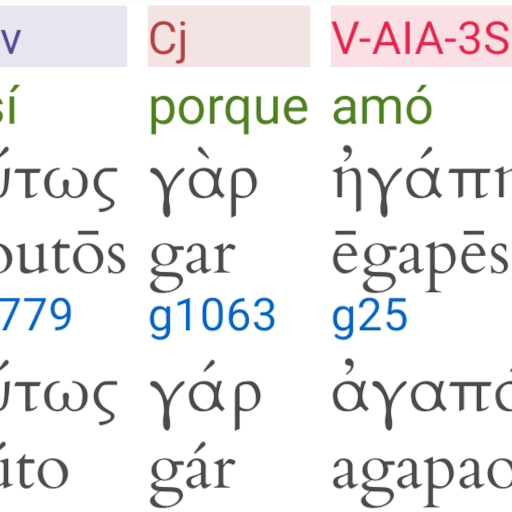
Displays original Hebrew and Koine Greek text with word-by-word translation, transliteration, and morphological parsing
Integrated word search functionality linked to Strong's numbers for lexical study
Scroll-able and zoom-able text interface optimized for mobile screen sizes
How much does it cost?
Hybrid model using a direct purchase gate on iOS and an ad-supported model on Android to maximize reach.
Velocity
Dormant developmentplatform expansionperformanceShow more...
The development of Interlinear Bible has effectively ceased, with no releases recorded since April 2024. The last period of activity showed a focus on platform expansion to macOS and database maintenance, but the project has remained dormant for over 14 months. Given the lack of updates for more than a year, the app is classified as a zombie project.
Who built it?
Martin Loch
9 apps tracked · Book
 Circuit Color
 Italian-English Bible
 ChattyMouth
 Latin-English Bible
 Biblia Interlineal Hebreo/Gr.
 NBLA-Nueva Biblia d/L Américas
 Conduit Fill
 Interlinear Greek
User Sentiment
What do users think recently?
Review voice lately leans thrilled. Users appreciate interlinear layout provides deep access to original hebrew and greek word roots for serious students and offline functionality ensures reliable access to study materials without requiring active cellular data connections, but report forced notifications without user-controlled settings disrupt the experience on mobile devices.
How are ratings & reviews evolving?
What users say, by theme
- Interlinear layout provides deep access to original Hebrew and Greek word roots for serious students
- Offline functionality ensures reliable access to study materials without requiring active cellular data connections
- Forced notifications without user-controlled settings disrupt the experience on mobile devices
85 of 93 recent reviews analyzed · high confidence · Thrilled overall
Read the full review analysisUnlock 1 more frustration theme and 1 user request, each backed by review evidence.
Access the full report for freeCompetition
Competitive landscape for Interlinear Bible
How's the Book market?
Interlinear Bible holds a #4 Paid rank in South Africa and the Philippines, but its #71 Paid rank in the US signals volatility. The disparity between free Android access and the $6.99 iOS price point creates a fragmented user base that complicates unified feature development.
Read the market outlookThe rivals identified

By Oleg Shukalovich
Both apps target theological students and researchers with Hebrew and Greek lexical tools, creating direct competition for users seeking portable biblical study resources.
- Bible and Strong’s Concordance offers native audio playback, whereas Interlinear Bible lacks integrated audio features.
- Bible and Strong’s Concordance provides iCloud synchronization across devices, while Interlinear Bible lacks cross-device data continuity.
 CepherContender
 Greek New Testament Study AppContender
 PARALLEL PLUS Bible-study appContender
 Literal Word: Bible & LexiconContender
 Greek BibleContender
 YLT Bible: Literal VersionContender
 Greek and Hebrew Study BibleContender
 Hebrew English Audio BibleContender

Unlock the head-to-head verdict: where this rival wins, and where it loses.
Access the full report for freeThe Analyst's Read
Key takeaways for Interlinear Bible
Where is it heading?
The theological study market is consolidating around apps that offer both deep lexical access and a clean, distraction-free interface. Interlinear Bible remains advantaged by its core interlinear layout, but the current ad-quality and touch-latency issues leave it exposed to competitors like Hebrew Bible Offline that prioritize performance.
- Touch responsiveness issues in the latest release require multiple taps to register, which erodes the daily active habit.
- Strong's Concordance integration in the latest release increases time-in-app, providing a retention lever for the free-tier user base.
The SWOT
- Interlinear layout provides deep lexical access
- Offline functionality enables reliable study access
- Bookmark system increases user switching costs
- Expansion of interlinear library to Tamil and German
- Customizable row visibility for translation testing
- B2B partnerships with theological education institutions
Next best moves
Audit ad-provider settings to filter medical content because users report inappropriate ads → improve brand trust
+ 1 more prioritized moveThe counter-intuitive read
The app's fragmented monetization model is actually a defensive moat…
Read the full takeFeature gaps
Audio Bible integration (available in Book of Enoch and Audio Bible) +1
Since the last report: The app experienced a notable rating increase and a refinement of PM priorities toward addressing ad-quality and notification friction.
Bottom line
Interlinear Bible secures a loyal academic user base through its specialized lexical tools, but the reliance on uncurated ads and clunky touch navigation risks alienating power users, so the PM should prioritize ad-removal paths and UI responsiveness to defend against specialized competitors.
Unlock 3 critical frictions, 3 market threats, 1 more prioritized move and the analyst’s take.
Access the full report for freeReport last updated