Report updated May 13, 2026

Astrolabe Clock is an established reference app that is completely free. With a 4.7/5 rating from 48 reviews, it shows polarized user reception.

What is Astrolabe Clock?

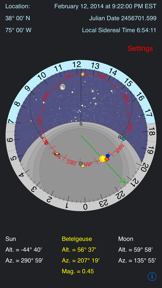
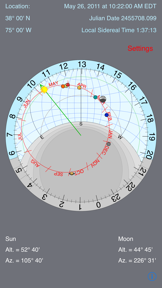
Astrolabe Clock is an astronomical reference app for iOS and Android that visualizes celestial positions and historical timekeeping data.

Users hire this app to visualize complex astronomical events at a glance, replacing manual calculation with fluid, real-time sky tracking.

Current Momentum

v2.0 · 1d ago

Maintenance
  • Ships UI updates for latest iOS
  • Maintains stable astronomical reference data

Active Nemesis

Fragmented niche

No dominant direct rival identified yet — see Other Rivals below.

Other Rivals

Polymer: OctoPrint 3D Printing
VAG Virtual Cockpit ELM327 OBD
Prusa
Flash Studio

7-Day Rank Pulse 🇺🇸

Reference

No ranking data

BusinessGrossing

Rating Pulse 🇺🇸

What makes this app unique?

What Does It Look Like?

Loading...

What Are The Key Features?

Astronomical VisualizationDifferentiator

Real-time sky view showing positions of Sun, Moon, planets, and stars based on current time and date

Home Screen WidgetsStandard

Small and large widgets for iOS home screen displaying astrolabe data and Standby Mode support

Interactive Time AdjustmentDifferentiator

Fluid 60 fps time-scrubbing to explore sky positions at any point in the day

How much does it cost?

Free
  • Free version with full feature set

The app operates as a free utility with no visible IAP or subscription gates, focusing on brand presence for the developer.

Who Built It?

TwoNineEight Software

View Publisher Intel →
Reference

Enrichment in progress

Publisher profile available very soon

What other apps does TwoNineEight Software make?

What is the competitive landscape for Astrolabe Clock?

Where is it available?

Localized markets (1)

United States

How's The Reference Market?

How does it evolve in the Reference market?

Astrolabe Clock maintains a 4.67-star rating on iOS with 48 ratings, but the absence of Android engagement signals a failure to capture the cross-platform reference market.

Rank progression

1 active ranking tracked — 30-day window

No rank history available for this chart.

The rivals identified

Same space(4)

Flash Studio icon

浙江闪铸三维科技有限公司

2.4(112)

While both apps serve niche hardware-centric utility needs, they compete for the user's attention on mobile devices by providing specialized monitoring and reference data.

Differentiators

  • Offers deep hardware-specific remote print monitoring and video surveillance features for 3D printer users.
  • Focuses on industrial utility management rather than the astronomical reference data provided by Astrolabe Clock.
Prusa icon

Prusa Research a.s.

3.8(576)

This app competes for the same mobile-first utility user base, prioritizing high-frequency hardware management over the reference-based astronomical data of the target.

Differentiators

  • Leverages proprietary NFC printer setup and Buddy3D camera integration to lock users into their hardware ecosystem.
  • Provides robust remote printer management tools that drive daily active usage compared to passive reference apps.

This app occupies the same 'niche reference' space, providing specialized technical data displays that serve a specific enthusiast audience similar to the target's astronomical focus.

Differentiators

  • Provides real-time automotive diagnostic data streams which require active connection to vehicle OBD-II hardware ports.
  • Lacks the frequent update cadence and modern UI polish found in the target's astronomical reference interface.

Polymer competes for the same technical enthusiast demographic, offering a highly polished mobile interface for monitoring complex systems.

Differentiators

  • Features advanced GCODE visualization and OctoEverywhere integration, creating a high-utility experience for 3D printing power users.
  • Maintains a massive user base and high rating, establishing a strong community-driven moat through long-term feature refinement.

Compare Astrolabe Clock against every rival

All rivals in one side-by-side table — identity, store metrics, ratings & sentiment, and strategic intel — plus a head-to-head page for each.

Go deeper

The outtake for Astrolabe Clock

Strengths to defend, gaps to attack

Core Strengths

  • Fluid 60 fps time-scrubbing interface sustains high user satisfaction
  • Home screen widget support drives daily passive engagement

Critical Frictions

  • Zero Android rating count indicates failed cross-platform adoption
  • No IAP or subscription model limits long-term development funding

Growth Levers

  • Integration with smart-telescope hardware could unlock a new B2B distribution channel
  • Educational partnerships could leverage the historical instrument focus

Market Threats

  • Hardware-integrated utilities capture more daily attention
  • Lack of update cadence allows competitors to overtake the niche reference space

What are the next best moves?

mediumPivot

Audit Android user acquisition funnel because zero ratings indicate a discovery or technical barrier → increase Android install velocity

Android platform shows zero ratings despite recent updates, suggesting a failure to reach the target audience.

Trade-off: Pause iOS widget refinement — Android parity is a higher priority for market share.

highInvest

Ship smart-telescope hardware integration because current reference-only utility is losing to hardware-connected competitors → drive daily active usage

Competitors like Prusa and Polymer succeed by locking users into hardware-connected ecosystems.

Trade-off: Deprioritize new historical instrument data sets — hardware utility has higher retention potential.

A counter-intuitive read

The lack of monetization is not a weakness but a deliberate brand-building choice that prevents the app from becoming a bloated, ad-supported utility.

Feature Gaps vs Competitors

  • Hardware-specific remote monitoring (available in Polymer and Flash Studio but absent here)
  • Proprietary hardware setup integration (available in Prusa but absent here)

Key Takeaways

Astrolabe Clock succeeds as a high-fidelity reference tool but lacks the retention mechanics of hardware-connected utilities, so revenue growth hinges on pivoting from passive reference data to active hardware integration.

Where Is It Heading?

Stable

The astronomical reference market is consolidating around tools that offer active hardware connectivity, leaving passive reference apps like Astrolabe Clock exposed. Unless the app integrates with external hardware, it will remain a niche utility with limited growth potential.

Recent updates focus on stability rather than feature expansion, which limits the app's ability to compete with hardware-integrated utilities.

The complete lack of Android engagement suggests the app is failing to gain traction outside of the iOS ecosystem.

Disclosure: Independent intel to help mobile builders succeed.

AI-powered analysis with editorial review, built from publicly available sources. Marlvel.ai is not affiliated with, endorsed by, or sponsored by Astrolabe Clock, its developer, the app publisher, Apple, or Google Play. All trademarks, logos, and screenshots referenced remain the property of their respective owners.

What's new

The report shifts the app's competitive positioning from a standalone astronomical reference tool to a hardware-integrated utility, with a new strategic focus on Android market entry.

shifted

Competitive Landscape Re-alignment

shifted

Strategic Weakness Identification

shifted

PM Action Item Pivot

removed

Sentiment Data Availability

Cite this report

Marlvel.ai. “Astrolabe Clock Intelligence Report.” Updated May 13, 2026. https://marlvel.ai/apps/astrolabe-clock

Agent Markdown (.md)See methodologyContact support

Data licensed under CC-BY-NC 4.0