


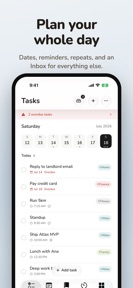





Atlas is a productivity app for iOS that combines task management, note-taking, and journaling into a single, privacy-focused interface.
The App DNA
What makes this app unique?
It removes the cognitive friction of managing multiple apps by centralizing daily planning and reflection in one space.
For Individuals seeking a distraction-free, privacy-focused productivity tool for task management, journaling, and deep work.
What does it look like?
Key features
On-device audio processing converts spoken input into structured tasks.
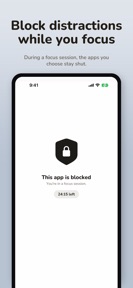
Full-screen timer with ambient soundscapes and app blocking.
Visualizes mood patterns and word usage frequency over time.
How much does it cost?
The premium tier gates advanced focus tools and calendar sync, serving as the primary revenue lever.
Velocity
Maintenance developmentUX improvementsinternationalizationShow more...
Atlas currently operates at a maintenance cadence, with only one release shipped in the last 19 days. Development is focused on enhancing productivity workflows through on-device voice processing and internationalization of natural language parsing. The latest update demonstrates a commitment to feature expansion, though the current release frequency remains low. Future development appears centered on refining core task management capabilities.
Who built it?
User Sentiment
What do users think recently?
How are ratings & reviews evolving?
Not enough recent reviews to extract reliable themes yet.
Read the full review analysisCompetition
Competitive landscape for Atlas: Tasks, Notes & Journal
How's the Productivity market?
Atlas occupies the minimalist productivity niche, competing against feature-dense suites. The $4.99/month premium entry point positions it as a mid-range tool, requiring strong retention to justify the cost against free alternatives.
The rivals identified
The Analyst's Read
Key takeaways for Atlas: Tasks, Notes & Journal
Where is it heading?
The productivity market is shifting toward consolidated, privacy-first tools, favoring Atlas's current trajectory. Continued investment in on-device processing will be critical to maintaining a competitive edge against cloud-heavy incumbents.
- The latest release (v1.5) introduced on-device voice-to-task transcription, signaling active feature investment rather than maintenance mode.
- The $4.99/month premium tier requires consistent feature expansion to maintain value perception against free, integrated alternatives.
The SWOT
- On-device voice processing ensures privacy-conscious users maintain data control.
- All-in-one design creates a high-frequency habit loop within a single interface.
- Minimalist aesthetic reduces cognitive load for casual productivity users.
- Localized pricing in high-ARPU markets could capture users priced out of the current tier.
- Expanding journal insights could increase retention for power users.
- Adding team-based task sharing would open the professional productivity segment.
Next best moves
Ship basic team-based task sharing because the lack of collaboration limits professional adoption → increase user base.
+ 1 more prioritized moveThe counter-intuitive read
The minimalist design is not a feature but a defensive barrier…
Read the full takeSince the last report: Atlas has pivoted its roadmap to address the professional market by prioritizing team-based collaboration, moving away from its previous focus on solo-user feature expansion.
Bottom line
Atlas's on-device voice-to-task mechanism effectively lowers entry friction, but the lack of collaboration features restricts its appeal to solo users. Prioritizing a clear path to team-based utility would unlock the professional segment currently dominated by incumbents.
Unlock 3 critical frictions, 3 market threats, 1 more prioritized move and the analyst’s take.
Access the full report for freeFAQ
Is Atlas suitable for professional team collaboration?
How does Atlas protect my journal entries?
What is the difference between the free and premium versions?
Are there free alternatives to Atlas?
Sources
Report last updated