




Augsburg Offline City Map is a travel utility providing offline map data and a local search index for Augsburg on Android.
The App DNA
What makes this app unique?
The app removes the connectivity dependency for tourists who lack mobile data plans or reliable Wi-Fi access while navigating the city.
For Tourists and city visitors in Augsburg requiring offline navigation.
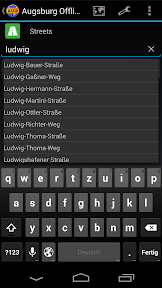
What does it look like?
Key features
Full map data stored locally, removing the need for connectivity.
Local database for locating streets and points of interest.
Advanced sorting and filtering behind a premium gate.
How much does it cost?
The freemium model gates advanced discovery tools to monetize power users, though the lack of recent updates limits the value proposition for the premium tier.
Velocity
Dormant developmentopaqueShow more...
The app has not received a single update in over 15 months, placing it firmly in the zombie category. There is no evidence of active development, feature releases, or maintenance patches during this period. The lack of activity suggests the project is no longer being supported or updated on the Android platform.
Who built it?
Topobyte.de
13+ apps tracked · Travel & Local
 Hildesheim Offline City Map
 Darmstadt Offline City Map
 Bayreuth Offline City Map
 Linz Offline City Map
 Vienna Offline City Map
 Stuttgart Offline City Map
 Trier Offline City Map
 Frankfurt Offline City Map
 Osnabrück Offline City Map
 Kassel Offline City Map
 Munich Offline City Map
 Hanover Offline City Map
User Sentiment
What do users think recently?
The recent review mood reads frustrated. Users appreciate offline functionality allows users to reference map data without relying on a constant cellular connection and search functionality performs reliably when users need to locate specific points of interest quickly.
How are ratings & reviews evolving?
What users say, by theme
- Offline functionality allows users to reference map data without relying on a constant cellular connection
- Search functionality performs reliably when users need to locate specific points of interest quickly
- Data plan consumption occurs even when users expect offline map usage to remain entirely local
2 of 2 recent reviews analyzed · limited sample
Read the full review analysisUnlock 1 more frustration theme, each backed by review evidence.
Access the full report for freeCompetition
Competitive landscape for Augsburg Offline City Map
How's the Travel & Local market?
Augsburg Offline City Map occupies a narrow, offline-first niche in the Travel & Local category. The lack of updates for 475 days contrasts with the active development cycles of global navigation rivals, signaling a stagnant position that fails to capture modern transit-focused users.
Read the market outlookThe rivals identified

By Firehawk
This app competes directly by offering high-utility, offline-capable location services that capture the same travel-focused user base seeking reliable navigation without data connectivity.
- Massive user base with over 66,000 ratings provides significant social proof and data-driven trust.
- Advanced location sharing and tagging features offer utility beyond simple static city map browsing.
- Established brand presence in the navigation category creates a high barrier to entry for niche maps.
 NoqtaContender
 Caller ID - Places Near By YouContender
 Guía Urbana Ciudad de La PazContender
 PARKnRIDEContender
Unlock the head-to-head verdict: where this rival wins, and where it loses.
Access the full report for freeThe Analyst's Read
Key takeaways for Augsburg Offline City Map
Where is it heading?
The navigation market is consolidating around apps that offer real-time, multi-modal transit support, leaving static, offline-only maps like Augsburg Offline City Map increasingly isolated. Unless the developer addresses the data-usage complaints and resumes a regular release cadence, the app will continue to lose relevance to competitors that provide dynamic, high-utility travel experiences.
- The 15-month update gap signals a maintenance-mode posture, which prevents the app from addressing the data-usage complaints that drive negative sentiment.
- User comparisons to global navigation rivals highlight a lack of feature parity, accelerating churn pressure as travelers prioritize dynamic, real-time transit information.
The SWOT
- Offline map data removes connectivity dependency for tourists
- Localized content partnerships could differentiate from generic global coordinate locators
Next best moves
Audit data-usage logic because reviews flag unexpected consumption → restore user trust
The counter-intuitive read
The app's lack of updates is not just…
Read the full takeFeature gaps
Real-time traffic camera feeds (available in Beat the Jam but absent here) +2
Since the last report: Unexpected data consumption reports have triggered a negative sentiment shift and a declining market outlook, further isolating the app from its offline-first value proposition. The competitive landscape has been recalibrated to reflect the app's growing irrelevance against specialized navigation and transit-focused rivals.
Bottom line
Addressing the reported data-usage leaks would restore the offline-first promise that defines the app's utility. Without this, the current maintenance-mode cadence will continue to drive users toward global navigation competitors that offer more reliable, real-time experiences.
Unlock 2 critical frictions, 1 market threat and the analyst’s take.
Access the full report for freeFAQ
Does Augsburg Offline City Map work without any internet connection?
How does Augsburg Offline City Map compare to Google Maps?
Is there a free version of the app?
Sources
- [1] Play Store listing, source
Report last updated