


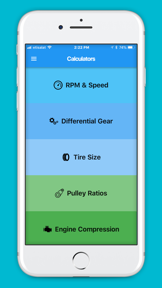

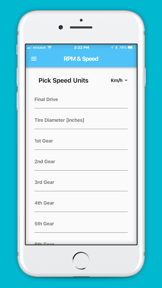

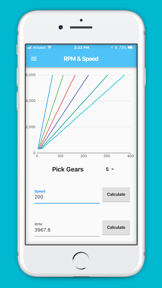
AutoCal is an iOS utility app providing a suite of automotive engine and drivetrain calculators for mechanics and enthusiasts.
The App DNA
What makes this app unique?
Users hire AutoCal to perform quick, manual technical calculations without needing to reference multiple specialized manuals or external websites.
For Automotive enthusiasts and mechanics requiring quick access to technical engine and drivetrain calculations.
What does it look like?
Key features
Centralized toolset for RPM, speed, differential gear, engine compression, displacement, tire size, and pulley calculations.
Integrated utility for converting automotive-specific units within the app interface.
How much does it cost?
The app is currently distributed as a free utility with no observable in-app purchase or subscription model.
Velocity
Dormant developmentopaqueShow more...
The app has been inactive for over seven years, with no updates recorded since October 2018. The development momentum is non-existent, as the single available version provided only basic compliance and maintenance fixes. There is no evidence of ongoing support, feature development, or live operations.
Who built it?
User Sentiment
What do users think recently?
How are ratings & reviews evolving?
Not enough recent reviews to extract reliable themes yet.
Read the full review analysisCompetition
Competitive landscape for AutoCal: Automotive Calculator
How's the Utilities market?
Users report: AutoCal occupies a static utility niche with minimal visibility, evidenced by its 3 total ratings and lack of updates since 2018. The absence of a grossing rank signals a missed opportunity to monetize the utility through professional-grade data add-ons.
Read the market outlookThe rivals identified

By Nikita Morozov
This app directly competes for the automotive enthusiast audience by providing specialized tire and wheel calculation tools that overlap with AutoCal's core utility set.
- Maintains a comprehensive tire brand database that provides real-world fitment data beyond simple mathematical calculations.
- Offers a highly specialized visual comparison tool for wheel offsets that AutoCal currently lacks entirely.
- Established a significant user base with nearly 100 reviews, signaling strong community trust and brand recognition.


Unlock the head-to-head verdict: where this rival wins, and where it loses.
Access the full report for freeThe Analyst's Read
Key takeaways for AutoCal: Automotive Calculator
Where is it heading?
The automotive utility market is consolidating around apps that provide real-time vehicle telemetry and brand-specific fitment data. AutoCal remains a static tool, which will likely lead to further loss of market share to active competitors that offer deeper, database-backed value.
- The lack of updates since 2018 indicates the app is in maintenance mode, which prevents it from competing with modern, hardware-integrated automotive utilities.
The SWOT
- Centralized utility suite reduces friction for quick mechanical calculations.
- Integration of OBD-II diagnostic data could shift the app from a passive calculator to an active vehicle companion.
Next best moves
Pivot to OBD-II integration because static calculators are commoditized → increase user retention via real-time telemetry.
The counter-intuitive read
The app's lack of updates is not just…
Read the full takeFeature gaps
Real-time diagnostic data (available in VAG Virtual Cockpit but absent here) +2
Since the last report: The app remains in a stagnant state, but the competitive analysis has been refined to emphasize the threat posed by specialized, hardware-integrated automotive utilities over general-purpose calculators.
Bottom line
AutoCal provides a convenient, singular interface for mechanical math, but its lack of updates since 2018 renders it a legacy tool in a market shifting toward real-time diagnostic integration, so the developer must pivot to hardware-connected telemetry to remain relevant.
Unlock 2 critical frictions, 1 market threat and the analyst’s take.
Access the full report for freeReport last updated