


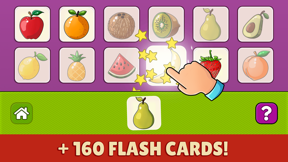
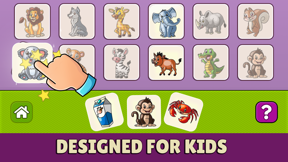




Baby FlashCards Brain toddler is an educational vocabulary-building game for young children, structured around Montessori pedagogical methods on iOS.
The App DNA
What makes this app unique?
The app removes the cognitive friction of unstructured learning by organizing 160 everyday objects into 14 distinct, pedagogical categories.
For Toddlers and young children learning basic English vocabulary through visual identification.
What does it look like?
Key features
Educational content structured according to Montessori pedagogical methodology for early childhood development.
160 flashcards organized into 14 distinct categories including animals, food, and professions.
Access to 3 themes at no cost before requiring a purchase for the full version.
How much does it cost?
The freemium model uses a content-gate strategy, restricting 11 of 14 categories to the paid version.
Velocity
Dormant developmentopaqueShow more...
Development has ceased, with no updates or feature additions in 2,352 days. The app remains in a zombie state, as the last recorded release was over six years ago. There is no evidence of ongoing support or maintenance for the platform.
Who built it?
David Tourino
9 apps tracked · Education
 Patrulla cachorros canina
 Extreme Motorbike City Race
 Metal Simulador carros 2022
 Juego para colorear para niños
 Parking PRO Multiplayer Drive
 Metal OFFROAD 4x4 Simulator
 Patrulha Resgate Missão Canina
 BrainZ - Logical Game
User Sentiment
What do users think recently?
How are ratings & reviews evolving?
Not enough recent reviews to extract reliable themes yet.
Read the full review analysisCompetition
Competitive landscape for Baby FlashCards Brain toddler
How's the Education market?
Baby FlashCards Brain toddler maintains a niche position in the education category, though its six-year update hiatus limits its visibility against active competitors.
The rivals identified
The Analyst's Read
Key takeaways for Baby FlashCards Brain toddler
Where is it heading?
The educational flashcard market is shifting toward high-frequency content updates and interactive gamification. Baby FlashCards Brain toddler remains exposed due to its lack of development, which will likely result in continued decline in new-user conversion as the product becomes increasingly dated.
- The six-year development hiatus indicates a maintenance-only state, which accelerates churn as users migrate to more frequently updated educational alternatives.
The SWOT
- Montessori pedagogical alignment functions as a trust-based barrier for parents
- Content-refresh cycle could re-engage dormant user base
Next best moves
Ship a content-refresh update because the current library has been static for six years → increase conversion rate
The counter-intuitive read
The six-year update silence is a feature, not a bug…
Read the full takeBottom line
The Montessori pedagogical alignment provides a defensible niche, but the six-year development stagnation prevents the app from competing with modern, frequently updated educational tools. A content refresh is necessary to justify the full-version purchase for new users.
Unlock 1 critical friction, 1 market threat and the analyst’s take.
Access the full report for freeSources
- [1] App Store, source
Report last updated