


Bio-Compatibility Analysis®
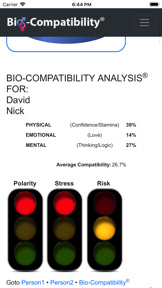


Bio-Compatibility Analysis® is a lifestyle app for iOS and Android that calculates physical, mental, and emotional compatibility between individuals based on their birth dates.
The App DNA
What makes this app unique?
Users open the app to find diagnostic explanations for interpersonal friction, replacing the uncertainty of standard name-based love calculators with a structured numerology model.
For Individuals seeking relationship guidance or explanations for interpersonal conflicts based on birth date data.
What does it look like?
Key features
Calculates physical, mental, and emotional compatibility scores between two individuals using birth dates.
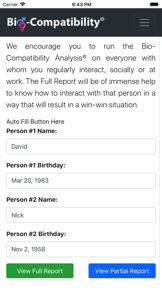
Provides diagnostic insights into relationship friction based on user-inputted birth dates.
How much does it cost?
The app utilizes a freemium model that gates comprehensive compatibility reports behind a paid version.
Velocity
Maintenance developmentperformanceShow more...
Bio-Compatibility Analysis® exhibits a maintenance-level cadence, with only two releases identified in the recent window. The latest release occurred 34 days ago, while the iOS platform has not seen an update in 410 days. Development is currently limited to minor technical adjustments, such as library updates and compliance changes, rather than new feature development. The overall trend indicates a lack of active feature iteration.
Who built it?
User Sentiment
What do users think recently?
Review voice lately leans thrilled. Users appreciate numerology analysis provides accurate and interesting insights that go beyond standard name-based love calculators and birthdate-based analysis delivers results that users perceive as more accurate than name-based alternatives.
How are ratings & reviews evolving?
What users say, by theme
- Numerology analysis provides accurate and interesting insights that go beyond standard name-based love calculators
- Birthdate-based analysis delivers results that users perceive as more accurate than name-based alternatives
2 of 2 recent reviews analyzed · limited sample
Read the full review analysisCompetition
Competitive landscape for Bio-Compatibility Analysis®
How's the Lifestyle market?
Bio-Compatibility Analysis® maintains a niche position in the Lifestyle category, relying on its three-category testing structure to differentiate from generic name-based calculators. The current maintenance-mode release cadence suggests a focus on stability over aggressive market share acquisition.
Read the market outlookThe rivals identified
Unlock the deeper market read.
Access the full report for freeThe Analyst's Read
Key takeaways for Bio-Compatibility Analysis®
Where is it heading?
The lifestyle numerology market is consolidating around apps that offer social-sharing and interactive features. Bio-Compatibility Analysis® remains stable due to its accurate diagnostic model, but it must introduce social-sharing to avoid being displaced by more dynamic competitors.
- The current maintenance-mode release cadence ensures stability but risks stagnation against rivals with more frequent feature updates.
The SWOT
- Three-category testing structure provides a defensible differentiator against name-based calculators
- Localized compatibility reporting for markets where birth-date-based numerology holds higher cultural significance
Next best moves
Ship social-sharing features because the current analysis is a high-intent, shareable insight → increase organic install velocity
The counter-intuitive read
The lack of frequent updates is a retention lever…
Read the full takeBottom line
The three-category testing structure provides a clear value proposition that retains core users, but the current maintenance-mode cadence limits growth. Introducing social-sharing features would unlock organic acquisition by leveraging the high-intent nature of the compatibility results.
Unlock 1 critical friction, 1 market threat and the analyst’s take.
Access the full report for freeFAQ
Is Bio-Compatibility Analysis® accurate for relationship advice?
Does Bio-Compatibility Analysis® require payment for full results?
What is the difference between this and name-based calculators?
Sources
- [1] App Store
Report last updated