


Biomechanics of the Spine is a 3D anatomical visualization tool for medical students and professionals on desktop platforms.
The App DNA
What makes this app unique?
Users hire this tool for high-accuracy clinical demonstration and academic study that standard 2D textbooks cannot provide. The dynamic slider system serves the job of visualizing complex spinal mechanics in real-time.
For Medical students and healthcare professionals requiring high-accuracy 3D anatomical visualization for study or patient demonstration.
What does it look like?
Key features
User-controlled interface to manipulate the 3D spine model in real-time using evidence-based logic. Core utility justifies the $19.99 one-time purchase price.
Transition between user-defined spine positions to visualize deformities or movement. Specialized clinical visualization tool increases value for professional medical users.
Advanced rendering of transparent anatomical structures available only on desktop platforms. Platform-specific feature gate encourages higher-value desktop license acquisition.
How much does it cost?
Fixed-price model at $19.99 targets professional and academic users without recurring subscription overhead.
Velocity
Steady developmentShow more...
Who built it?
Anatomy Standard
4 apps tracked · Education
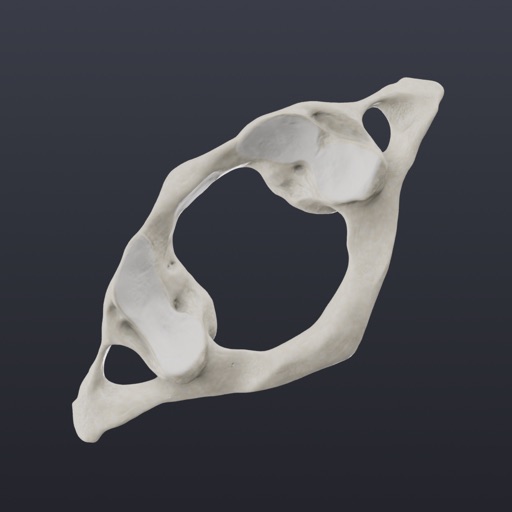 Biomechanics of the Spine Lite
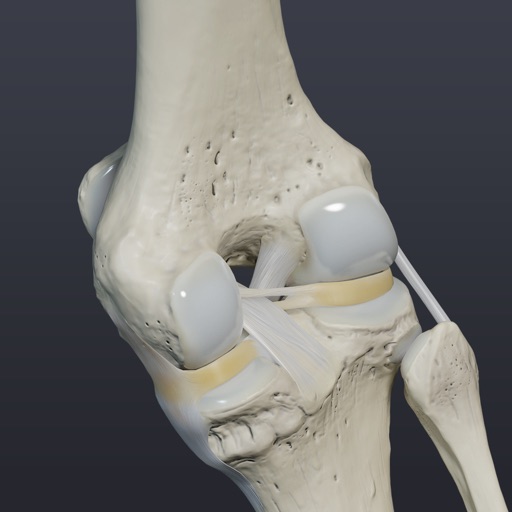 Knee Biomechanics
 Skull, Teeth & TMJ
User Sentiment
What do users think recently?
How are ratings & reviews evolving?
Not enough recent reviews to extract reliable themes yet.
Read the full review analysisCompetition
Competitive landscape for Biomechanics of the Spine
How's the Education market?
The app occupies a premium niche in the Education category, leveraging a $19.99 price point to signal professional-grade accuracy. This positioning avoids the ad-heavy churn of free competitors but limits the total addressable market to serious academic and clinical users.
Read the market outlookThe rivals identified
Unlock the deeper market read.
Access the full report for freeThe Analyst's Read
Key takeaways for Biomechanics of the Spine
Where is it heading?
The educational anatomy market is consolidating around subscription models that offer lower upfront costs and higher update frequency. Biomechanics of the Spine remains stable in its professional niche, but the lack of a mobile-first freemium strategy leaves it vulnerable to competitors capturing the student lifecycle early.
- Recent updates focused on stability and minor bug fixes, indicating a maintenance-mode posture rather than aggressive feature expansion.
- The $19.99 price point remains a significant friction point for students, who increasingly migrate to subscription-based competitors with lower entry costs.
The SWOT
- High anatomical accuracy provides a defensible barrier for professional medical demonstration.
- Dynamic slider system functions as a core utility that justifies the $19.99 price point.
- Desktop-exclusive rendering creates a platform-specific feature gate for high-value users.
- Education partnerships offer untapped B2B distribution channels.
- Wearable or mobile-native integration could expand the user base beyond desktop-bound professionals.
Next best moves
Ship a freemium mobile companion app because the $19.99 barrier limits student adoption → increase top-of-funnel conversion.
The counter-intuitive read
The app's desktop-only focus is not a weakness but a strategic moat…
Read the full takeSince the last report: The report transitioned from a basic feature overview to a critical competitive analysis, identifying the $19.99 price point and desktop-only focus as primary inhibitors to student market penetration.
Bottom line
Biomechanics of the Spine holds a strong professional niche through high anatomical accuracy, but its $19.99 price point caps the funnel, so the PM should prioritize a mobile freemium entry to capture the student market.
Unlock 2 critical frictions, 2 market threats and the analyst’s take.
Access the full report for freeSources
Report last updated