


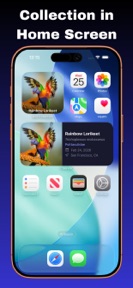

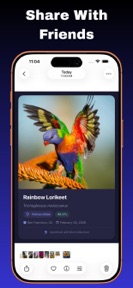


Bird Collection: AI Identifier is a reference tool for iOS that uses AI to identify bird species from photos and catalog them into a digital collection.
The App DNA
What makes this app unique?
The app removes the cognitive load of manual species identification, serving users who want to track birding progress without needing expert knowledge.
For Birdwatchers and nature enthusiasts looking to catalog sightings and track birding progress.
What does it look like?
Key features
Image recognition identifies bird species from camera or library photos, serving as the primary engagement driver.
Removes the five-bird limit on saved sightings, acting as the primary paid-conversion lever.
Interactive map displays user sightings and friend locations via iCloud sharing, increasing app stickiness.
How much does it cost?
The freemium model gates storage capacity to force conversion for power users.
Velocity
Maintenance developmentsocial featuresUX improvementsShow more...
Bird Collection: AI Identifier maintains a maintenance cadence, with only one version released in the observed window and the last update occurring 13 days ago. Development is currently focused on social integration and UX refinements, such as the new leaderboard and photo cropping tools. Given the single release, the app does not meet the threshold for active or liveops status. Future development trends remain unclear due to the limited release history.
Who built it?
Jenesh Napit
5 apps tracked · Reference
 Becoming Stoic
 Stack Tower: Block Stacker
 Simon Says Race
 RefundCheck - Tax Estimator
User Sentiment
What do users think recently?
Fresh user feedback skews frustrated.
How are ratings & reviews evolving?
What users say, by theme
- Daily usage limits on photo identification restrict the utility of the bird recognition feature for active users
1 of 1 recent reviews analyzed · limited sample
Read the full review analysisCompetition
Competitive landscape for Bird Collection: AI Identifier
How's the Reference market?
Bird Collection: AI Identifier holds a 3.5-star rating on the iOS platform with only two total ratings. The limited review volume and the restrictive free-tier storage cap suggest the app has yet to establish a significant footprint in the Reference category.
The rivals identified
The Analyst's Read
Key takeaways for Bird Collection: AI Identifier
Where is it heading?
The nature-identification market is consolidating around tools that offer higher utility for free, leaving Bird Collection: AI Identifier exposed. The app's current maintenance-mode cadence and restrictive storage gate will likely continue to suppress growth until the free-tier value proposition is adjusted to match category norms.
- The restrictive five-bird storage limit drives negative sentiment, which compounds the risk of churn for new users who hit the paywall too early.
- The latest release introduced social features, but the app remains in a maintenance cadence with only one release in the observed window.
The SWOT
- Gamified rarity tiers and badges create a retention loop absent in utility-only rivals.
- Tiered identification limits could reduce churn for casual users hitting the current cap.
Next best moves
Raise free-tier storage limit to 15 birds because the current 5-bird cap is the top complaint → increase retention of casual users
The counter-intuitive read
The five-bird limit is not a conversion lever but a churn accelerator…
Read the full takeSince the last report: The developer has pivoted its strategic focus from social feature expansion to addressing the restrictive free-tier storage limit, which is now identified as a primary driver of user churn.
Bottom line
The current storage gate creates a friction point that outweighs the value of the gamified collection, and raising this limit would unlock the funnel for casual users who currently churn after identifying their first few birds.
Unlock 1 critical friction, 1 market threat and the analyst’s take.
Access the full report for freeFAQ
Is Bird Collection: AI Identifier free to use?
Does Bird Collection: AI Identifier work offline?
What is the difference between the free and Pro versions?
Sources
- [1] App Store, source
Report last updated