

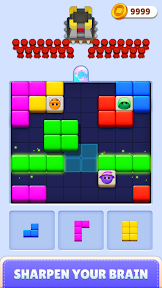


Block vs Tower is a casual puzzle game for Android that blends grid-based block merging with tower-assault combat mechanics.
The App DNA
What makes this app unique?
Users hire this game for quick, high-stakes puzzle sessions where the merging action directly impacts a combat outcome, providing a more satisfying feedback loop than static block-placement games.
For Casual mobile gamers who enjoy logic-based puzzle mechanics and tower defense progression.
What does it look like?
Key features
Merged units automatically subtract from the enemy mob counter to destroy the tower.
Aligning 3, 4, or 5 units triggers 9, 16, or 25 unit spawns respectively.
Levels require clearing the enemy mob counter before a countdown timer expires.
How much does it cost?
Monetization relies on ad-supported gameplay and potential future IAP for boosters, as no subscription or direct purchase is currently implemented.
Velocity
Steady developmentShow more...
Who built it?
SuperGaming
10 apps tracked · Puzzle
 Battle Stars: 4v4 TDM & BR
 Tower Conquest
 MaskGun - Online shooting game
 Silly Royale
 Silly Royale -Devil Amongst Us
 Home Paint Puzzle
 Cargo Delivery Puzzle
 Prime Rush: Battle Royale Game
 Prime Rush
User Sentiment
What do users think recently?
Fresh user feedback skews thrilled. Users appreciate core gameplay mechanics provide a satisfying experience that outperforms established casual puzzle titles and early adopters express high satisfaction with the initial release state and overall game quality.
How are ratings & reviews evolving?
What users say, by theme
- Core gameplay mechanics provide a satisfying experience that outperforms established casual puzzle titles
- Early adopters express high satisfaction with the initial release state and overall game quality
4 of 4 recent reviews analyzed · limited sample
Read the full review analysisCompetition
Competitive landscape for Block vs Tower: Merge Puzzle
How's the Puzzle market?
The app is in the early growth phase on Android, with a perfect rating from initial users but no established chart rank yet. The lack of IAP depth relative to category peers suggests a reliance on ad-volume over lifetime value.
Read the market outlookThe rivals identified

By Easybrain
Dominates the block-puzzle category with over 1.2 million reviews and a mature, highly-refined core loop that defines the standard for the genre.
- Features a highly polished, minimalist aesthetic that prioritizes long-term retention over aggressive monetization.
- Maintains a consistent, high-frequency update cadence that keeps the core puzzle mechanics feeling fresh.
- Leverages a massive, established user base to drive organic discovery, creating a significant barrier to entry.


Unlock the head-to-head verdict: where this rival wins, and where it loses.
Access the full report for freeThe Analyst's Read
Key takeaways for Block vs Tower: Merge Puzzle
Where is it heading?
Casual block-puzzle traffic is consolidating around fresh entrants that offer higher visual fidelity and daily engagement loops. The current build is stable but lacks the live-ops cadence required to defend against high-velocity competitors.
- The core gameplay loop is receiving positive early feedback, which suggests a strong product-market fit for casual puzzle players.
- The lack of meta-progression features creates a churn risk as players reach higher levels and exhaust the current content.
The SWOT
- Tower-assault combat layer differentiates the core loop from static block-placement puzzles
- Offline-first architecture removes friction for casual play sessions
- Integration of daily challenge content to drive recurring engagement
- Expansion into 3D spatial mechanics to match rising competitor fidelity
Next best moves
Ship cloud-save functionality because it is the standard for long-term retention in puzzle games → reduce churn risk
+ 1 more prioritized moveThe counter-intuitive read
The tower-assault mechanic is a liability if it…
Read the full takeFeature gaps
Daily challenge content (available in Block Puzzle but absent here) +1
Since the last report: The report transitioned from a basic feature list to a comprehensive competitive intelligence profile, highlighting the tower-assault mechanic as the primary differentiator.
Bottom line
Block vs Tower succeeds by gamifying block merging with tower-assault combat, but it lacks the meta-depth required to retain players against 3D-sorting rivals, so the PM should prioritize daily challenges to stabilize long-term retention.
Unlock 2 critical frictions, 2 market threats, 1 more prioritized move and the analyst’s take.
Access the full report for freeReport last updated