


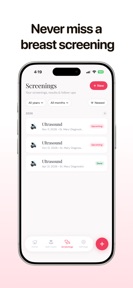


Bloom is a private, guided breast self-exam tracker for women that stores all screening records and photos locally on the device.
The App DNA
What makes this app unique?
Users report: It removes the privacy friction of cloud-based health apps, allowing users to maintain a consistent health habit without account-related data exposure.
For Women in their 20s and beyond seeking a private, offline-first tool to build a consistent breast health self-exam habit.
What does it look like?
Key features
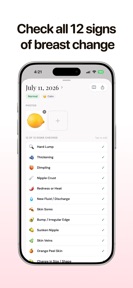
Step-by-step walkthrough of 12 breast health signs with inline note-taking capabilities.
All records, photos, and notes reside exclusively on the device with no cloud sync or account requirement.
Visual and textual comparison tool for any two historical check-ins to track changes over time.
How much does it cost?
The paid model removes subscription friction and reinforces the privacy-first value proposition by eliminating the need for recurring billing data.
Velocity
Maintenance developmentUX improvementsnew contentShow more...
Bloom: Monitor Breast Health exhibits a maintenance-level development cadence, with only two releases identified over the last four months. The latest release added functional integration with Apple Health, marking a shift toward improved data connectivity. Development appears focused on core utility rather than rapid iteration or live-service events. At the current pace of roughly 0.12 releases per week, the app remains in a stable maintenance phase.
Who built it?
Royal Labs
3 apps tracked · Health & Fitness
 Japan on a Budget: JOAB
 Cart AI: Smart Budget Tracker
User Sentiment
What do users think recently?
How are ratings & reviews evolving?
Not enough recent reviews to extract reliable themes yet.
Read the full review analysisCompetition
Competitive landscape for Bloom: Monitor Breast Health
How's the Health & Fitness market?
Bloom currently holds the #2 Paid rank in its category, demonstrating strong initial traction despite a limited review count. The $1.99 price point positions it as a premium, privacy-focused alternative to free, ad-supported health trackers.
Read the market outlookThe rivals identified

By Matthew Culbert
Both apps target individuals managing breast health, with Bloom focusing on habit-based self-exams and My Risk focusing on clinical risk assessment and screening guidelines.
- Bloom provides visual comparison tools for self-exams: My Risk focuses on clinical risk assessment.
- Bloom operates entirely offline without accounts: My Risk functions as an educational resource for screening.
- Bloom tracks BI-RADS results and clinical exams: My Risk provides general screening recommendations.
 BREAST TESTContender
 My Breast FriendContender
 breastcare - breast awarenessContender
 ABC's of Breast HealthContender
Unlock the head-to-head verdict: where this rival wins, and where it loses.
Access the full report for freeThe Analyst's Read
Key takeaways for Bloom: Monitor Breast Health
Where is it heading?
The breast health tracking market is consolidating around integrated wellness platforms. Bloom's stable, offline-first posture is advantaged for privacy-conscious users, but the lack of aggressive feature expansion risks stagnation against institutional competitors.
- Cycle syncing integration with Apple Health increases utility for users tracking biological data, strengthening the habit-building loop.
- Maintenance-only update cadence leaves the app vulnerable to faster-moving rivals that integrate wearable data or broader symptom tracking.
The SWOT
- Offline-only architecture creates a defensible privacy barrier
- Know Your Lemons framework provides structured guidance
- Localized language support could unlock international markets
Next best moves
Ship multi-language support because international rivals like breastcare capture non-English segments → expand addressable market
+ 1 more prioritized moveThe counter-intuitive read
The $1.99 price point is a feature, not a barrier…
Read the full takeFeature gaps
Multilingual support (available in breastcare but absent here) +1
Since the last report: Bloom transitioned from a strictly isolated utility to a more integrated health tool by adding Apple Health cycle syncing. This update represents the first functional change to the core feature set in four months.
Bottom line
Bloom's privacy-first architecture provides a clear moat against cloud-dependent health trackers. Shifting toward internationalization would unlock the user segments currently dominated by multilingual rivals, turning a niche utility into a broader health-management tool.
Unlock 2 critical frictions, 1 market threat, 1 more prioritized move and the analyst’s take.
Access the full report for freeSources
Report last updated