




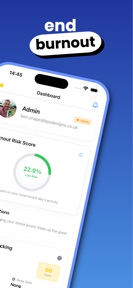
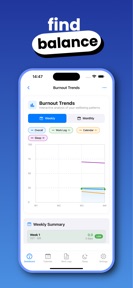
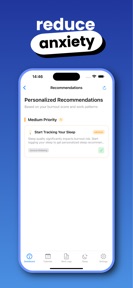
Burnout Guard is an iOS wellness app for professionals that tracks burnout risk using calendar and health data.
The App DNA
What makes this app unique?
The app removes the cognitive load of manual stress tracking by automating data collection from existing professional and health workflows.
For Professionals and managers seeking data-driven insights to manage workplace stress and prevent burnout.
What does it look like?
Key features
Calculates a 0-100 risk score using stress, energy, workload, and screen time metrics.
Connects to Google or iOS Calendar to analyze meeting loads and scheduling patterns.
Provides burnout forecasting, correlation analysis, and trend visualization.
How much does it cost?
Freemium model anchored at £39.99/year, gating advanced AI analytics and team features behind the premium subscription.
Velocity
Dormant developmentnew contentUX improvementsShow more...
Burnout Guard has entered a zombie state, having shipped no updates in the last 348 days. The development momentum has completely stalled, with no new features or maintenance patches released in nearly a year. The latest release remains the only version in the analyzed window, indicating a lack of active support or product iteration.
Who built it?
BPS Designs
3 apps tracked · Health & Fitness
 SwimClub Manager
 EV Mileage Tracker
User Sentiment
What do users think recently?
How are ratings & reviews evolving?
Not enough recent reviews to extract reliable themes yet.
Read the full review analysisCompetition
Competitive landscape for Burnout Guard
How's the Health & Fitness market?
Burnout Guard occupies the preventive health niche on iOS, yet the 348-day update gap suggests a stagnant market position relative to active wellness competitors.
Read the market outlookThe rivals identified
Unlock the deeper market read.
Access the full report for freeThe Analyst's Read
Key takeaways for Burnout Guard
Where is it heading?
The wellness market is consolidating around apps with high-frequency update cadences and cross-platform availability. Burnout Guard's current maintenance-only posture leaves it exposed to churn, as the lack of feature expansion will eventually force users to seek more active, modern alternatives.
- The 348-day update gap indicates a shift to maintenance mode, which will likely lead to user churn as competitors iterate faster.
- The current B2B-ready team analytics feature remains a unique differentiator that could sustain revenue if the product receives a technical refresh.
The SWOT
- Burnout Risk Scoring establishes category authority via multi-metric stress correlation.
- Apple Health integration reduces manual entry friction for premium subscribers.
- Anonymous team analytics unlock B2B subscription potential for organizational wellness programs.
- Expansion into Android markets could capture the significant segment of professionals using non-Apple hardware.
- Integration with project management tools like Asana or Jira would deepen the workload analysis beyond simple calendar meetings.
Next best moves
Pivot development focus to Android migration because the current iOS-only constraint limits total addressable market → capture non-Apple professional segment.
+ 1 more prioritized moveThe counter-intuitive read
The lack of updates is not just a failure of maintenance…
Read the full takeBottom line
Burnout Guard holds a defensible niche in preventive wellness, but the 11-month development silence risks ceding the category to more agile rivals. Prioritizing a platform expansion would unlock the growth potential inherent in its B2B-ready team analytics.
Unlock 3 critical frictions, 2 market threats, 1 more prioritized move and the analyst’s take.
Access the full report for freeSources
Report last updated