


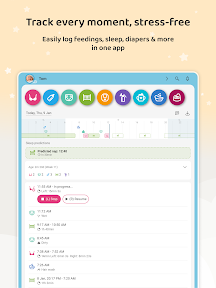
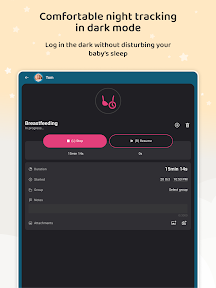




Baby Daybook is a newborn and toddler health tracker for parents, offering activity logging, growth charts, and sleep forecasting on iOS and Android.
The App DNA
What makes this app unique?
Parents use the app to remove the cognitive load of remembering feeding and sleep times, replacing manual notes with a shared, real-time digital record.
For New parents and caregivers seeking to organize and monitor newborn and toddler routines, health, and development.
What does it look like?
Key features
Real-time nap and bedtime forecasting based on individual baby sleep patterns and wake windows.
Real-time data sharing across multiple devices for parents and caregivers.
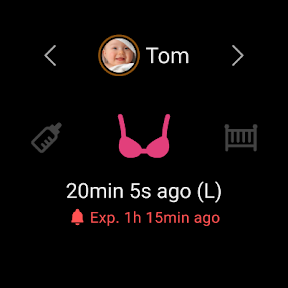
Quick-access tiles and complications for logging activities directly from smartwatches and home screens.
How much does it cost?
The freemium model uses ad-supported access to drive acquisition, while gating advanced sleep predictions and historical data behind a subscription.
Velocity
Maintenance developmentperformanceopaqueShow more...
The app maintains a release cadence of approximately 0.18 releases per week, placing it firmly in the maintenance tier. Development is characterized by consistent but minor stability updates, with no evidence of new features or live operations in the recent history. The publisher utilizes opaque release notes across all recent builds, suggesting that changes are limited to performance improvements or internal refinements. The development trend is stable, focusing exclusively on maintenance rather than growth or content expansion.
Who built it?
User Sentiment
What do users think recently?
Fresh user feedback skews thrilled. Users appreciate multi-user synchronization allows parents and caregivers to track baby activities across different devices and platforms and intuitive interface and widget support enable quick logging of baby activities without unlocking the phone, but report performance regressions post-update cause app freezing and slow loading times on various android devices.
How are ratings & reviews evolving?
Weekly average review rating
What users say, by theme
- Multi-user synchronization allows parents and caregivers to track baby activities across different devices and platforms
- Intuitive interface and widget support enable quick logging of baby activities without unlocking the phone
- Data-driven insights and sleep predictions provide actionable guidance for establishing consistent daily routines for infants
- Performance regressions post-update cause app freezing and slow loading times on various Android devices
120 of 854 recent reviews analyzed · high confidence · Thrilled overall
Read the full review analysisUnlock 2 more frustration themes and 2 user requests, each backed by review evidence.
Access the full report for freeCompetition
Competitive landscape for Baby Daybook - Newborn Tracker
How's the Medical market?
Baby Daybook holds top-40 grossing positions in the Parenting category across multiple international markets. The gap between its free-tier discovery and grossing rank suggests a conversion opportunity if performance stability is restored [1, 2].
Read the market outlookThe rivals identified

By Philips Digital UK Limited
Pregnancy+ captures the prenatal market, creating a natural transition point for users moving into the newborn tracking phase covered by Baby Daybook.
- Pregnancy+ features interactive 3D models for fetal visualization, while Baby Daybook focuses on manual activity logging.
- Baby Daybook supports real-time partner synchronization, a capability currently absent in the rival application.
- Pregnancy+ delivers weekly developmental updates, whereas Baby Daybook prioritizes high-frequency tracking of infant sleep and feeding.
 Huckleberry: Baby & ChildContender
 amma: Pregnancy & Baby TrackerContender
 Glow Baby Tracker & Growth AppContender
 Pregnancy Baby Tracker - WTEContender
 Baby Tracker & Newborn LogContender
 The Wonder Weeks - Baby leapsContender
 Baby Tracker - Newborn LogContender
 Baby Tracker • My BabyContender

Unlock the head-to-head verdict: where this rival wins, and where it loses.
Access the full report for freeThe Analyst's Read
Key takeaways for Baby Daybook - Newborn Tracker
Where is it heading?
The parenting tracking market is consolidating around AI-assisted tools that automate routine analysis. Baby Daybook's maintenance-mode cadence leaves it exposed to rivals that offer more immediate value, so stabilizing the core Android experience is the only way to prevent further churn.
- Android performance regressions in the latest update erode the daily active habit, which compounds the rating drag already visible on the platform.
- Maintenance-only release cadence leaves the app exposed to rivals with 2-week update cycles that offer more automated developmental insights.
The SWOT
- Real-time sleep prediction algorithms provide a functional differentiator that adapts to individual infant patterns
- Multi-user sync creates a network effect within the household unit
- Localized pricing in high-ARPU markets could capture users deterred by the premium-tier barrier
- Granular profile customization would address caregiver requests for multi-child management
Next best moves
Audit Android performance regressions because user reports of freezing are rising → stabilize daily active habit
+ 1 more prioritized moveThe counter-intuitive read
The app's reliance on manual logging is a strength, not a weakness…
Read the full takeFeature gaps
Conversational AI-driven parenting advice (available in Glow Baby Tracker) +1
Since the last report: Android performance regressions have become the primary driver of user sentiment, forcing a shift in the outlook from declining to mixed as the developer prioritizes stability over new feature growth.
Bottom line
Restoring Android stability is the prerequisite for any growth initiative, as the current performance regressions undermine the app's core utility. Addressing this will stabilize the user base and allow the PM to focus on differentiating the sleep-prediction engine against AI-driven rivals.
Unlock 2 critical frictions, 2 market threats, 1 more prioritized move and the analyst’s take.
Access the full report for freeSources
Report last updated