




The Croissant Lab is a dual-purpose app providing professional baking calculators on iOS and workspace access for enterprise teams on Android.
The App DNA
What makes this app unique?
Users hire the iOS app to reduce lamination failure rates through precision math, while Android users hire the service for flexible office access to manage hybrid work overhead.
For Professional bakers and hobbyists on iOS; remote workers and enterprise teams on Android.
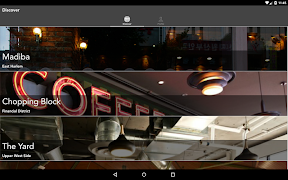
What does it look like?
Key features
Calculates ingredient ratios based on flour weight, butter weight, or target piece count.
Optional tool to evaluate internal dough structure and lamination quality.
Provides on-demand access to coworking spaces in 100+ cities.
How much does it cost?
The iOS app operates as a paid utility tool, while the Android app functions as a free-to-use interface for a B2B workspace subscription service.
Velocity
Intense developmentShow more...
3 versions in history. Development pace: intense.
Who built it?
User Sentiment
What do users think recently?
How are ratings & reviews evolving?
Not enough recent reviews to extract reliable themes yet.
Read the full review analysisCompetition
Competitive landscape for The Croissant Lab
How's the Food & Drink market?
The app maintains a #48 Paid rank in the US culinary category on iOS, while the Android workspace service competes in the broader B2B office-sharing market. The divergence between a $4.99 utility and a free B2B portal signals a lack of unified brand strategy.
Read the market outlookThe rivals identified
Unlock the deeper market read.
Access the full report for freeThe Analyst's Read
Key takeaways for The Croissant Lab
Where is it heading?
The professional baking utility market is consolidating around hardware-integrated solutions, leaving standalone apps like The Croissant Lab exposed. The PM must bridge the UX gap on Android to prevent churn in the B2B workspace segment before enterprise contracts come up for renewal.
- Recent feature additions like pre-ferment auto-calculation show active investment in the professional baking utility, which keeps the iOS product competitive.
- The 1.2-star rating gap between iOS and Android suggests the workspace interface is failing to meet user expectations, which threatens B2B retention.
The SWOT
- Baker's Math precision enables professional-grade lamination workflows
- B2B workspace integration provides recurring enterprise revenue streams
- AI-driven crumb analysis differentiates from static recipe managers
- Expansion into wearable proofing-timer alerts
- B2B partnerships with culinary schools for student-license distribution
- Integration with smart-oven temperature sensors
Next best moves
Unify brand messaging across platforms because the current split identity confuses user acquisition → increase conversion
+ 1 more prioritized moveThe counter-intuitive read
The split-platform identity is not a weakness but a strategic hedge…
Read the full takeFeature gaps
Guided cooking steps (available in Cookidoo) +1
Since the last report: The app pivoted to a dual-identity model, combining a paid iOS culinary utility with a free Android B2B workspace portal.
Bottom line
The Croissant Lab succeeds as a high-precision culinary utility but suffers from a fragmented brand identity that risks alienating both professional bakers and enterprise workspace users, so the PM should prioritize a unified brand strategy to stabilize acquisition.
Unlock 3 critical frictions, 3 market threats, 1 more prioritized move and the analyst’s take.
Access the full report for freeReport last updated