


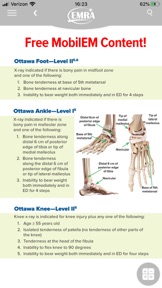
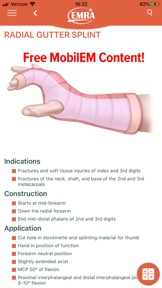

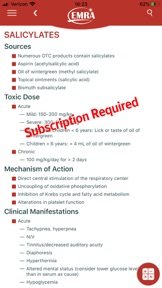
MobilEM is a clinical reference app for emergency medicine professionals, offering evidence-based guidance on iOS and Android.
The App DNA
What makes this app unique?
Clinicians hire MobilEM to reduce cognitive load during high-stakes shifts, using its library as a reliable, pocket-sized decision support tool.
For Emergency medicine physicians-in-training and clinical professionals requiring rapid, evidence-based reference material.
What does it look like?
Key features
Evidence-based guidance for antibiotics, toxicology, EKGs, and pediatric emergencies
Cross-category search functionality for rapid clinical decision support
User-defined annotations and saved reference points for personalized clinical workflows
How much does it cost?
Hybrid model combining free entry-level content with both individual resource sales and a recurring all-access subscription.
Velocity
Maintenance developmentopaqueShow more...
The app has shipped only two releases in the last 4.5 months, resulting in a cadence of approximately 0.1 releases per week. Development is currently in a maintenance phase, focusing exclusively on generic bug fixes and content updates without clear feature milestones. There is no evidence of live-ops activity or significant feature development in the observed data. The current release pattern suggests a low-priority maintenance cycle.
Who built it?
Emergency Medicine Residents' Association
4 apps tracked · Medical
 EMRA Peds Meds
 EMRA Antibiotic Guide
 EMRA PressorDex
User Sentiment
What do users think recently?
The recent review mood reads frustrated. Users appreciate comprehensive clinical reference library provides essential medical guidance for emergency department shifts.
How are ratings & reviews evolving?
What users say, by theme
- Comprehensive clinical reference library provides essential medical guidance for emergency department shifts
- Subscription verification failures prevent users from accessing purchased clinical content after updates
44 of 44 recent reviews analyzed · high confidence · Frustrated overall
Read the full review analysisUnlock 1 user request, each backed by review evidence.
Access the full report for freeCompetition
Competitive landscape for MobilEM
How's the Medical market?
MobilEM holds a #14 Grossing position in the US Medical category, but the 3.36 average rating across 75 total ratings indicates that technical instability is currently suppressing its potential revenue ceiling.
Read the market outlookThe rivals identified

By OpenEM Foundation
Both apps target emergency medicine clinicians with reference material, creating direct competition for daily clinical utility and professional reference.
- WikEM provides offline access to its wiki database, reducing reliance on connectivity for clinical reference.
- WikEM gates AI-powered natural language queries behind a subscription, providing distinct functional utility.
- MobilEM includes note-taking and bookmarking, which tethers user-generated clinical data to the application.
 CorePendiumContender
 iCPG: the JRCALC GuidelinesContender
 palmEM AI: EM Quick ReferenceContender
 EB MedicineContender
 5-Minute Emergency MedicineContender
 5 Minute Emergency MedicineContender
 Tintinalli's Emergency Med ManContender
 Pedi STATContender

Unlock the head-to-head verdict: where this rival wins, and where it loses.
Access the full report for freeThe Analyst's Read
Key takeaways for MobilEM
Where is it heading?
The clinical reference market is consolidating around high-frequency, stable tools that integrate into active workflows. MobilEM's current maintenance-mode cadence leaves it exposed to rivals with better reliability, so the PM must pivot from content expansion to technical hygiene to prevent further erosion of its professional user base.
- Subscription verification failures post-update drive recurring churn, which compounds the negative sentiment already visible in the 3.36 average rating.
- Application instability during critical clinical shifts erodes professional trust, which will likely accelerate user migration to more stable, specialized competitors.
The SWOT
- Evidence-based library functions as a brand-authority moat for clinical reference
- Note-taking features increase switching costs by tethering user-generated clinical data
- Pediatric emergency medicine content expansion addresses top user request
- Wearable integration could provide a differentiator against static reference rivals
Next best moves
Rebuild subscription verification logic because verification failures are the top complaint theme → reduce churn
+ 1 more prioritized moveThe counter-intuitive read
The app's #14 Grossing rank is a liability…
Read the full takeFeature gaps
Real-time diagnostic hardware integration (available in Kardia but absent here) +1
Since the last report: MobilEM has entered a maintenance phase with no new feature development, while technical instability in subscription verification and core modules continues to drive negative sentiment.
Bottom line
MobilEM maintains a strong clinical authority, but the recurring subscription verification failures and module crashes directly undermine its professional value, so the team must prioritize authentication stability to prevent further churn.
Unlock 2 critical frictions, 2 market threats, 1 more prioritized move and the analyst’s take.
Access the full report for freeReport last updated