


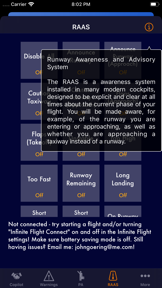

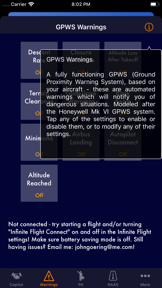
In-Flight Assistant is a third-party audio utility for the Infinite Flight simulator on iOS and Android that provides cockpit callouts and safety warnings.
Product velocity
Dormant
Daily rank 🇺🇸
#32
▲32Games · paid
Sentiment
4.1
130 reviews
Nemesis
Fragmented field
The App DNA
What makes this app unique?
Users hire the app to increase the realism of their flight simulation experience through automated co-pilot audio and safety systems that the base simulator lacks.
For Dedicated users of the Infinite Flight mobile simulator seeking increased realism and automated cockpit assistance.
What does it look like?
Key features
Headset-based voice recognition for controlling autopilot and aircraft systems
Automated flight safety callouts including sink rate and terrain warnings based on Honeywell MK VI specifications
Automated cabin audio sequences for safety briefings and flight status updates
How much does it cost?
Paid model with modular in-app purchases allows users to pay only for specific simulation realism features.
Velocity
Dormant developmentShow more...
5 versions in history. Development pace: zombie.
Who built it?
John Goering
7 apps tracked · Games
 SmoothTrack: Head Tracker
 Mindscope - Thought Organizer
 In-Flight Operations
 BridgePad
 Stack 5 Dice Roller
 Mindscope 2
User Sentiment
What do users think recently?
Recent user voice shows a mixed sentiment. Users appreciate flight simulation realism is significantly boosted by the integrated audio callouts and flight attendant announcements.
How are ratings & reviews evolving?
What users say, by theme
- Flight simulation realism is significantly boosted by the integrated audio callouts and flight attendant announcements
- Aggressive monetization strategy requires multiple separate in-app purchases to access core features beyond the initial price
49 of 49 recent reviews analyzed · high confidence · Mixed overall
Read the full review analysisUnlock 1 user request, each backed by review evidence.
Access the full report for freeCompetition
Competitive landscape for In-Flight Assistant
How's the Games market?
In-Flight Assistant maintains a stable presence in the simulation category, currently holding a #19 Paid rank in the simulation category in Japan. The fragmented monetization model creates a pricing ceiling that limits mass adoption compared to free-to-play modding hubs.
Read the market outlookThe rivals identified
Unlock the deeper market read.
Access the full report for freeThe Analyst's Read
Key takeaways for In-Flight Assistant
Where is it heading?
The simulation utility market is consolidating around comprehensive modding hubs, leaving In-Flight Assistant exposed to churn if stability issues persist. The PM must prioritize stability to defend the current user base against more stable, all-in-one alternatives.
- Stability regressions during long-haul flights erode the daily active habit, which compounds the rating drag already visible on the platform.
- Active feature investment in VNAV and waypoint systems shows the developer is not in maintenance mode, supporting long-term retention.
The SWOT
- Honeywell-spec GPWS engine provides industry-standard realism
- Direct developer support builds trust with the simulation community
- Integration of traffic collision avoidance systems
- Expansion into wearable companion apps
Next best moves
Consolidate monetization modules into a single premium bundle because users cite fragmented IAPs as a top complaint → reduce refund surge
+ 1 more prioritized moveThe counter-intuitive read
The app's fragmented monetization is actually a feature…
Read the full takeFeature gaps
Traffic collision avoidance systems (TCAS) (requested by users, missing here)
Since the last report: The app transitioned to a paid-plus-IAP model, triggering user complaints about monetization, while simultaneously formalizing its competitive position around high-fidelity audio features.
Bottom line
In-Flight Assistant provides essential immersion for simulation enthusiasts, but the fragmented monetization model risks long-term churn, so the PM should consolidate IAP modules to reduce friction and stabilize the user base.
Unlock 2 critical frictions, 2 market threats, 1 more prioritized move and the analyst’s take.
Access the full report for freeReport last updated