




PLANBELLA is a minimalist digital bullet journal and calendar app for iOS and Android.
The App DNA
What makes this app unique?
Users hire PLANBELLA to organize daily tasks and notes within an aesthetic, non-subscription interface that avoids the recurring cost of standard productivity tools.
For Users seeking a minimalist, aesthetic digital alternative to paper bullet journals for personal organization.
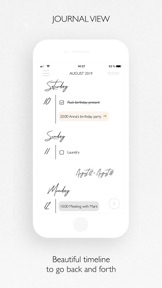
What does it look like?
Key features
Imports external Apple, Google, and Outlook calendars.
Quick access to calendar functions via home screen.
Timeline view for notes, tasks, and events.
How much does it cost?
One-time purchase model anchored at $8.99, supplemented by optional in-app purchases for home screen widgets.
Velocity
Maintenance developmentShow more...
5 versions in history. Development pace: maintenance.
Who built it?
Netzinkubator Software
5 apps tracked · Productivity
 Manpower FIRElease App
 FIRElease
 Windsurf Spot Guide
 Gutachter App
User Sentiment
What do users think recently?
The recent review mood reads mixed. Users appreciate minimalist design and aesthetic appeal drive daily usage for organization and task management.
How are ratings & reviews evolving?
What users say, by theme
- Minimalist design and aesthetic appeal drive daily usage for organization and task management
- Lack of cross-device synchronization prevents consistent usage across multiple hardware platforms
49 of 49 recent reviews analyzed · high confidence · Mixed overall
Read the full review analysisUnlock 1 user request, each backed by review evidence.
Access the full report for freeCompetition
Competitive landscape for PLANBELLA - Planner App
How's the Productivity market?
PLANBELLA holds the #93 Paid rank in the US Productivity category, with performance varying widely across international markets like Poland (#15) and South Korea (#16). The reliance on a one-time purchase model limits the revenue available for cloud infrastructure, creating a gap between the app's aesthetic appeal and its functional utility.
Read the market outlookThe rivals identified
Unlock the deeper market read.
Access the full report for freeThe Analyst's Read
Key takeaways for PLANBELLA - Planner App
Where is it heading?
The productivity market is consolidating around ecosystem-integrated tools, leaving standalone apps like PLANBELLA exposed if they lack basic utility like cloud sync. The current development focus on platform optimization is insufficient to address the core retention risks, so the app will likely see stagnant growth until the data architecture is modernized.
- Data persistence issues in the latest release erode user trust, which directly compounds the rating drag on Android.
- The one-time purchase model continues to attract users who are actively churning away from subscription-heavy productivity apps.
The SWOT
- One-time purchase model lowers barrier to entry compared to subscription-based rivals
- Minimalist aesthetic design sustains high organic engagement among core users
- Cloud-sync implementation would unlock power-user retention
- Global search integration would address top-requested feature gap
Next best moves
Ship cloud-based data synchronization because it is the top-requested feature → increase power-user retention
+ 1 more prioritized moveThe counter-intuitive read
The app's minimalist, one-time purchase model is its greatest weakness…
Read the full takeFeature gaps
Cross-device cloud synchronization (available in Structured) +1
Since the last report: The app has moved from a stable maintenance state to a high-risk phase, characterized by newly identified data loss bugs and a lack of cloud infrastructure that limits its competitiveness against ecosystem-integrated rivals.
Bottom line
PLANBELLA captures the aesthetic-focused planner market through its one-time purchase model, but the lack of cloud synchronization and data persistence issues threaten long-term retention, so the team must prioritize cloud-sync to prevent churn to more functional competitors.
Unlock 3 critical frictions, 2 market threats, 1 more prioritized move and the analyst’s take.
Access the full report for freeFAQ
Is PLANBELLA a good alternative to subscription planners?
Does PLANBELLA sync data between my phone and tablet?
How does PLANBELLA compare to Structured?
Can I search for past notes in PLANBELLA?
Report last updated