




Code Runner Pro is a medical utility app for ACLS and cardiac arrest documentation, designed for doctors and paramedics on iOS and Android.
The App DNA
What makes this app unique?
Clinicians hire this tool to maintain accurate, timestamped resuscitation logs during high-pressure code blues where manual documentation is prone to error.
For Emergency healthcare professionals including doctors, nurses, paramedics, and first responders working in high-acuity clinical environments.
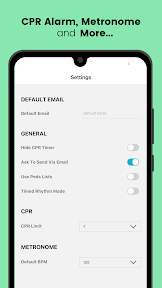
What does it look like?
Key features
Tracks Code Time, CPR cycles, Shock intervals, and Epinephrine dosing concurrently on a single screen
Provides dedicated controls for shock, epinephrine, and timer toggling directly from the wrist
Generates a chronological report of rhythms, medications, and shocks for medical record attachment
How much does it cost?
Direct paid model with no IAP or subscription, pricing anchored to capture one-time professional tool spend.
Velocity
Maintenance developmentplatform expansionperformanceUX improvementsShow more...
The app ships approximately 0.15 releases per week, placing it firmly in the maintenance tier. Development is currently focused on platform-specific refinements for the Apple Watch and general stability improvements rather than major feature expansion. The release cadence has remained stable over the last three months, with no evidence of live-ops or seasonal content. The publisher provides descriptive notes, confirming that updates are primarily technical in nature.
Who built it?
Angel Vazquez
7 apps tracked · Medical
 OKNDrum: Optokinetic Drum
 LaborLove: Contraction Timer
 StrokeTimer - NIHSS & DTN
 BBTC - B & B Target Center
 KegelPRO: Longer Lasting Sex
 SoundSleep – Snoring Sounds
User Sentiment
What do users think recently?
Review voice lately leans mixed. Users appreciate medical professionals value the organized interface for tracking critical code events in real time.
How are ratings & reviews evolving?
What users say, by theme
- Medical professionals value the organized interface for tracking critical code events in real time
- Apple Watch integration fails to load or freezes during critical code documentation
33 of 33 recent reviews analyzed · high confidence · Mixed overall
Read the full review analysisUnlock 1 user request, each backed by review evidence.
Access the full report for freeCompetition
Competitive landscape for Code Runner Pro: CPR Timer
How's the Medical market?
Code Runner Pro maintains a #14 Grossing position in the US Medical category, but its reliance on a one-time paid model limits revenue scaling compared to subscription-based reference tools.
Read the market outlookThe rivals identified
Unlock the deeper market read.
Access the full report for freeThe Analyst's Read
Key takeaways for Code Runner Pro: CPR Timer
Where is it heading?
The medical utility market is shifting toward automated, EHR-integrated documentation, leaving manual-entry tools like Code Runner Pro increasingly exposed. Unless the team pivots to address the vitals-logging gap and stabilizes the wearable interface, the app risks losing its professional user base to more comprehensive clinical platforms.
- Persistent Apple Watch instability in the latest release erodes trust with bedside clinicians, leading to continued negative sentiment on the wrist-based workflow.
- The app maintains a top-20 Grossing position in the US Medical category, proving that professional users still value the core timing utility despite technical friction.
The SWOT
- Multi-timer interface enables concurrent tracking of four resuscitation events
- Apple Watch integration provides hands-free documentation for bedside providers
- Pediatric-ready medication lists expand addressable market into NICU/PICU settings
- Integration with hospital EHR systems automates documentation
- Custom input fields for vitals address primary user complaints
- B2B partnerships with hospital code teams scale distribution
Next best moves
Rebuild Apple Watch connectivity logic because watch-freezing is the top complaint → improve retention of bedside power users
+ 1 more prioritized moveThe counter-intuitive read
The app's biggest risk is not a competitor feature…
Read the full takeFeature gaps
Clinical scenario simulation (available in Full Code Medical Simulation but absent here) +1
Since the last report: The app expanded its clinical utility with pediatric medication support but continues to face high-impact retention risks due to unresolved Apple Watch connectivity failures.
Bottom line
Code Runner Pro holds a unique niche in real-time code documentation, but persistent Apple Watch instability threatens its primary retention lever, so the team should prioritize platform reliability over new feature expansion to protect its professional user base.
Unlock 3 critical frictions, 3 market threats, 1 more prioritized move and the analyst’s take.
Access the full report for freeReport last updated