


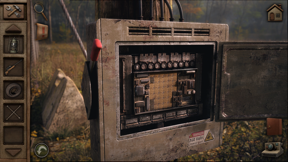


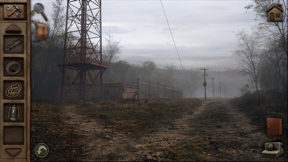
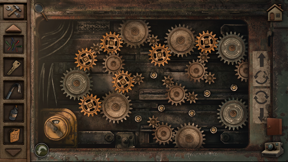


Aurora Hills: Chapter 2 is a narrative-driven, point-and-click puzzle adventure game set in 1980s West Virginia, available as a paid title on iOS.
The App DNA
What makes this app unique?
Users hire this app for immersive, ad-free mystery solving that rewards patience and observation, serving a need for high-quality, self-contained narrative experiences.
For Fans of narrative-driven mystery games and point-and-click puzzle enthusiasts who prefer ad-free experiences.
What does it look like?
Key features
Narrative-driven exploration of 1980s West Virginia with interactive environmental puzzles
In-game guidance for complex riddles to prevent player frustration
Increased difficulty setting for puzzle mechanics
How much does it cost?
Paid model at $3.99 price point with no in-game advertisements, prioritizing user experience over ad-based monetization.
Velocity
Steady developmentShow more...
Who built it?
NovaSoft Interactive
6 apps tracked · Games
 Meridian 157: Chapter 3
 Meridian 157: Chapter 2
 Aurora Hills: Chapter 1
 Meridian 157: Prologue
 Meridian 157: Chapter 1
User Sentiment
What do users think recently?
The recent review mood reads thrilled. Users appreciate atmospheric world design and high-quality audio cues create an immersive point and click experience.
How are ratings & reviews evolving?
What users say, by theme
- Atmospheric world design and high-quality audio cues create an immersive point and click experience
- Lack of a custom difficulty setting prevents players from accessing hints during hard mode
27 of 27 recent reviews analyzed · moderate confidence · Thrilled overall
Read the full review analysisUnlock 1 user request, each backed by review evidence.
Access the full report for freeCompetition
Competitive landscape for Aurora Hills: Chapter 2
How's the Games market?
Aurora Hills: Chapter 2 holds a #47 Paid rank in the US puzzle category, supported by a 4.89-star rating. The $3.99 price point targets a premium segment, though the lack of recurring revenue limits its grossing potential against F2P competitors.
Read the market outlookThe rivals identified
By Fireproof Studios Limited
The foundational benchmark for tactile, physics-based puzzle games that defines the expectations for the genre.
- Utilizes a proprietary tactile interaction engine that makes every puzzle object feel physically grounded and realistic.
- Employs a sophisticated hint system that guides players without breaking the immersion of the atmospheric narrative.
- Features a multi-layered, interconnected puzzle design that rewards deep observation rather than simple trial and error.

Unlock the deeper market read.
Access the full report for freeThe Analyst's Read
Key takeaways for Aurora Hills: Chapter 2
Where is it heading?
The puzzle-adventure market is consolidating around titles that offer either infinite replayability or high-fidelity, hub-based exploration. Aurora Hills: Chapter 2 remains stable but exposed, as its static, single-purchase model lacks the live-ops cadence required to retain players against competitors like The Room series.
- Recent updates focused on stability and interaction refinement, indicating a transition into maintenance mode rather than active feature expansion.
- Repetitive backtracking complaints in reviews suggest that the current map design is failing to scale for extended play sessions.
The SWOT
- 9-language localization functions as a B2B distribution barrier into international markets
- Tiered hint system reduces churn during difficult sequences
- High-quality ambient audio design sustains immersive atmosphere
- Map-based fast travel integration would reduce late-game friction
- Inventory management tools would improve puzzle-solving workflow
- Education partnerships untapped as B2B distribution channel
Next best moves
Ship map-based fast travel because navigation complaints are a top friction point → increase late-game completion rates
+ 1 more prioritized moveThe counter-intuitive read
The game's 9-language localization is its most significant moat…
Read the full takeFeature gaps
Fast travel navigation (available in The Room Three but missing here) +1
Since the last report: The report transitioned from a general overview to a detailed competitive diagnostic, highlighting specific feature differentiators and critical user friction points in hard mode.
Bottom line
Aurora Hills: Chapter 2 excels in atmospheric immersion, but the lack of fast-travel navigation and rigid hard-mode settings creates unnecessary friction, so the PM should prioritize navigation updates to maximize completion rates and player retention.
Unlock 3 critical frictions, 3 market threats, 1 more prioritized move and the analyst’s take.
Access the full report for freeFAQ
Is Aurora Hills: Chapter 2 suitable for casual players?
How does this compare to The Room?
Does the game contain intrusive advertisements?
Report last updated