


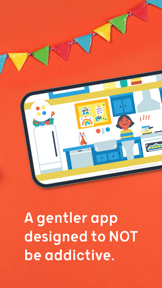
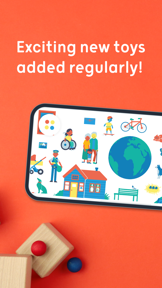



Pok Pok is a Montessori-inspired digital playroom designed for children aged 2-8. The app focuses on open-ended, interactive learning games that exclude traditional levels or win/loss mechanics to promote calm, regulated play.
Overview · Full Intel report in progress
The App DNA
What makes this app unique?
For Parents and caregivers of children aged 2-8 seeking educational, non-overstimulating screen time alternatives.
What does it look like?
Key features
Interactive games designed without levels, winning, or losing to encourage exploration.
Educational activities modeled after Montessori principles to support child development.
The app supports offline play, allowing for use without a Wi-Fi connection.
Designed to be non-addictive and help children stay regulated during screen time.
How much does it cost?
Velocity
Intense developmentShow more...
5 versions in history. Development pace: intense.
Who built it?

User Sentiment
What do users think recently?
How are ratings & reviews evolving?
Not enough recent reviews to extract reliable themes yet.
Read the full review analysisCompetition
Competitive landscape for Pok Pok | Montessori Preschool
How's the Education market?
The rivals identified

By Age of Learning, Inc.
Both apps target the 2-8 age demographic with educational content, forcing parents to choose between Pok Pok's open-ended Montessori approach and ABCmouse's structured, curriculum-based path.
- Pok Pok avoids win-loss mechanics, whereas ABCmouse relies on a gamified reward system for engagement.
- Pok Pok provides a calm, non-overstimulating interface, while ABCmouse includes navigation friction before reaching content.
- Pok Pok offers offline functionality, while ABCmouse requires consistent connectivity for its 13,000 activity library.

Unlock the head-to-head verdict: where this rival wins, and where it loses.
Access the full report for freeThe Analyst's Read
Key takeaways for Pok Pok | Montessori Preschool
Where is it heading?
Bottom line
Pok Pok differentiates itself by prioritizing a non-addictive, open-ended user experience that aims to minimize overstimulation in young children.
Report last updated