


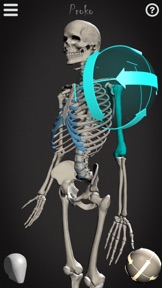

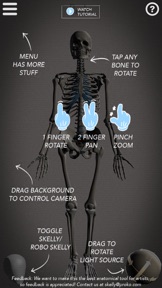
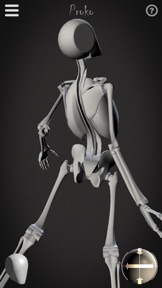

Skelly is an anatomy reference tool developed by Proko that provides artists with a fully poseable, anatomically correct skeleton model. It serves as a portable alternative to physical reference materials, allowing users to adjust lighting and camera angles for drawing, sculpting, and animation studies.
Overview · Full Intel report in progress
The App DNA
What makes this app unique?
For The app is designed for art students and professionals seeking a digital reference for human anatomy and figure drawing.
What does it look like?
Key features
Provides a detailed, fully poseable skeleton model for studying human structure.
Includes a simplified version of the skeleton to assist with basic anatomical understanding.
Allows users to manipulate the light source and viewing angle to assist with complex drawing perspectives.
How much does it cost?
Velocity
Dormant developmentShow more...
3 versions in history. Development pace: zombie.
Who built it?

User Sentiment
What do users think recently?
How are ratings & reviews evolving?
Not enough recent reviews to extract reliable themes yet.
Read the full review analysisCompetition
Competitive landscape for Skelly - Art Model
How's the Education market?
The rivals identified

By Wombat Studio, Inc.
Both apps target artists requiring 3D reference models for figure drawing, with Magic Poser providing a free, broader posing toolset that competes directly with Skelly's specialized anatomical focus.
- Magic Poser provides full finger and toe articulation, whereas Skelly lacks this granular control.
- Magic Poser operates on a free model, while Skelly requires a 6.99 dollar upfront purchase.
- Magic Poser includes a physics engine for dynamic posing, unlike Skelly's focus on static anatomy.
 Handy Art Reference ToolContender
 Easy Pose -Best Posing AppContender
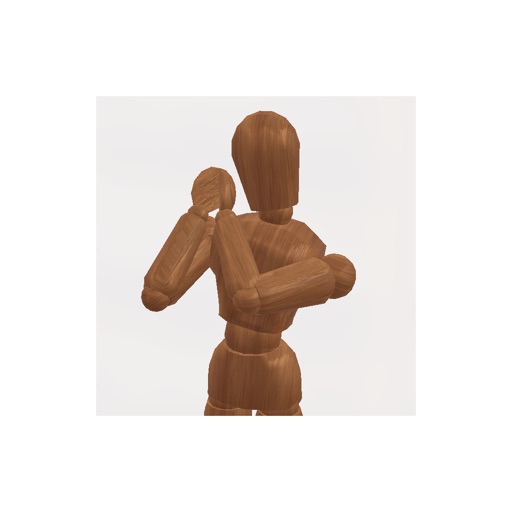 MNQN art posing modelContender
 Draw Gestures : Figure DrawingContender
 Artista - Drawing ReferenceContender
 Value Study: art referenceContender
 Tracing Buddy: Drawing GridContender
 Art Model - Pose & morph toolContender

Unlock the head-to-head verdict: where this rival wins, and where it loses.
Access the full report for freeThe Analyst's Read
Key takeaways for Skelly - Art Model
Where is it heading?
Bottom line
While users value the anatomical accuracy and utility for figure drawing, feedback indicates a demand for more granular control over finger and toe articulation.
Report last updated