


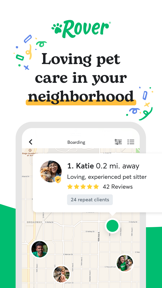

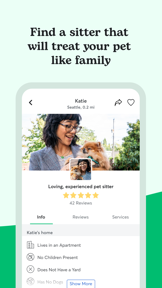

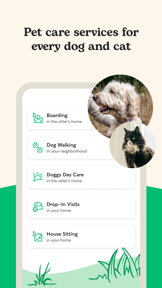

Rover is a pet-sitting and dog-walking marketplace connecting pet owners with local service providers on iOS.
The App DNA
What makes this app unique?
Users hire Rover to secure verified, insured care for their pets, replacing the uncertainty of informal neighborhood arrangements with a standardized, trackable service contract.
For Pet owners seeking local, verified care for dogs and cats, and individuals looking to monetize pet care services.
What does it look like?
Key features
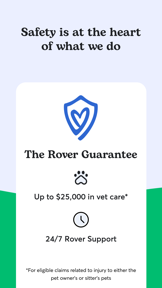
Insurance coverage for vet care up to $25,000 for eligible bookings
In-app digital cards for sitters to share walk maps and logs
Real-time location tracking for active dog walking services
How much does it cost?
Marketplace model where the platform takes a cut of transactions, with pricing determined by individual service providers.
Velocity
Active developmentperformanceopaqueShow more...
With two releases in the last 24 days, the app maintains an active cadence of approximately 0.6 releases per week. Despite this consistent update frequency, the release notes remain entirely opaque, providing no insight into specific feature development or bug fixes. This pattern is characteristic of apps that utilize server-side A/B testing and feature flags to manage the user experience. The development trend is stable, focusing on iterative performance maintenance rather than public-facing feature milestones.
Who built it?

User Sentiment
What do users think recently?
Fresh user feedback skews upset. Users appreciate flexible scheduling options allow sitters to manage their own availability and time off.
How are ratings & reviews evolving?
What users say, by theme
- Flexible scheduling options allow sitters to manage their own availability and time off
- Automated support responses and AI-generated replies fail to resolve complex account issues
49 of 49 recent reviews analyzed · high confidence · Upset overall
Read the full review analysisUnlock 1 more frustration theme and 1 user request, each backed by review evidence.
Access the full report for freeCompetition
Competitive landscape for Rover—Dog Sitters & Walkers
How's the Travel market?
Rover holds the #53 Free position in the Travel category. The gap between its high rating and the severe sitter-side sentiment deficit signals that the platform's consumer-facing trust features are masking deep operational instability.
Read the market outlookThe rivals identified

By Wag Labs, Inc.
Wag! competes directly with Rover by targeting the same pet owner demographic with on-demand pet care services, specifically addressing the immediate booking gap in the current Rover service model.
- Wag! supports on-demand booking for immediate care, a capability currently absent from the Rover platform.
- Wag! integrates veterinary telehealth services, providing a broader range of pet care solutions than Rover.
 Sittsy – Pet Sitters & WalkersContender
 PetBacker: Dog Cat Pet SittingContender
 Pawshake - Dog & Pet SitterContender
 DogHero - Pet ServicesContender
 Wag! Pet CaregiverContender
 Petme: Pet Sitting & WalkingContender
 Cloudy Pet Sitter & Dog WalkerContender
 Pet Watch - #1 Pet Sitting AppContender

Unlock the head-to-head verdict: where this rival wins, and where it loses.
Access the full report for freeThe Analyst's Read
Key takeaways for Rover—Dog Sitters & Walkers
Where is it heading?
The pet care market is consolidating around specialized service models, and Rover's reliance on automated, opaque operations leaves it exposed to more agile, service-oriented rivals. If the platform does not pivot to human-led support and granular scheduling, it will continue to lose its most experienced sitters to competitors who offer better business-side control.
- The high frequency of algorithmic account deactivations without appeal processes is driving experienced sitters to alternative platforms, which threatens the marketplace supply.
- Automated support interactions are failing to resolve complex account issues, which compounds the trust deficit already visible in the 15/100 sentiment score.
The SWOT
- Rover Guarantee reduces user risk perception
- GPS tracking provides verifiable proof of service
- In-app messaging keeps transaction lifecycle on-platform
- Granular scheduling controls would reduce booking conflicts
- Human-led support would stabilize the sitter base
- B2B tools could capture professional sitters
Next best moves
Replace automated support with human-led conflict resolution because support complaints are the #1 sentiment driver → stabilize sitter retention
+ 1 more prioritized moveThe counter-intuitive read
The platform's high rating is a lagging indicator…
Read the full takeFeature gaps
On-demand walk requests (available in Wag!) +1
Since the last report: Rover's competitive position has declined due to a severe supply-side trust deficit and operational friction, despite maintaining its category chart position.
Bottom line
Rover maintains its category lead through strong trust-based consumer features, but the platform is bleeding supply-side loyalty due to opaque support and high entry fees, so the PM must prioritize human-led support and on-demand booking to prevent further erosion to Wag!.
Unlock 3 critical frictions, 3 market threats, 1 more prioritized move and the analyst’s take.
Access the full report for freeReport last updated