



Reptiles & Amphibians of NA is a paid digital field guide for North American herpetology, providing offline species identification via annotated illustrations and audio recordings.
The App DNA
What makes this app unique?
Users hire this app to identify species in remote, low-connectivity environments where community-based identification apps fail to function due to network requirements.
For Outdoor explorers, students, and herpetology enthusiasts requiring a comprehensive, offline-capable field guide for North American reptiles and amphibians.
What does it look like?
Key features
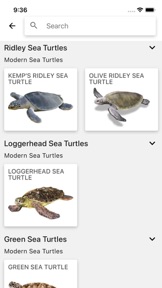
Drawings of nearly 700 species featuring specific annotations for field marks to aid identification
Full download of species data and maps for use without network connectivity
Side-by-side comparison interface for identifying species based on scientific or common names
GPS-enabled filter to identify species expected in the user's immediate vicinity
Library of frog and toad calls for auditory identification
How much does it cost?
Paid model anchored at $19.99, targeting enthusiasts who require offline, comprehensive field data without recurring subscription costs.
Velocity
Maintenance developmentShow more...
5 versions in history. Development pace: maintenance.
Who built it?
Schechter Natural History
2 apps tracked · Education
 ABA/AOU Bird Codes
User Sentiment
What do users think recently?
The recent review mood reads excited. Users appreciate audio playback features help users identify vocalizing amphibians in the field without visual confirmation and geographic filtering tools allow users to narrow species lists to their immediate local environment.
How are ratings & reviews evolving?
What users say, by theme
- Audio playback features help users identify vocalizing amphibians in the field without visual confirmation
- Geographic filtering tools allow users to narrow species lists to their immediate local environment
- Reliance on illustrations instead of actual field photographs limits the utility for some users
4 of 4 recent reviews analyzed · limited sample
Read the full review analysisUnlock 1 user request, each backed by review evidence.
Access the full report for freeCompetition
Competitive landscape for Reptiles & Amphibians of NA
How's the Education market?
The app occupies a niche paid-reference segment, relying on offline utility to compete against free, community-verified identification platforms. With a 4.12 rating across 8 reviews, the current footprint is limited to a small, high-intent enthusiast base.
Read the market outlookThe rivals identified

By iNaturalist
Dominates the identification niche through a massive, community-verified database and high-frequency release cadence.
- Leverages a massive global community-verified database that provides higher identification accuracy than static field guides.
- Gamifies the exploration experience with monthly challenges and badges to drive long-term user retention.
- Provides real-time image recognition feedback that lowers the barrier to entry for amateur naturalists.

Unlock the deeper market read.
Access the full report for freeThe Analyst's Read
Key takeaways for Reptiles & Amphibians of NA
Where is it heading?
The identification market is consolidating around community-verified platforms that offer real-time AI feedback. Without a transition to a more dynamic, user-contributed data model, this app will remain a static reference tool, limiting its long-term retention potential against free, network-effect-driven rivals.
- Recent updates focused on stability and audio handling, indicating the app is currently in a maintenance phase rather than an aggressive growth cycle.
- The lack of community-verified data loops prevents the app from scaling its identification accuracy, which will likely lead to churn as users migrate to iNaturalist.
The SWOT
- Offline-first architecture ensures utility in remote field environments
- Annotated illustrations provide specific identification marks missing in standard photography-based guides
- Integration of conservation status data would address user requests for more granular research utility
- Expansion into subspecies-specific range maps would increase depth
Next best moves
Integrate photographic references alongside existing illustrations because the lack of photos is a top-cited complaint → increase conversion of casual users.
+ 1 more prioritized moveThe counter-intuitive read
The app's reliance on static illustrations is a feature, not a bug…
Read the full takeFeature gaps
Real-time image recognition (available in Seek by iNaturalist but absent here) +1
Since the last report: The report reflects a shift toward a more critical assessment of the app's competitive viability, highlighting the tension between its offline-first utility and the lack of photographic evidence.
Bottom line
The app maintains a strong utility moat through offline-first functionality, but the $19.99 price point and reliance on illustrations leave it vulnerable to free, AI-driven competitors, so the PM should prioritize photographic integration to broaden the user base.
Unlock 2 critical frictions, 2 market threats, 1 more prioritized move and the analyst’s take.
Access the full report for freeReport last updated