




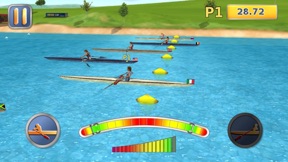


Athletics 2: Summer Sports is a 3D athletic simulation game for iOS and Android featuring 30 events and local multiplayer.
The App DNA
What makes this app unique?
Users hire this app for a realistic, offline-capable sports simulation that avoids the aggressive monetization and connectivity requirements of modern F2P titles.
For Casual sports fans and gamers looking for a realistic, offline-capable simulation of summer Olympic-style events.
What does it look like?
Key features
Local two-player competition on a single device screen
Includes athletics, shooting, cycling, swimming, and diving events in 3D environments
World rankings for each event and competition via Game Center integration
How much does it cost?
Paid-upfront model targets users avoiding IAP and ads.
Velocity
Dormant developmentShow more...
5 versions in history. Development pace: zombie.
Who built it?
Tangram3D
13+ apps tracked · Games
 Summer Games 3D
 Athletics: Winter Sports Full
 Summer Games Heroes
 Athletics 2 Summer Sports Lite
 Athletics 3: Summer Sports
 Athletics: Winter Sports
 Athletics: Summer Sports
 Athletics 2: Winter Sports
 Cycling 2013
 Rugby: Hard Runner
 Cycling 2011
 Musketeers
User Sentiment
What do users think recently?
Fresh user feedback skews excited. Users appreciate retro-style athletic simulation mechanics provide an engaging experience for track and field enthusiasts.
How are ratings & reviews evolving?
What users say, by theme
- Retro-style athletic simulation mechanics provide an engaging experience for track and field enthusiasts
- Repetitive gameplay loop forces excessive screen tapping that leads to physical fatigue during sessions
49 of 49 recent reviews analyzed · high confidence · Excited overall
Read the full review analysisUnlock 1 user request, each backed by review evidence.
Access the full report for freeCompetition
Competitive landscape for Athletics 2: Summer Sports
How's the Games market?
The app maintains a presence in regional paid charts, but its grossing rank lags significantly behind free-to-play sports titles. The $1.49-$1.99 price point limits reach in markets where F2P sports games dominate the top 100 grossing.
Read the market outlookThe rivals identified

By Wasabi Applications
Both apps target casual sports fans with 3D track and field simulations, creating direct competition for time spent in the Olympic-style sports category.
- Sprint 100 includes a progression system for leveling athletes, while Athletics 2: Summer Sports lacks persistent career growth.
- Athletics 2: Summer Sports provides split-screen multiplayer for local play, whereas Sprint 100 focuses on online competitive multiplayer.
- Sprint 100 operates on a free-to-play model, contrasting with the paid-upfront pricing of Athletics 2: Summer Sports.
 runPress. Athletics managerContender
 Athletics ChampionshipContender
 World Athletics & Sports GamesContender
Unlock the head-to-head verdict: where this rival wins, and where it loses.
Access the full report for freeThe Analyst's Read
Key takeaways for Athletics 2: Summer Sports
Where is it heading?
The casual sports market is consolidating around live-service titles that offer meta-progression and social features. Athletics 2 remains stable in paid charts, but its lack of feature iteration leaves it vulnerable to competitors with higher update cadences.
- Repetitive control complaints indicate a design-level friction that limits session length and long-term retention.
- Recent updates focused on stability, no feature expansion, leaving the title exposed to more active competitors.
The SWOT
- 30-event simulation depth justifies paid-upfront model
- Split-screen multiplayer drives local peer-to-peer acquisition
- Introduce meta-progression systems to extend retention
- Add requested relay and sprint events to deepen content
Next best moves
Refine control mechanics to mitigate physical fatigue because tapping-heavy controls are a top complaint → improve session duration
+ 1 more prioritized moveThe counter-intuitive read
The app's paid-upfront model is a feature, not a bug…
Read the full takeFeature gaps
Persistent career progression (available in Athletics Mania but missing here) +1
Since the last report: The product remains in a stable, stagnant state, but the intelligence coverage has expanded to include specific pricing, sentiment, and competitive benchmarking.
Bottom line
The app wins on content volume and offline accessibility, but the lack of meta-progression and repetitive controls creates a retention ceiling. The PM should prioritize control refinement to stabilize the casual base, as the current tapping-heavy loop limits long-term play.
Unlock 2 critical frictions, 2 market threats, 1 more prioritized move and the analyst’s take.
Access the full report for freeReport last updated