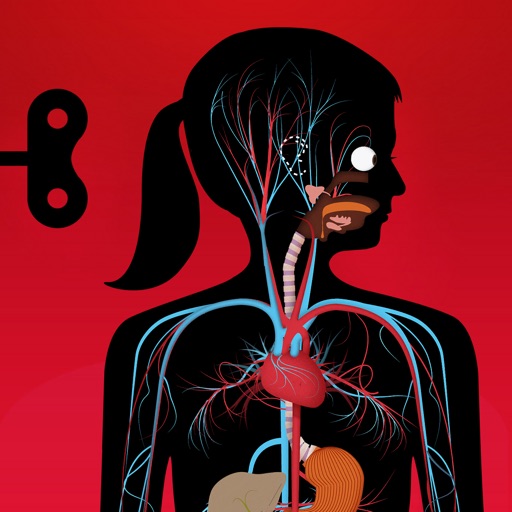



The Human Body by Tinybop is an interactive anatomy exploration app for children ages 4+ on iOS and Android.
The App DNA
What makes this app unique?
It removes the cognitive friction of abstract biological concepts by providing a tactile, self-guided environment that rewards curiosity over rigid level-based progression.
For Children ages 4+ and parents seeking interactive STEM learning tools.
What does it look like?
Key features
Eight systems respond to touch input, serving as the primary retention loop.
Text labels in 50+ languages act as a B2B distribution barrier for international partnerships.
How much does it cost?
The iOS version utilizes a one-time purchase model, while the Android version is free, likely serving as a different acquisition strategy.
Velocity
Dormant developmentopaqueShow more...
The app has been effectively dormant for an extended period, with the most recent release occurring on August 28, 2024. Given that the last update was over 20 months ago, the development momentum is classified as zombie status. There is no evidence of active feature development, live operations, or maintenance cycles. The lack of updates suggests the product is no longer being actively supported on the App Store.
Who built it?
Tinybop
13+ apps tracked · Education
 Space by Tinybop
 The Human Body Lite
 The Robot Factory by Tinybop
 Skyscrapers by Tinybop
 The Earth by Tinybop
 Simple Machines by Tinybop
 Everything Machine by Tinybop
 The Infinite Arcade by Tinybop
 Mammals by Tinybop
 Creature Garden by Tinybop
 Homes by Tinybop
 The Monsters by Tinybop
User Sentiment
What do users think recently?
The recent review mood reads excited. Users appreciate interactive anatomy models provide an engaging educational experience for children interested in science and biology and visual design and animation quality keep young users curious about how human body systems function, but report absence of audio labels for body parts limits the educational value for children who cannot read.
How are ratings & reviews evolving?
What users say, by theme
- Interactive anatomy models provide an engaging educational experience for children interested in science and biology
- Visual design and animation quality keep young users curious about how human body systems function
- Absence of audio labels for body parts limits the educational value for children who cannot read
106 of 810 recent reviews analyzed · high confidence · Excited overall
Read the full review analysisUnlock 2 more frustration themes and 1 user request, each backed by review evidence.
Access the full report for freeCompetition
Competitive landscape for The Human Body by Tinybop
How's the Education market?
The Human Body by Tinybop holds a consistent presence in the Education category, currently ranking #33 in Top Paid (US) and #175 in Grossing (US). The gap between its high discovery rank and lower grossing performance signals that the current one-time purchase model may be under-monetizing the active user base.
Read the market outlookThe rivals identified

By Learny Land
Both apps target the same human biology education segment for children, competing directly for the same user base through interactive anatomy simulations.
- Learny Land includes healthy habit education, whereas Tinybop focuses exclusively on anatomical systems.
- Tinybop offers a 50-language vocabulary library, providing a broader linguistic reach than the rival.
Unlock the head-to-head verdict: where this rival wins, and where it loses.
Access the full report for freeThe Analyst's Read
Key takeaways for The Human Body by Tinybop
Where is it heading?
The early-childhood STEM market is consolidating around apps that offer structured, measurable learning outcomes rather than purely self-guided play. Without a return to active development, Tinybop risks losing its market share to rivals that provide parents with clear evidence of educational progress.
- The 18-month update silence erodes user trust, as the latest release failed to address long-standing audio-label requests.
- New reports of broken sound functionality post-update degrade the core interactive experience, accelerating sentiment decline.
The SWOT
- 50+ language vocabulary library functions as a B2B distribution barrier
- Interactive touch-input models serve as a high-retention core loop
- Granular content-gating for sensitive modules addresses parental concerns
Next best moves
Ship audio-label support for body parts because non-readers report frustration → increase session length for the 4+ segment
+ 1 more prioritized moveThe counter-intuitive read
The app's maintenance-mode status is a strategic choice to preserve a high-quality…
Read the full takeFeature gaps
Integrated progress tracking (available in GeoForge Academy but missing here) +1
Since the last report: The app's competitive outlook has shifted from stable to declining as new reports of broken audio functionality compound long-standing accessibility gaps. While the core feature set remains static, the developer has identified parental content-gating as a necessary pivot to address user concerns.
Bottom line
Restoring basic audio-label functionality would immediately address the primary friction point for the core 4+ user segment, stabilizing the declining sentiment trend.
Unlock 2 critical frictions, 1 market threat, 1 more prioritized move and the analyst’s take.
Access the full report for freeSources
Report last updated