


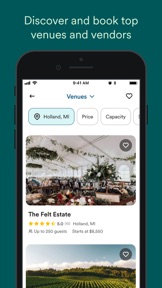




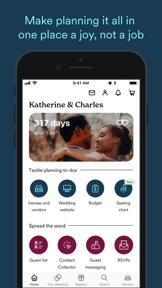


Zola is a wedding planning platform for iOS and Android that combines vendor marketplaces, registry management, and guest logistics.
The App DNA
What makes this app unique?
Couples use Zola to eliminate the cognitive load of managing wedding expenses and guest lists across multiple disconnected tools.
For Engaged couples seeking a centralized platform to manage wedding logistics, vendor bookings, and gift registries.
What does it look like?
Key features
Personalized vendor recommendations filtered by style, location, and budget, generating lead-gen revenue.
Registry management for gifts and cash funds, driving high-intent traffic to the Zola store.
Expense management tool that centralizes financial planning, increasing daily active usage.
How much does it cost?
Zola operates as a free utility to drive high-volume traffic to its e-commerce store and vendor marketplace.
Velocity
Intense developmentShow more...
5 versions in history. Development pace: intense.
Who built it?
Zola
4 apps tracked · Lifestyle
 Zola Baby Registry
 Add to Zola Button
 Add to Zola Baby Button
User Sentiment
What do users think recently?
How are ratings & reviews evolving?
Not enough recent reviews to extract reliable themes yet.
Read the full review analysisCompetition
Competitive landscape for Zola - Wedding Planner
How's the Lifestyle market?
Zola currently holds the #100 Free rank in the US Lifestyle category. The platform's focus on registry-linked e-commerce differentiates its revenue model from standard planning apps.
Read the market outlookThe rivals identified
Unlock the deeper market read.
Access the full report for freeThe Analyst's Read
Key takeaways for Zola - Wedding Planner
Where is it heading?
The wedding planning market is consolidating around platforms that offer a unified experience across all devices. Zola's current trajectory is bifurcated: the iOS experience remains competitive, while the neglect of Android creates a vulnerability that rivals will exploit to capture the broader market.
- The Android build has been stagnant since 2019, which limits user acquisition and signals a lack of platform-wide investment.
- The registry-linked e-commerce model continues to drive high-intent traffic, providing a sustainable revenue stream independent of vendor lead-gen.
The SWOT
- Registry-to-store conversion loop captures transaction fees
- Localized registry features for international markets
Next best moves
Migrate Android codebase to current standards because the current build is abandoned since 2019 → capture lost Android user base
The counter-intuitive read
Zola's lack of Android investment is a strategic…
Read the full takeFeature gaps
Cross-platform parity (available in major competitors but absent here due to abandoned Android build)
Since the last report: Zola has pivoted its market narrative to highlight registry-linked e-commerce as its core revenue engine while formally acknowledging the abandoned Android build as a critical competitive vulnerability.
Bottom line
Zola's registry-linked monetization model provides a clear path to revenue, but the abandoned Android build creates a significant churn risk. Prioritizing cross-platform parity would unlock the full addressable market currently underserved by the legacy Android experience.
Unlock 1 critical friction, 1 market threat and the analyst’s take.
Access the full report for freeFAQ
Is Zola free to use?
How does Zola make money?
Is Zola available on Android?
Sources
Report last updated