


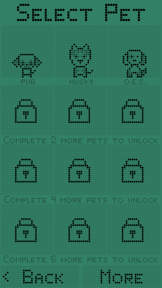


Dogotchi is a retro-style virtual pet simulation game for casual players, available on iOS and Android.
The App DNA
What makes this app unique?
Users hire the app for low-stakes, nostalgic pet care that provides a relaxing daily habit, but the current ad-heavy design conflicts with the intended chill experience.
For Casual gamers interested in retro-style virtual pet simulations and collection-based progression.
What does it look like?
Key features
Unlocks new dog breeds based on the number of pets raised to adult stage
Provides 3 unique mini-games per pet, totaling 12 distinct games across the collection
Allows users to modify the color scheme of the game interface
How much does it cost?
Monetization relies on ad-supported engagement within a free-to-play model, utilizing IAP for potential content or utility unlocks.
Velocity
Steady developmentShow more...
Who built it?
Janusz Jankowski
4 apps tracked · Games
 Wildagotchi: Virtual Pet
 Snake Classic Retro Arcade
 Noise: Green, Brown, White
User Sentiment
What do users think recently?
Fresh user feedback skews excited. Users appreciate nostalgic virtual pet simulation mechanics provide a relaxing experience for long-term fans.
How are ratings & reviews evolving?
What users say, by theme
- Nostalgic virtual pet simulation mechanics provide a relaxing experience for long-term fans
- Excessive advertisement frequency disrupts the core pet interaction and gameplay flow
49 of 49 recent reviews analyzed · high confidence · Excited overall
Read the full review analysisUnlock 1 user request, each backed by review evidence.
Access the full report for freeCompetition
Competitive landscape for Dogotchi: Virtual Pet
How's the Games market?
Dogotchi maintains a 4.49 average rating across 5,792 total ratings, positioning it as a niche retro-simulator. The lack of significant chart momentum relative to market leaders like Pou signals a need for better onboarding to convert casual interest into long-term retention.
Read the market outlookThe rivals identified

By Zakeh Limited
Pou is the undisputed market leader in the virtual pet simulation genre, commanding a massive, multi-generational user base that defines the category's standard.
- Features a deep, expansive mini-game ecosystem that keeps users engaged far beyond basic pet care
- Maintains a massive, long-term community presence that creates a significant barrier to entry for new simulators
- Offers extensive cosmetic customization options that drive long-term retention through personal expression


Unlock the head-to-head verdict: where this rival wins, and where it loses.
Access the full report for freeThe Analyst's Read
Key takeaways for Dogotchi: Virtual Pet
Where is it heading?
The virtual pet market is consolidating around high-engagement titles with deep meta-games, leaving Dogotchi exposed to churn. Without a shift toward onboarding and non-disruptive monetization, the app will struggle to maintain its current rating baseline against more feature-rich competitors.
- Excessive ad frequency during core interactions leads to user deletion, which erodes the long-term retention required for ad-supported revenue models.
- Recent updates focus on minor UI animations and bug fixes, indicating the app is in a maintenance phase rather than active growth.
The SWOT
- Collection-based progression loop drives repeated play cycles
- Retro-style aesthetic creates immediate nostalgic appeal
- Introduce a 'grace period' for pet care to reduce emotional churn
- Implement a tutorial layer to improve early-funnel retention
Next best moves
Ship onboarding tutorial because new-user confusion is a top complaint → reduce early-funnel churn
+ 1 more prioritized moveThe counter-intuitive read
The app's high ad-frequency is not just a…
Read the full takeFeature gaps
Expansive mini-game ecosystem (available in Pou but absent here) +1
Since the last report: The application transitioned to a freemium monetization model and is experiencing negative sentiment pressure from ad-frequency and onboarding gaps.
Bottom line
Dogotchi retains users through nostalgic, simple pet-care loops, but aggressive ad-frequency and lack of onboarding drive high churn, so the PM must prioritize tutorial implementation to stabilize the new-user funnel.
Unlock 2 critical frictions, 2 market threats, 1 more prioritized move and the analyst’s take.
Access the full report for freeReport last updated