


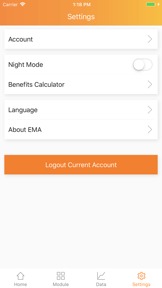


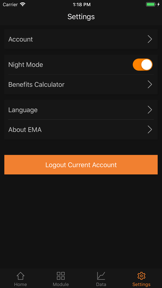


EMA App is a solar energy monitoring tool for APsystems microinverter owners, providing real-time production data and system health insights on iOS and Android.
The App DNA
What makes this app unique?
Users hire the app to verify hardware performance and track environmental savings, serving as a critical touchpoint for long-term system maintenance.
For Residential and commercial owners of APsystems solar microinverter products.
What does it look like?
Key features
Displays live output power data for PV systems via mobile interface.
Aggregates system output data by day, month, year, and lifetime.
Calculates savings in carbon emissions and gasoline based on system output.
Displays installer contact information and system profile details directly in the app.
How much does it cost?
The app functions as a free value-add service for hardware owners, with no direct monetization via subscriptions or ads.
Velocity
Maintenance developmentperformanceShow more...
The app currently ships at a cadence of approximately 0.14 releases per week, placing it firmly in the maintenance tier. Development activity is limited to minor bug fixes and hardware model adaptations rather than new user-facing features or live operations. The release history shows a lack of significant updates over the analyzed period, indicating a focus on stability rather than growth or content expansion.
Who built it?

User Sentiment
What do users think recently?
The recent review mood reads upset. Users appreciate solar production data visualization provides clear insights for users tracking their energy generation performance, but report frequent application crashes and failure to launch following the latest update prevent users from monitoring solar panels.
How are ratings & reviews evolving?
What users say, by theme
- Solar production data visualization provides clear insights for users tracking their energy generation performance
- Frequent application crashes and failure to launch following the latest update prevent users from monitoring solar panels
74 of 366 recent reviews analyzed · high confidence · Upset overall
Read the full review analysisUnlock 2 more frustration themes and 2 user requests, each backed by review evidence.
Access the full report for freeCompetition
Competitive landscape for EMA App
How's the Business market?
EMA App holds a #97 Free rank in its category. The 2.56-star rating on iOS signals significant user dissatisfaction following the latest update.
Read the market outlookThe rivals identified

By Wallbox
Wallbox dominates the energy-conscious homeowner segment by integrating EV charging infrastructure with broader home energy management.
- Provides sophisticated smart charging schedules that dynamically align EV power consumption with peak solar production.
- Maintains a high-traffic, mature platform supporting complex remote charger control and multi-device energy orchestration.
Unlock the head-to-head verdict: where this rival wins, and where it loses.
Access the full report for freeThe Analyst's Read
Key takeaways for EMA App
Where is it heading?
The market for home energy management is consolidating around platforms that offer integrated control over solar, storage, and EV charging. EMA App's current focus on basic PV monitoring leaves it exposed to more comprehensive rivals, and the recent stability issues threaten to permanently damage the user base's trust.
- Frequent launch failures post-update prevent users from accessing production data, which directly accelerates churn to more stable competitors.
- Removal of the per-module view prevents granular hardware diagnostics, leading to increased negative sentiment and user requests for restoration.
The SWOT
- Direct hardware-to-app integration maintains a captive user base
- Integrating automated energy management scheduling addresses dynamic tariff handling requests
Next best moves
Restore per-module performance view because it is the top-requested missing feature → reduce user frustration and support tickets
+ 1 more prioritized moveThe counter-intuitive read
The app's current instability is a higher-leverage threat than the missing features…
Read the full takeFeature gaps
Advanced energy optimization for battery discharge (available in AlphaESS but missing here) +1
Since the last report: The app's utility has further degraded due to the introduction of intrusive advertisements on large-screen devices and a continued decline in sentiment score.
Bottom line
EMA App provides critical hardware visibility but currently fails on basic stability and diagnostic utility, so the PM must prioritize restoring the per-module view and fixing launch crashes to prevent hardware owners from migrating to more comprehensive energy management platforms.
Unlock 2 critical frictions, 1 market threat, 1 more prioritized move and the analyst’s take.
Access the full report for freeSources
- [1] Play Store listing, source
Report last updated