


Ember - Overdrive Distortion




Ember is a multi-stage distortion and fuzz pedal app for guitarists and producers on iOS and Mac.
The App DNA
What makes this app unique?
The app removes the need for complex gain-staging by layering overdrive, fuzz, and compression into a single, one-knob interface.
For Guitarists and music producers seeking professional-grade distortion and fuzz effects for mobile or desktop recording.
What does it look like?
Key features
Combines overdrive, fuzz, and compression into a single signal path, replacing the need for multiple physical pedals
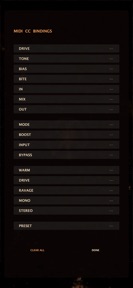
Maps external MIDI footswitches and controllers to pedal parameters, voices, and preset recall
Functions as an Audio Unit plugin within hosts like GarageBand, Logic Pro, and AUM
How much does it cost?
Paid model at $1.99 per unit, leveraging a one-time purchase strategy without subscriptions or bundles.
Velocity
Maintenance developmentperformanceShow more...
The app currently operates at a maintenance cadence, with only one release shipped in the last 43 days. Development is focused exclusively on minor stability improvements rather than new features or content. The release history shows no evidence of active feature development or live operations, suggesting a focus on long-term stability over iterative growth.
Who built it?
Joshua Rideout
10 apps tracked · Music
 Slab - Plate Reverb
 Lovely - Rotary Speaker
 Alara - Reactor
 VividCut
 Dr. Robo - Tremolo
 Serphonica
 Coil - Spring Reverb
 Reel - Motion Picture Sound
 CityRat
User Sentiment
What do users think recently?
Review voice lately leans thrilled. Users appreciate the user interface design provides a clear and accessible layout for music production tasks.
How are ratings & reviews evolving?
What users say, by theme
- The user interface design provides a clear and accessible layout for music production tasks
1 of 1 recent reviews analyzed · limited sample
Read the full review analysisCompetition
Competitive landscape for Ember - Overdrive Distortion
How's the Music market?
Ember occupies a niche in the Music category as a specialized hardware-replacement tool. Its $1.99 price point targets users seeking professional utility without the recurring cost of subscription-based audio suites.
Read the market outlookThe rivals identified
Unlock the deeper market read.
Access the full report for freeThe Analyst's Read
Key takeaways for Ember - Overdrive Distortion
Where is it heading?
The mobile audio market is increasingly favoring apps that integrate directly into professional DAW workflows. Ember's AUv3 support keeps it relevant, but the lack of recent feature expansion suggests a risk of falling behind more active competitors. The PM should prioritize conversion-focused work to maximize the current one-time purchase model before the product lifecycle enters a decline phase.
- The 43-day update cadence suggests a maintenance-focused posture, which may limit the app's ability to respond to OS-level audio changes.
- The AUv3 integration ensures Ember remains compatible with professional DAW workflows, maintaining its utility for the core producer audience.
The SWOT
- Multi-stage signal chain replaces three physical pedals, reducing gain-staging complexity
- Integration with professional DAW workflows via AUv3 provides a path for expansion
Next best moves
A/B test the browser-based demo placement because it is the primary conversion lever → increase install-to-purchase ratio
The counter-intuitive read
Ember's lack of a subscription model is a…
Read the full takeBottom line
Ember's multi-stage signal chain offers a clear value proposition for mobile producers, but the current maintenance-only cadence risks losing momentum. Focusing on the browser-based demo conversion will unlock the revenue potential of the one-time purchase model.
Unlock 1 critical friction, 1 market threat and the analyst’s take.
Access the full report for freeFAQ
Is Ember suitable for professional music production?
Does Ember require a subscription?
Can I try Ember before buying it?
Sources
- [1] App Store
Report last updated