




Emporia Energy is a home energy monitoring app that provides real-time circuit-level usage data and efficiency recommendations for homeowners.
The App DNA
What makes this app unique?
Users hire the app to reduce electricity costs and manage solar or EV loads through hardware-integrated data analysis.
For Homeowners seeking to reduce electricity costs, solar panel owners, and EV drivers looking to manage charging loads.
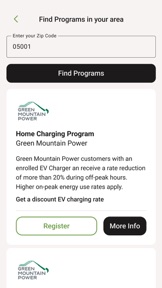
What does it look like?
Key features
Tracks electricity usage down to individual circuits and appliances via hardware integration
Automates EV charging levels based on existing electrical panel capacity
Provides natural language conversation interface to query home energy data
How much does it cost?
Monetization is driven by hardware sales rather than software subscriptions.
Velocity
Maintenance developmentperformanceShow more...
The app currently ships at a cadence of approximately 1 release per week, but all recent activity is limited to minor bug fixes and stability improvements. There is no evidence of new features, content, or live-ops events in the observed data. Development appears to be in a maintenance phase focused exclusively on technical debt and issue resolution.
Who built it?
User Sentiment
What do users think recently?
How are ratings & reviews evolving?
Not enough recent reviews to extract reliable themes yet.
Read the full review analysisCompetition
Competitive landscape for Emporia Energy
How's the Lifestyle market?
Emporia Energy maintains a 4.82 rating on iOS and 4.69 on Android, positioning itself as a high-utility tool for hardware-integrated energy management. The absence of a subscription model differentiates it from utility-scale competitors but limits the software-only revenue potential.
Read the market outlookThe rivals identified

By Shenzhen Poweroak Newener Co., Ltd.
BLUETTI competes directly for the hardware-centric energy management market, targeting users who manage both home energy and portable power storage systems.
- Offers integrated portable power station management which Emporia lacks in its core home monitoring suite
- Stronger focus on remote scheduled charging for mobile battery units compared to Emporia's fixed-home focus


Unlock the head-to-head verdict: where this rival wins, and where it loses.
Access the full report for freeThe Analyst's Read
Key takeaways for Emporia Energy
Where is it heading?
The home energy market is shifting toward automated cost-optimization, where apps that actively manage tariffs and battery behavior are gaining share. Emporia remains advantaged by its hardware-integrated data, but it must evolve from a monitoring tool to an active management platform to prevent erosion by competitors.
- Competitors like GivEnergy are shipping automated tariff-switching, which pulls cost-conscious users away from Emporia's manual monitoring tools.
- The existing hardware-integrated monitoring provides a stable retention loop that prevents mass churn to software-only alternatives.
The SWOT
- Hardware-linked circuit monitoring creates high switching costs
- AI assistant provides natural language data access
- Free app access drives hardware adoption
- Integrate VPP revenue tracking for solar owners
- Expand into proactive leak prevention
- Add automated tariff-switching logic
Next best moves
Ship automated tariff-switching logic because competitors like GivEnergy use it to minimize costs → increase user retention.
The counter-intuitive read
The hardware-centric model is a strength, not a weakness…
Read the full takeFeature gaps
Automated tariff-switching (available in GivEnergy) +2
Since the last report: The app's strategic focus has moved from fixing UI navigation friction to addressing competitive gaps in automated tariff-switching and recurring revenue models.
Bottom line
Emporia Energy holds a strong hardware-linked position, but the lack of automated tariff-switching leaves it vulnerable to cost-optimized competitors, so the PM should prioritize tariff-automation features to defend the user base.
Unlock 3 critical frictions, 3 market threats and the analyst’s take.
Access the full report for freeReport last updated