Report updated Jun 25, 2026
Eye Chart Pro Remote Control
For eye care professionals and clinicians using iPad-based vision testing software.
Eye Chart Pro Remote Control is a challenged medical app that is free with in-app purchases. With a 3.0/5 rating from 5 reviews, it faces significant user friction. Users particularly appreciate the core eye chart functionality provides a usable free tool for basic clinical vision testing, though remote control connectivity fails consistently between devices after recent operating system updates remains a common concern.
What is Eye Chart Pro Remote Control?
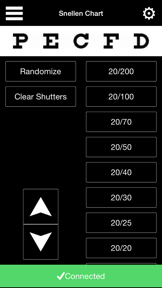
Eye Chart Pro Remote Control is a companion utility for iPad-based vision testing, allowing clinicians to manage charts via iPhone.
Clinicians hire this app to enable wireless control of vision charts, reducing the need for manual interaction with the primary display device during patient exams.
Current Momentum
v2.0 · 18mo ago
Zombie- Ships only minor bug fixes.
- No new features released recently.
Active Nemesis
Fragmented niche
No dominant direct rival identified yet — see Other Rivals below.
Other Rivals
7-Day Rank Pulse 🇺🇸
MedicalNo ranking data
Rating Pulse 🇺🇸
Recent User Mood
What makes this app unique?
What Does It Look Like?
Loading...
What Are The Key Features?
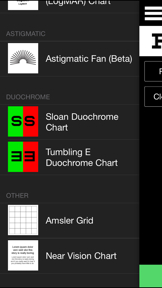
Turns iPhone or iPod Touch into a wireless controller for iPad-based eye charts.
Connects with Eye Chart Pro, Eye Chart Premium, and Eye Chart Professional iPad apps.
Access to advanced remote control features via the primary iPad app.
How much does it cost?
- Free remote control preview
- Unlockable advanced functionality via primary iPad app
Freemium model uses the remote app as a free utility to drive adoption of the primary paid iPad medical software.
Who Built It?
Enrichment in progress
Publisher profile available very soon
What other apps does Dok make?
EyeChart
Medicina
Eye Chart HD
Medicina
What do users think recently?
Low confidence · 8 reviews analyzed
How did the latest release land?
What is the recent mood?
Recent user voice shows a frustrated sentiment. Users appreciate the core eye chart functionality provides a usable free tool for basic clinical vision testing, but report remote control connectivity fails consistently between devices after recent operating system updates and monetization model feels deceptive because paid features stop functioning after limited usage.
Limited review volume (8 reviews). Sentiment analysis will deepen as more data lands.
View the full user-sentiment analysis
Mood gauge, ratings & review-volume history, every praise / complaint / request, and sentiment over time.
What is the competitive landscape for Eye Chart Pro Remote Control?
Where is it available?
Localized markets (1)
How's The Medical Market?
How does it evolve in the Medical market?
The app maintains a 3-star rating across 8 reviews, reflecting significant stability issues. The lack of recent functional updates relative to the competitive landscape signals a loss of market relevance.
Rank progression
4 active rankings tracked — 30-day window
Which niche is Eye Chart Pro Remote Control in?
to control eye examination charts remotely
Explore the full Vision Testing Companions niche
Every app in this space — 1 tracked, the niche's live rankings, and Marlvel's editorial take on the job-to-be-done.
The rivals identified
Same space(6)
This app competes by offering specialized diagnostic screening, specifically targeting the Ishihara method for color vision assessment.
Differentiators
- Generates personalized vision status reports that provide users with tangible documentation of their screening results.
- Includes a dedicated professional screening mode that allows for more rigorous testing than standard consumer-grade apps.
This app captures the casual segment of the vision testing market by offering quick, accessible tests for both general vision and color blindness.
Differentiators
- Bundles color blindness testing directly into the core experience, providing higher utility for general health-conscious users.
- Maintains a simplified, low-friction UX that prioritizes speed over the complex remote-control setup required by our app.
iVisionTester targets the same medical category by providing a structured, multi-step vision screening process for non-professional users.
Differentiators
- Implements a five-step testing process that guides users through a comprehensive screening workflow without needing external hardware.
- Features a visual sensitivity ranking system that provides immediate, actionable feedback on user vision performance.
This app competes for the same clinical and home-screening audience by offering professional-grade vision testing tools that mirror the utility of the Eye Chart Pro ecosystem.
Differentiators
- Provides optician-gated testing protocols which adds a layer of clinical credibility missing from our remote control.
- Focuses on precision measurement tools that cater to users seeking diagnostic-level accuracy rather than simple remote functionality.
This app competes for the same vision-conscious demographic by providing hardware-integrated tools for pupillary distance and vision tracking.
While more clinical, it competes for the medical professional's screen time by integrating vision-related documentation into a broader clinical workflow.
New entrants(2)
While focused on oncology, this app represents a new category entrant that leverages institutional authority to provide medical guidance.
Differentiators
- Leverages deep institutional trust and member-only authentication to provide authoritative clinical guidelines that consumer apps cannot match.
A modern entrant that threatens to disrupt the space by combining professional data integration with a web-based demo experience.
Differentiators
- Offers a web-based demo that eliminates the need for app downloads, significantly lowering the barrier to user acquisition.
Compare Eye Chart Pro Remote Control against every rival
All rivals in one side-by-side table — identity, store metrics, ratings & sentiment, and strategic intel — plus a head-to-head page for each.
The outtake for Eye Chart Pro Remote Control
Strengths to defend, gaps to attack
Core Strengths
- Cross-app integration functions as a suite-retention mechanism for clinical practices
Critical Frictions
- Connectivity failures between devices after OS updates
- Monetization friction due to pay-to-unlock feature limitations
Growth Levers
- Visual feedback integration on remote interface to match main display
Market Threats
- Web-based vision testing entrants lowering acquisition barriers
What are the next best moves?
Rebuild connectivity module because remote control failure is the #1 complaint → restore core clinical utility
Connectivity failure is the top-cited complaint in sentiment analysis.
Trade-off: Pause all UI-polish sprints — connectivity is the primary churn driver.
Audit pay-to-unlock logic because users report deceptive feature access → reduce negative sentiment
Users report purchased features stop functioning after limited use.
Trade-off: Same-quarter capacity available — no major lever displaced.
A counter-intuitive read
The app's primary risk is not a lack of features, but its reliance on a multi-device hardware bridge that is increasingly obsolete compared to web-based diagnostic tools.
Feature Gaps vs Competitors
- Real-time visual feedback on remote (available in user requests but absent here)
- Web-based demo experience (available in vision.app but absent here)
Key Takeaways
The app provides essential clinical utility but suffers from critical connectivity failures, so the PM must prioritize a stability audit to prevent further erosion of the professional user base.
Where Is It Heading?
Declining
The clinical vision testing market is shifting toward web-based, hardware-agnostic solutions that offer higher reliability. This app remains exposed due to its reliance on outdated multi-device connectivity, so revenue growth is unlikely without a fundamental shift in technical architecture.
Persistent connectivity failures between devices after OS updates erode clinical trust, leading to a declining user sentiment trend.
Deceptive monetization reports regarding feature access create long-term brand damage, which will likely accelerate churn to more reliable competitors.