




FasCard is a lifestyle utility app for iOS and Android that allows users to manage laundry accounts, monitor machine status, and initiate cycles remotely.
Product velocity
Maintenance
Daily rank 🇺🇸
—
Lifestyle
Sentiment
3.0
539 reviews
Nemesis
Fragmented field
The App DNA
What makes this app unique?
Users hire FasCard to eliminate the need for physical coins and to track laundry progress remotely, reducing the time spent waiting in shared laundry facilities.
For Laundromat customers who use facilities equipped with FasCard hardware and property managers overseeing laundry operations.
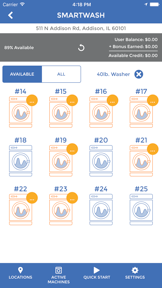
What does it look like?
Key features
Initiate laundry cycles by scanning a machine-specific QR code or identifier with the phone camera
View status of washers and dryers in the facility via the app interface
Receive push or email alerts when a laundry cycle finishes
How much does it cost?
The app functions as a free utility to support the B2B hardware sales model, where revenue is generated from laundromat owners via payment processing and system management fees.
Velocity
Maintenance developmentUX improvementsperformanceShow more...
The app has released only two updates in the last month, averaging approximately 0.5 releases per month. Given the limited history and the nature of the release notes, the development cadence is classified as maintenance. The latest release focused on a visual refresh, while the previous update was limited to security improvements. There is no evidence of a live-ops strategy or high-frequency feature deployment.
Who built it?
User Sentiment
What do users think recently?
Recent user voice shows a frustrated sentiment. Users appreciate convenient laundry cycle notifications help users track progress without waiting in the laundry room, but report inability to add laundry locations or scan qr codes prevents users from starting machines.
How are ratings & reviews evolving?
What users say, by theme
- Convenient laundry cycle notifications help users track progress without waiting in the laundry room
- Inability to add laundry locations or scan QR codes prevents users from starting machines
84 of 101 recent reviews analyzed · high confidence · Frustrated overall
Read the full review analysisUnlock 1 more frustration theme and 1 user request, each backed by review evidence.
Access the full report for freeCompetition
Competitive landscape for FasCard
How's the Lifestyle market?
FasCard competes in the Lifestyle category, maintaining a low rating baseline across 539 total ratings. The discrepancy between its utility-focused feature set and the negative sentiment trend indicates that functional instability is currently negating its competitive advantage.
Read the market outlookThe rivals identified
Unlock the deeper market read.
Access the full report for freeThe Analyst's Read
Key takeaways for FasCard
Where is it heading?
The laundry management market is consolidating around stable, hardware-integrated solutions, leaving FasCard exposed due to its reliance on legacy authentication and manual payment flows. Unless the team pivots from UI maintenance to core functional reliability, the current churn rate will accelerate as users migrate to more stable alternatives.
- Persistent authentication failures in the latest release block account access, which directly compounds the negative sentiment trend already visible in reviews.
- Lack of payment persistence forces manual entry for every transaction, increasing user friction and reducing the likelihood of repeat fund replenishment.
The SWOT
- Loyalty program integration incentivizes repeat usage at specific locations
- Pre-paid balance management increases user switching costs
- Education and multi-family housing partnerships provide untapped B2B distribution
- Adding in-app support would reduce reliance on external management
Next best moves
Rebuild authentication flow because login loops are the top-cited complaint → reduce churn
+ 1 more prioritized moveThe counter-intuitive read
The app's primary risk is not feature parity with competitors…
Read the full takeFeature gaps
Integrated 24/7 in-app support (available in appWash by Miele) +1
Since the last report: The product's core technical issues persist, but the SWOT analysis has been updated to emphasize loyalty and balance management as primary strengths.
Bottom line
FasCard provides essential facility management tools, but critical authentication and payment friction drive high churn, so the PM must prioritize functional stability over UI updates to protect the user base.
Unlock 2 critical frictions, 2 market threats, 1 more prioritized move and the analyst’s take.
Access the full report for freeReport last updated