


Financial Payment Tracker
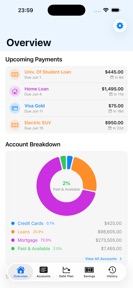

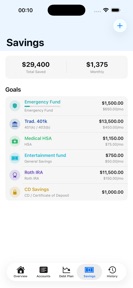

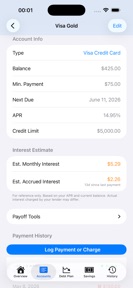

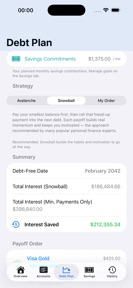


Financial Payment Tracker is a privacy-focused debt management tool for iOS that allows users to track balances, APR, and payoff strategies manually.
The App DNA
What makes this app unique?
The app removes the security friction of connecting bank accounts, serving users who prefer manual control over their sensitive financial information.
For Privacy-conscious individuals managing personal debt who prefer manual tracking over automated bank-connected finance apps.
What does it look like?
Key features
All financial data resides on the device with no server-side storage or third-party analytics.
Calculates payoff timelines using Avalanche or Snowball methods to visualize interest savings.
Provides read-only access to upcoming payments and a watch face complication for due-date countdowns.
How much does it cost?
The app is currently free with no visible subscription or IAP gates, positioning it as a privacy-focused utility.
Velocity
Maintenance developmentUX improvementsperformanceShow more...
The app currently operates on a maintenance cadence, with only one release shipped in the last 50 days. Development is focused on stability and minor UX refinements, specifically addressing iCloud synchronization reliability and settings layout consistency. There is no evidence of a shift toward live operations or high-frequency feature delivery. The current pace suggests a focus on long-term stability rather than rapid iteration.
Who built it?
User Sentiment
What do users think recently?
How are ratings & reviews evolving?
Not enough recent reviews to extract reliable themes yet.
Read the full review analysisCompetition
Competitive landscape for Financial Payment Tracker
How's the Finance market?
Financial Payment Tracker operates as a privacy-focused utility in the Finance category, relying on manual entry to differentiate from automated aggregators. The lack of public ratings suggests a nascent user base, requiring a focus on organic discovery via privacy-centric messaging.
Read the market outlookThe rivals identified
Unlock the deeper market read.
Access the full report for freeThe Analyst's Read
Key takeaways for Financial Payment Tracker
Where is it heading?
The personal finance market is consolidating around automated aggregators, leaving a clear opening for privacy-first, manual-entry tools. Financial Payment Tracker is well-positioned to serve this segment if it can maintain its core utility without succumbing to the feature bloat of its competitors.
- The 50-day maintenance cadence indicates a stable, low-touch product lifecycle rather than an active growth phase.
- Privacy-first positioning remains a growing market segment, providing a clear, non-competitive space against data-heavy automated finance apps.
The SWOT
- Local-first architecture removes third-party data exposure risks
- Debt-payoff calculators provide actionable planning without bank integration
- Expanding manual entry to custom savings goals increases daily utility
- Localized marketing in privacy-sensitive regions captures wary users
Next best moves
Ship custom savings goal tracking because manual entry is the primary user workflow → increase daily active usage
+ 1 more prioritized moveThe counter-intuitive read
The lack of bank connectivity is not a limitation but a retention mechanism…
Read the full takeSince the last report: The developer pivoted its product roadmap from infrastructure-heavy tasks like CSV imports to user-facing engagement features like custom savings goals and onboarding flow optimization.
Bottom line
Financial Payment Tracker's privacy-first design provides a defensible niche, but the manual-entry model requires consistent utility to retain users. Pivoting toward broader financial goal tracking would unlock higher daily engagement, moving the app beyond a simple debt-calculator utility.
Unlock 2 critical frictions, 2 market threats, 1 more prioritized move and the analyst’s take.
Access the full report for freeSources
- [1] App Store
- [2] Developer website, source
Report last updated