


Galápagos Marine Life
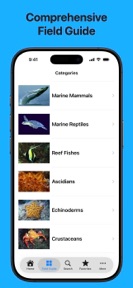


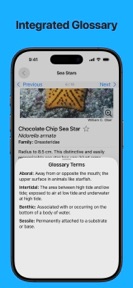


Galápagos Marine Life is a free digital field guide for the Galápagos Archipelago, providing offline species profiles for researchers and travelers on iOS and Android.
The App DNA
What makes this app unique?
The app removes the connectivity dependency required by standard mobile reference tools, serving users who need reliable identification data in remote field environments where internet access is unavailable.
For Researchers, students, and travelers interested in the marine biodiversity of the Galápagos Archipelago.
What does it look like?
Key features
Full access to species profiles and search functionality without an active internet connection.
Detailed information on marine invertebrates, fishes, reptiles, and mammals unique to the Galápagos Archipelago.
How much does it cost?
The app operates as a non-profit distribution tool funded by the Galápagos Conservancy to support conservation awareness.
Velocity
Maintenance developmentperformanceUX improvementsinternationalizationShow more...
Galápagos Marine Life maintains a maintenance-level cadence, with the latest release arriving 68 days after the previous update. Development is currently focused on minor stability, performance, and UI refinements rather than new feature expansion. The release history shows a stable but infrequent update pattern, typical of a utility app that has reached feature maturity. No new content or major functional changes have been introduced in the recent window.
Who built it?
Galapagos Conservancy
2 apps tracked · Reference
 Shark Count Galapagos
User Sentiment
What do users think recently?
How are ratings & reviews evolving?
Not enough recent reviews to extract reliable themes yet.
Read the full review analysisCompetition
Competitive landscape for Galápagos Marine Life
How's the Reference market?
Galápagos Marine Life maintains a specialized position in the Reference category, serving as a non-profit conservation tool. The absence of monetization and ads distinguishes the app from commercial field guides that rely on ad-inventory or subscription gates.
Read the market outlookThe rivals identified
Unlock the deeper market read.
Access the full report for freeThe Analyst's Read
Key takeaways for Galápagos Marine Life
Where is it heading?
The market for specialized, offline scientific reference tools remains stable, as these apps serve a distinct need that general-purpose identification tools often fail to address. Galápagos Marine Life is well-positioned to maintain its user base by focusing on data integrity, provided it continues to serve the core needs of field researchers.
- The app maintains a steady maintenance-only release cadence, ensuring stability for existing users without the churn risk of frequent, breaking feature changes.
The SWOT
- Offline-first architecture enables field utility in remote regions without connectivity.
- Non-profit funding model eliminates ad-based friction for users.
- Integration of user-submitted sightings could build a community-driven data layer.
Next best moves
Ship user-submitted sighting logs because the current static guide lacks community-driven data → increase app engagement
The counter-intuitive read
The app's maintenance-mode status is a feature, not a bug: in scientific reference…
Read the full takeSince the last report: The analysis shifted from a passive maintenance outlook to an active recommendation for community-driven data features to mitigate the threat of AI-based identification tools. This pivot addresses the long-term viability of the app's static content model.
Bottom line
Galápagos Marine Life serves its conservation mission through reliable offline access, but the lack of community-driven data limits its long-term growth. Integrating user-submitted sightings would unlock a dynamic data layer that static guides cannot match, ensuring continued relevance against AI-driven identification tools.
Unlock 2 critical frictions, 1 market threat and the analyst’s take.
Access the full report for freeFAQ
Is Galápagos Marine Life free to use?
Does Galápagos Marine Life work without an internet connection?
What kind of species are included in the guide?
Sources
- [1] Galapagos Conservancy website, source
Report last updated