



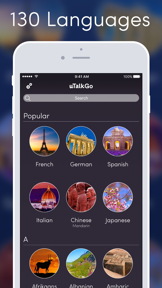
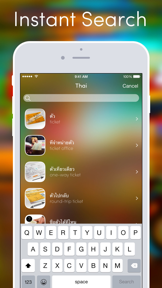

Go Talk is a mobile language-learning tool for travelers and casual learners, structured around topic-based vocabulary packs and native-speaker audio.
The App DNA
What makes this app unique?
Users hire Go Talk to acquire specific, travel-ready phrases quickly without needing an active internet connection, solving the friction of accessing language tools in transit.
For Travelers and language learners seeking practical, everyday vocabulary and pronunciation practice.
What does it look like?
Key features
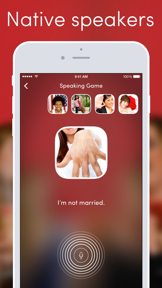
All words and phrases are recorded by native speakers to ensure correct pronunciation
Users record their own voice to compare pronunciation against native speaker audio
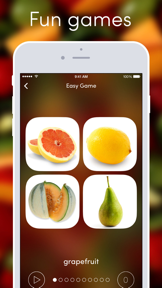
Each word or phrase is paired with an image to link visual and linguistic memory
How much does it cost?
Freemium model uses a free entry point with modular IAP for additional content packs and premium features.
Velocity
Dormant developmentopaqueShow more...
The app has not received a single update in over six years, indicating that development has ceased. There is no evidence of active maintenance, feature development, or live operations. The project is classified as a zombie app due to the extreme duration of inactivity.
Who built it?
EuroTalk
13+ apps tracked · Education
 Learn Swahili
 Learn Tibetan
 Learn Dari - EuroTalk
 Learn Flemish
 Learn Haitian Creole: EuroTalk
 Learn Maori - EuroTalk
 Learn Latin
 Learn Slovenian - EuroTalk
 Lernen Sie Rätoromanisch
 Learn Swiss German - EuroTalk
 Learn Quechua - EuroTalk
 Learn French - EuroTalk
User Sentiment
What do users think recently?
How are ratings & reviews evolving?
Not enough recent reviews to extract reliable themes yet.
Read the full review analysisCompetition
Competitive landscape for Go Talk - Learn languages
How's the Education market?
Go Talk maintains a 4.71 rating on iOS, anchored by a 2,360-count review base. The lack of updates since 2020 suggests a maintenance-mode posture that risks losing ground to high-cadence AI competitors.
Read the market outlookThe rivals identified

By AIBY
Fluentika competes directly for the language-learning demographic by leveraging AI-driven conversational practice, which challenges Go Talk's traditional, EuroTalk-style structured curriculum.
- Utilizes generative AI for real-time role-play scenarios that adapt dynamically to user conversation inputs
- High-frequency release cadence ensures the app remains current with modern AI language learning trends
- Focuses on conversational fluency through instant feedback loops rather than static vocabulary-based learning modules
 Kana TownContender
 Speech Sounds VisualizedContender
 Korean Dungeon: K-Word 1000Contender
 LP Ancient GreekContender
Unlock the head-to-head verdict: where this rival wins, and where it loses.
Access the full report for freeThe Analyst's Read
Key takeaways for Go Talk - Learn languages
Where is it heading?
The language learning market is shifting toward generative AI-driven conversational practice, leaving static, vocabulary-based tools like Go Talk increasingly isolated. Without a pivot to interactive features, the app risks becoming a legacy reference utility rather than a primary learning destination.
- The absence of feature updates since 2020 allows AI-first rivals to capture the conversational fluency segment, which accelerates user churn toward more interactive platforms.
The SWOT
- 30-million-customer EuroTalk legacy sustains brand trust
- Offline-first architecture enables utility in low-connectivity travel environments
- B2B partnerships with travel agencies
- Wearable integration for on-the-move users
Next best moves
Ship AI-driven conversational practice because competitors like Fluentika use it to drive retention → increase daily active usage
The counter-intuitive read
The lack of updates since 2020 is not…
Read the full takeFeature gaps
Real-time AI conversational role-play (available in Speak English with Fluentika) +1
Since the last report: The app has pivoted its positioning to leverage its historical brand legacy while formally identifying the lack of generative AI as a critical competitive weakness.
Bottom line
Go Talk maintains a stable niche through its travel-ready, offline-first design, but the lack of generative AI features leaves it exposed to modern competitors, so the team must prioritize an AI-driven conversational module to prevent churn.
Unlock 2 critical frictions, 2 market threats and the analyst’s take.
Access the full report for freeReport last updated