


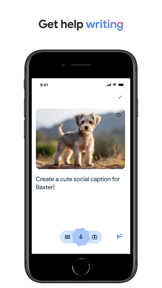
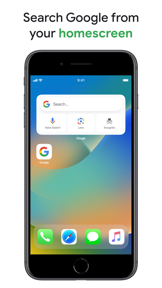


The Google app is a search utility for Android and iOS providing text, voice, and visual information retrieval.
The App DNA
What makes this app unique?
Users hire the app for immediate access to information and visual identification, serving as a primary research tool that requires minimal friction to maintain daily utility.
For General mobile users seeking information, visual identification, and personalized news updates across Android and iOS platforms.
What does it look like?
Key features
Generative AI interface providing conversational responses to complex queries with web-linked citations
Gesture-based visual search overlay allowing users to identify screen content without switching applications
Camera-based visual search for product identification, text translation, and homework assistance
How much does it cost?
The app operates as a free-to-use utility that monetizes through ad-inventory and data-driven search engagement.
Velocity
Intense developmentperformanceopaqueShow more...
The app maintains an intense release cadence of approximately 0.8 to 1 release per week. Despite the high frequency of updates, the release notes are consistently opaque, providing no insight into specific feature development or content changes. This pattern suggests that the development team utilizes server-side configuration and feature flagging to deploy updates, bypassing traditional App Store changelog documentation. The development trend remains stable and high-velocity, focusing on continuous performance optimization.
Who built it?
13+ apps tracked · Utilities
 Google Family Link
 Google Earth
 YouTube Kids
 Google TV: Watch Movies & TV
 Google Docs
 Photomath
 Gboard – the Google Keyboard
 Google One
 Google Keep - Notes and lists
 Google News
 Snapseed: Photo Editor
 Google NotebookLM
User Sentiment
What do users think recently?
The recent review mood reads mixed. Users appreciate comprehensive information access replaces the need for physical reference books and dictionaries, but report aggressive notification prompts following the latest update disrupt the user experience.
How are ratings & reviews evolving?
What users say, by theme
- Comprehensive information access replaces the need for physical reference books and dictionaries
- Aggressive notification prompts following the latest update disrupt the user experience
100 of 296 recent reviews analyzed · high confidence · Mixed overall
Read the full review analysisUnlock 1 user request, each backed by review evidence.
Access the full report for freeCompetition
Competitive landscape for Google
How's the Utilities market?
Google sits #1 Free in Utilities and #7 Free Overall in the US market. The high volume of ratings (29M+ on Android) confirms its status as a default utility, though the mixed sentiment trend signals that its dominance is increasingly vulnerable to AI-native challengers.
Read the market outlookThe rivals identified

By Microsoft Corporation
The primary direct rival in general search and AI assistance, leveraging Microsoft Copilot to challenge Google's search dominance.
- Native DALL-E 3 image generation integrated directly into the search chat interface
- Microsoft Rewards system that gamifies search to drive daily active usage and retention
 DuckDuckGo, Duck.ai, & VPNContender
 Perplexity: Ask AnythingContender
 Brave Browser & Search EngineContender
 Arc Search — Find it, FasterContender
Unlock the head-to-head verdict: where this rival wins, and where it loses.
Access the full report for freeThe Analyst's Read
Key takeaways for Google
Where is it heading?
The search market is consolidating around AI-native synthesis, and Google's current update cadence prioritizes feature expansion over stability. This strategy exposes the app to churn as users seek more predictable, privacy-focused alternatives for daily research.
- Forced notification prompts in the latest release disrupt the user experience, which compounds the rating drag already visible on Android.
- User dissatisfaction with AI-driven search results signals that the current generative integration is failing to meet core information-retrieval expectations.
The SWOT
- System-level Android integration replaces default assistant on hardware-mapped triggers
- 21-language visual library functions as a B2B distribution moat into international partnerships
- Editors' Choice badge across five markets sustains organic install velocity
- Education partnerships untapped as B2B distribution
- Wearable integration for hands-free visual search
- Offline-mode expansion for high-intent research
Next best moves
Audit notification logic because forced prompts are the top complaint → reduce churn-inducing friction
+ 1 more prioritized moveThe counter-intuitive read
The 'AI race' framing misses that Google's moat is OS-level access…
Read the full takeFeature gaps
Native DALL-E 3 image generation (available in Microsoft Bing Search) +1
Since the last report: The app's competitive position is under pressure as aggressive AI integration and intrusive notification prompts drive a decline in user sentiment and rating.
Bottom line
Google maintains its category lead through deep OS-level integration, but the aggressive push of generative AI features creates friction that invites churn, so the PM must prioritize user-controlled toggles to stabilize sentiment.
Unlock 3 critical frictions, 3 market threats, 1 more prioritized move and the analyst’s take.
Access the full report for freeReport last updated