


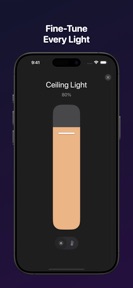
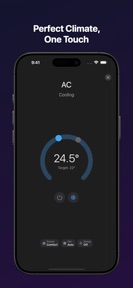


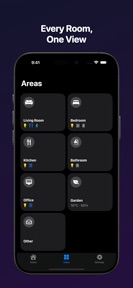
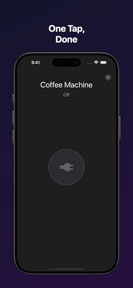
Hemera is a native, open-source Home Assistant client for iOS and iPadOS that provides a customizable, real-time smart home dashboard.
The App DNA
What makes this app unique?
It removes the latency and web-view overhead of the official Home Assistant app, serving users who prioritize local-first performance and privacy.
For Home Assistant users seeking a native, privacy-focused iOS client for smart home management.
What does it look like?
Key features
Maintains a persistent connection to the Home Assistant server for instant state changes without manual polling.
Allows users to pin, reorder, and resize device tiles on a grid layout.
Adjusts UI elements between compact grids for iPhone and multi-column views for iPad.
How much does it cost?
Hemera is distributed as free, open-source software under the MIT license with no monetization mechanisms.
Velocity
Maintenance developmentperformanceopaqueShow more...
Hemera for Home Assistant maintains a maintenance-level cadence, with the latest release arriving 27 days ago. The development history shows a focus on minor stability improvements rather than new feature rollouts. The publisher utilizes opaque release notes, providing no specific insight into the technical changes or roadmap. The app has remained in this maintenance state throughout the observed window.
Who built it?
User Sentiment
What do users think recently?
How are ratings & reviews evolving?
Not enough recent reviews to extract reliable themes yet.
Read the full review analysisCompetition
Competitive landscape for Hemera for Home Assistant
How's the Lifestyle market?
Hemera operates as a niche, open-source alternative in the Lifestyle category, currently maintaining a 4+ content rating.
Read the market outlookThe rivals identified
Unlock the deeper market read.
Access the full report for freeThe Analyst's Read
Key takeaways for Hemera for Home Assistant
Where is it heading?
The smart home client market is consolidating around the official Home Assistant app's native improvements, leaving third-party clients like Hemera in a defensive posture. Hemera must pivot toward high-utility, platform-specific integrations like widgets to maintain relevance for its power-user base.
- The maintenance-only release cadence suggests the project is stable but lacks the velocity to compete with official app feature updates.
- The open-source, no-tracking model creates a defensible position for privacy-conscious users that is unlikely to be replicated by corporate-backed alternatives.
The SWOT
- Native SwiftUI architecture ensures low-latency UI responsiveness
- Persistent WebSocket connection eliminates manual polling overhead
- Open-source MIT license removes data-tracking concerns
- Implement iOS home screen widgets for quick-access control
- Develop watchOS companion app for wearable smart home management
Next best moves
Ship iOS home screen widgets because they are the standard for quick-access control → increase daily active usage
+ 1 more prioritized moveThe counter-intuitive read
The lack of monetization is Hemera's strongest retention lever…
Read the full takeSince the last report: Hemera has transitioned from a passive maintenance state to an active development roadmap, specifically identifying watchOS expansion and social proof as critical growth levers.
Bottom line
Hemera's native performance provides a clear value proposition for power users, but the lack of social proof and slow update cadence risk stagnation. Prioritizing high-visibility features like home screen widgets would unlock the utility needed to gain traction against the official client.
Unlock 2 critical frictions, 1 market threat, 1 more prioritized move and the analyst’s take.
Access the full report for freeFAQ
Is Hemera free to use?
How does Hemera compare to the official Home Assistant app?
Does Hemera track my smart home data?
What are some alternatives to Hemera?
Sources
- [1] App Store, source
Report last updated