

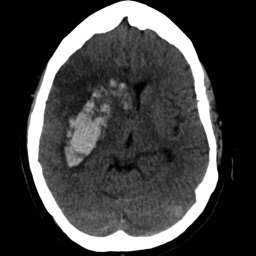
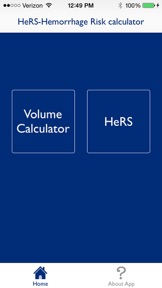
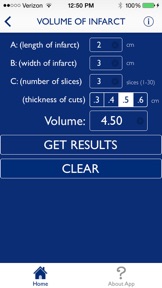


HeRS is a medical reference tool developed by Johns Hopkins Mobile Medicine designed to calculate the probability of hemorrhagic transformation in acute ischemic stroke patients. It automates a complex, prospectively validated equation that incorporates age, renal function, and stroke size to assist clinicians in anticoagulation decision-making. The app aims to provide rapid, accurate risk stratification that is difficult to perform manually.
Overview · Full Intel report in progress
The App DNA
What makes this app unique?
For Healthcare professionals and clinicians managing acute ischemic stroke patients.
What does it look like?
Key features
Calculates the probability of hemorrhagic transformation for patients with acute ischemic stroke.
Utilizes a prospectively validated formula based on continuous variables including age, renal function, and stroke size.
Provides a mobile-based interface to perform complex mathematical risk assessments quickly in acute clinical settings.
How much does it cost?
Velocity
Who built it?
Johns Hopkins Mobile medicine
13+ apps tracked · Reference
 SafeLocal
 Johns Hopkins Find Your Way
 LDL Cholesterol Calculator
 Johns Hopkins OnDemand
 Pancreatic Pathology
 Ready for Kindergarten: KRA
 MESA Risk Score
 JHM Link
 Ready for Kindergarten: ELA
 Hopkins Sports
 Pancreatic Cytopathology
 BurnMed Pro
User Sentiment
What do users think recently?
How are ratings & reviews evolving?
Not enough recent reviews to extract reliable themes yet.
Read the full review analysisCompetition
Competitive landscape for HeRS - Hemorrhage Risk Stratification Calculator
How's the Reference market?
The rivals identified
The Analyst's Read
Key takeaways for HeRS - Hemorrhage Risk Stratification Calculator
Where is it heading?
Bottom line
The app serves as a specialized clinical utility for rapidly calculating stroke-related hemorrhage risk to support complex anticoagulation decisions.
Report last updated