


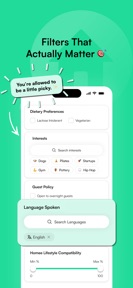

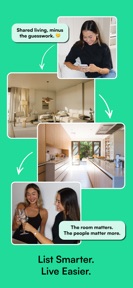

Homee is a shared-living platform for iOS that matches users based on lifestyle compatibility and housemate profiles.
The App DNA
What makes this app unique?
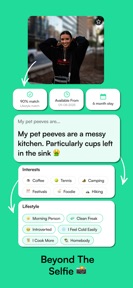
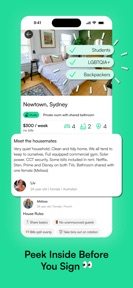
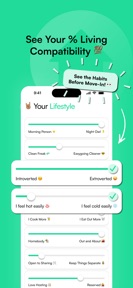
It removes the social and financial friction of moving in with strangers by providing upfront visibility into house rules and routines.
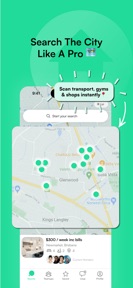
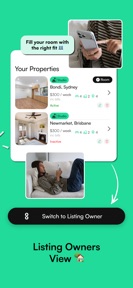
For Individuals seeking shared housing who prioritize lifestyle compatibility and social dynamics over property features alone.
What does it look like?
Key features
Aggregates sleep schedules, cleaning habits, and social energy into a compatibility score.
Paid visibility boost for searchers to stand out to listing owners.
In-app templates for setting house rules and expectations before move-in.
How much does it cost?
Freemium model centered on free access to listings, with monetization gated behind visibility-enhancing profile boosts.
Velocity
Maintenance developmentperformanceopaqueShow more...
The app maintains a maintenance-level cadence, with only one release shipped in the last 28 days. Development activity is currently limited to minor stability and performance patches. There is no evidence of new feature development or live operations in the recent history. The publisher continues to provide opaque release notes, offering no insight into specific technical improvements.
Who built it?
User Sentiment
What do users think recently?
How are ratings & reviews evolving?
Not enough recent reviews to extract reliable themes yet.
Read the full review analysisCompetition
Competitive landscape for Homee: Find Rooms & Housemates
How's the Lifestyle market?
Homee enters a crowded Lifestyle market with a niche compatibility-first focus. The platform currently holds a 17+ content rating, signaling a target demographic of working professionals and students rather than family-oriented renters.
Read the market outlookThe rivals identified
Unlock the deeper market read.
Access the full report for freeThe Analyst's Read
Key takeaways for Homee: Find Rooms & Housemates
Where is it heading?
The shared-living market is shifting toward platforms that offer higher trust and transparency. Homee is well-positioned to capture this trust, but it must accelerate its feature cadence to build the density required for a functional marketplace.
- The current maintenance-mode release cadence suggests the team is prioritizing stability over rapid expansion, which may slow user growth in the short term.
The SWOT
- Lifestyle compatibility scoring quantifies social friction before lease commitment
- University partnerships could drive high-intent student user acquisition
Next best moves
Ship university-specific verification badges because student housing demand is high-intent → increase user density
The counter-intuitive read
The platform's focus on compatibility scoring is a…
Read the full takeSince the last report: Homee pivoted its primary growth strategy from general visibility monetization to university-specific verification to address marketplace liquidity. The development cadence remains in maintenance mode, with the publisher prioritizing stability over feature expansion.
Bottom line
Homee's compatibility-first mechanism addresses a clear pain point in the shared-housing market, but the lack of user density remains a critical risk. Prioritizing high-intent segments like students would unlock the network effects necessary to compete with established classified platforms.
Unlock 1 critical friction, 1 market threat and the analyst’s take.
Access the full report for freeFAQ
Is Homee free to use?
How does Homee compare to standard rental sites?
Is Homee safe for finding roommates?
Sources
- [1] App Store, source
Report last updated