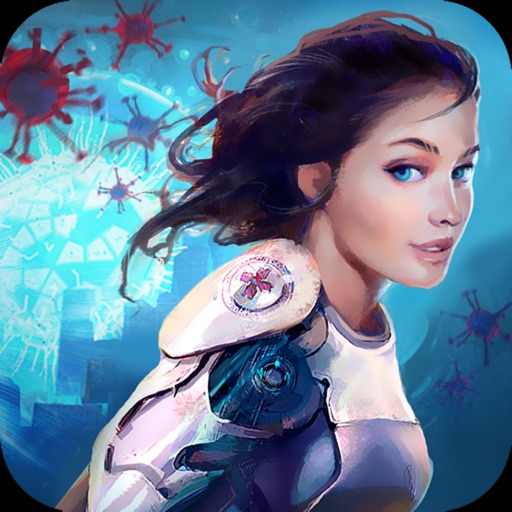





InCell VR (Cardboard) is an action-racing game for iOS that uses head-tracking or touch controls to navigate a simulated human cell environment.
The App DNA
What makes this app unique?
The project removes the hardware barrier for users interested in introductory VR by allowing standard touch-screen play alongside Cardboard-compatible headset support.
For Casual gamers and students interested in introductory virtual reality experiences and biological science.
What does it look like?
Key features
High-speed navigation through a simulated human cell environment using head-tracking input.
Standard touch-screen controls for users without VR hardware, removing the barrier to entry.
In-game environment recreates biological structures within a human cell.
How much does it cost?
The project is distributed as a free experimental title with no visible in-app purchases or subscription tiers.
Velocity
Dormant developmentopaqueShow more...
The app has not received a functional update in nearly a decade, with the latest release dating back to November 2016. Development activity is non-existent, and the app remains in a state of total stagnation. There is no evidence of ongoing support, maintenance, or feature development.
Who built it?

User Sentiment
What do users think recently?
How are ratings & reviews evolving?
Not enough recent reviews to extract reliable themes yet.
Read the full review analysisCompetition
Competitive landscape for InCell VR (Cardboard)
How's the Games market?
InCell VR (Cardboard) maintains a static presence in the Games category with no updates in over 3,500 days. The lack of monetization or recent feature expansion signals a project that functions as a legacy portfolio piece rather than a commercial product.
Read the market outlookThe rivals identified
Unlock the deeper market read.
Access the full report for freeThe Analyst's Read
Key takeaways for InCell VR (Cardboard)
Where is it heading?
The mobile VR landscape has shifted toward standalone hardware, leaving Cardboard-based projects like InCell VR (Cardboard) as legacy artifacts. With no updates in over 3,500 days, the project is effectively abandoned, and users should expect no further stability or feature improvements.
- The 9-year development silence indicates the project is in a terminal state, which risks total failure upon future iOS updates.
The SWOT
- Dual-mode input (VR and touch) enables broad accessibility across non-VR user segments
- Bio-science education theme offers a foundation for a paid, expanded curriculum-based mobile learning product
Next best moves
Sunset the project because the 9-year update gap renders it a maintenance liability → reduce brand drag
The counter-intuitive read
The project's lack of monetization is not a…
Read the full takeSince the last report: The project's competitive status remains unchanged, with no updates or functional shifts recorded over the last 3,570 days. The primary shift is a more critical framing of the app as a terminal legacy asset in the face of evolving mobile VR hardware standards.
Bottom line
InCell VR (Cardboard) serves as a functional proof-of-concept for educational VR, but the decade-long development silence suggests the project is effectively sunsetted, leaving its biological-simulation niche open for modern, live-ops-supported competitors to capture.
Unlock 1 critical friction, 1 market threat and the analyst’s take.
Access the full report for freeFAQ
Is InCell VR (Cardboard) still being updated?
Can I play InCell VR without a VR headset?
Is there a paid version of InCell VR?
Sources
- [1] App Store listing, source
Report last updated