



Kanji Garden Japanese
By kyle coburn
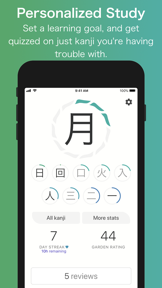
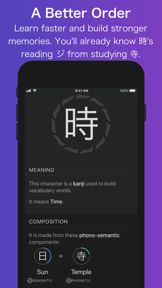


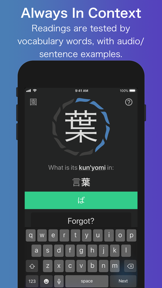
Kanji Garden Japanese is a specialized education app for Japanese learners, structured around component-based kanji memorization and spaced-repetition study plans.
The App DNA
What makes this app unique?
Users hire Kanji Garden to master complex Japanese characters through phono-semantic breakdown, a mechanism that reduces the cognitive load of rote memorization.
For Japanese language learners ranging from beginners to advanced students.
What does it look like?
Key features
Adjusts review frequency based on memory strength to manage thousands of kanji.
Teaches kanji by breaking characters into phono-semantic components.
How much does it cost?
The app is currently free with no explicit subscription or IAP, limiting long-term revenue potential.
Velocity
Dormant developmentperformanceplatform expansionShow more...
The app has been silent for over 5 years, with the last recorded update occurring in December 2020. There is no evidence of ongoing development, feature releases, or maintenance patches. The project is classified as a zombie due to the extreme duration of inactivity.
Who built it?

User Sentiment
What do users think recently?
How are ratings & reviews evolving?
Not enough recent reviews to extract reliable themes yet.
Read the full review analysisCompetition
Competitive landscape for Kanji Garden Japanese
How's the Education market?
Kanji Garden maintains a 4.7-star rating across 793 reviews. Its lack of recent updates since 2020 signals a maintenance-mode posture that risks losing ground to active competitors in the Education category.
Read the market outlookThe rivals identified

By BNR Languages
This app competes directly for the same Japanese language-learning demographic, focusing on beginner-level acquisition through structured, offline-accessible course content.
- Offers a comprehensive offline course structure that provides immediate utility for travelers without requiring active data.
- Leverages a massive review volume to build social proof and trust among new language learners globally.
- Focuses on broad conversational fluency rather than the specialized, kanji-centric mastery approach of this app.
 Learn Hindi (Beginners)Contender
 Learn Persian (Beginners)Contender
 Write It! ArabicContender
 LP Ancient GreekContender
Unlock the head-to-head verdict: where this rival wins, and where it loses.
Access the full report for freeThe Analyst's Read
Key takeaways for Kanji Garden Japanese
Where is it heading?
The Japanese language-learning market is shifting toward high-cadence, AI-integrated platforms that offer immediate, tactile feedback. Kanji Garden's static, unmonetized model leaves it exposed to these active competitors, suggesting a declining outlook unless the product roadmap is aggressively pivoted toward monetization and technical maintenance.
- The lack of updates since 2020 indicates a maintenance-mode posture, which will likely lead to technical regressions and user churn as iOS evolves.
The SWOT
- Component-based learning system enables phono-semantic mastery of complex characters
- Spaced repetition engine adapts review frequency to individual memory strength
- Integration of handwriting recognition to provide tactile feedback
- Expansion into B2B partnerships with language schools
Next best moves
Implement a freemium monetization model because the current free-only structure limits revenue potential → increase long-term sustainability
+ 1 more prioritized moveThe counter-intuitive read
The app's maintenance-mode status is its greatest threat…
Read the full takeFeature gaps
Handwriting recognition (available in Write It! Arabic but absent here)
Since the last report: The app's competitive outlook has declined due to prolonged inactivity, prompting a shift in focus toward technical stability and monetization.
Bottom line
Kanji Garden provides a high-quality pedagogical experience through component-based learning, but its lack of updates and monetization creates a high risk of obsolescence, so the PM should prioritize technical stability and a basic monetization layer to ensure survival.
Unlock 2 critical frictions, 2 market threats, 1 more prioritized move and the analyst’s take.
Access the full report for freeSources
- [1] App Store
- [2] Competitor App Store
Report last updated