


Keygram: Multilingual Keyboard
By Virat Singh

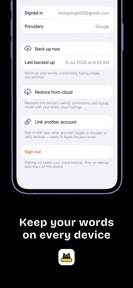
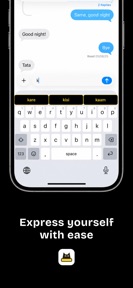
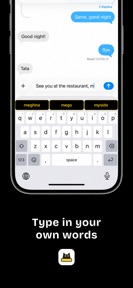
Keygram is a multilingual keyboard for iOS that enables code-switching between English and Indian regional languages without manual toggles.
The App DNA
What makes this app unique?
It removes the cognitive friction of backspacing and correcting autocorrect errors that occur when mixing languages in text communication.
For Multilingual speakers in India who frequently code-switch between English and regional languages in text communication.
What does it look like?
Key features
Enables mixing Hindi, Tamil, Telugu, and Kannada with English in a single sentence without manual language toggles.
Keyboard adapts to user-specific slang, spellings, and language patterns locally on the device.
Processes all predictions and learning locally without sending keystroke data to external servers.
How much does it cost?
Keygram is currently offered as a free utility with no visible subscription or in-app purchase gates.
Velocity
Maintenance developmentperformanceopaqueShow more...
The app maintains a maintenance-level release cadence, with only one version shipped in the observed window. Development is currently focused exclusively on minor stability improvements and bug fixes. There is no evidence of new feature development or live operations. The current pace of one release every 47 days suggests a stable but low-intensity development cycle.
Who built it?
User Sentiment
What do users think recently?
How are ratings & reviews evolving?
Not enough recent reviews to extract reliable themes yet.
Read the full review analysisCompetition
Competitive landscape for Keygram: Multilingual Keyboard
How's the Utilities market?
Keygram occupies a specialized utility niche for Indian bilingual users, currently maintaining a 4+ content rating on iOS. Its lack of monetization and recent release status suggest an early-stage focus on user acquisition over revenue generation.
Read the market outlookThe rivals identified
Unlock the deeper market read.
Access the full report for freeThe Analyst's Read
Key takeaways for Keygram: Multilingual Keyboard
Where is it heading?
The market for regional-language input tools is shifting toward integrated, multi-language support within major OS-level keyboards. Keygram's reliance on a niche, privacy-focused differentiator leaves it exposed unless it can accelerate its development velocity to match the evolving needs of its target audience.
- The latest release focuses on maintenance, signaling a need for active feature investment to stay relevant against OS-level keyboard improvements.
- The lack of recent major updates suggests a stagnant development velocity that may lead to user churn as competitors iterate faster.
The SWOT
- On-device learning mechanism creates high switching costs by adapting to user-specific slang
- Privacy-first architecture serves as a trust-based acquisition hook
- Expansion into additional regional Indian languages could capture underserved segments
Next best moves
Ship support for two additional regional languages because language coverage is the primary barrier to broader adoption → increase addressable market
+ 1 more prioritized moveThe counter-intuitive read
Keygram's lack of monetization is a strategic risk: without a revenue stream…
Read the full takeBottom line
Keygram's on-device learning mechanism provides a defensible utility for bilingual users, but the current maintenance-only cadence risks stagnation against better-funded incumbents. Focusing on feature-parity in language support would unlock the growth needed to establish a sustainable user base.
Unlock 2 critical frictions, 1 market threat, 1 more prioritized move and the analyst’s take.
Access the full report for freeFAQ
Is Keygram free to use?
Does Keygram collect my typing data?
Which languages does Keygram support?
Sources
- [1] App Store
Report last updated