


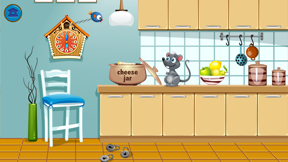


Kids Learn to Tell Time is an educational game for children that teaches analog and digital clock literacy through interactive clock manipulation and house exploration.
The App DNA
What makes this app unique?
The app removes the cognitive friction of abstract time-telling by mapping clock hands to immediate, gamified rewards within a structured four-room progression.
For Children learning to read and set time on analog and digital clocks, and their parents.
What does it look like?
Key features
Users manually adjust hour and minute hands on analog clocks, building spatial understanding of time.
Exercises bridge the gap between clock faces and digital displays, reinforcing dual-format literacy.
A four-room house setting provides a structured progression path for completing time-telling challenges.
How much does it cost?
The paid-upfront model positions the app as a low-cost, ad-free alternative to subscription-based educational rivals.
Velocity
Steady developmentShow more...
Who built it?
Intellijoy
13+ apps tracked · Games
 Kids Learn to Read
 Kids Numbers and Math
 Intellijoy Kids Academy
 Alive Alphabet: Letter Tracing
 Kids ABC Letter Trains
 Kids Sight Words
 Kids Learn ABC Letter Phonics
 Kids Kindergarten Math
 Kids Learn to Sort
 Kids Learn ABC Letters
 Kids Learn to Count 123
 Kids Learn Shapes 2
User Sentiment
What do users think recently?
How are ratings & reviews evolving?
Not enough recent reviews to extract reliable themes yet.
Read the full review analysisCompetition
Competitive landscape for Kids Learn to Tell Time
How's the Games market?
Kids Learn to Tell Time maintains a consistent presence in the top 60 Educational games across multiple international markets, including Australia and the UK. The $1.99 price point undercuts the $2.99 median of curriculum-aligned rivals, creating a low-barrier entry for parents prioritizing ad-free content.
The rivals identified
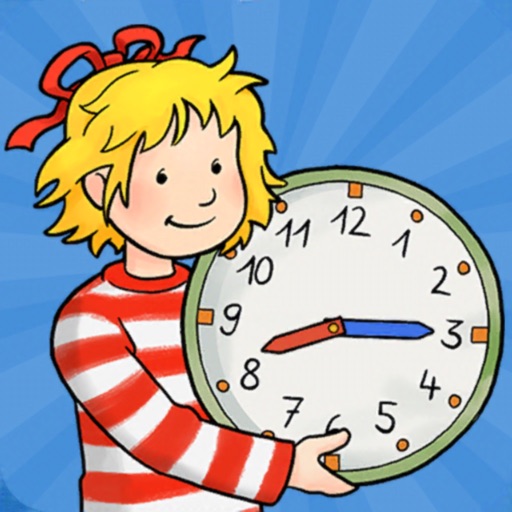
By Carlsen Verlag GmbH
Both apps target the same demographic of children learning to tell time and utilize gamified mechanics to teach analog and digital clock reading.
- Conni Uhrzeit includes parental controls and insights, which are absent in Kids Learn to Tell Time.
- Conni Uhrzeit aligns content with 1st and 2nd-grade curricula, providing a structured educational framework.
- Conni Uhrzeit offers regional time systems, whereas Kids Learn to Tell Time focuses on general clock reading.
Unlock the head-to-head verdict: where this rival wins, and where it loses.
Access the full report for freeThe Analyst's Read
Key takeaways for Kids Learn to Tell Time
Where is it heading?
Users report: The educational game market is consolidating around subscription-based tools that offer parents measurable curriculum progress. Kids Learn to Tell Time remains exposed to these rivals unless it adds a tracking layer to justify its place in a parent's long-term educational toolkit.
- Consistent top-60 educational game rankings across multiple markets indicate a stable, albeit niche, demand for ad-free time-telling tools.
The SWOT
- Gamified house exploration creates a structured progression path for time-telling challenges
- Localized curriculum alignment could capture market share from rivals in top-ranking regions
Next best moves
Ship parental progress tracking because it is the primary feature gap vs Conni Uhrzeit → increase long-term retention
The counter-intuitive read
The app's lack of a subscription model is its primary retention risk…
Read the full takeFeature gaps
Parental controls and progress tracking (available in Conni Uhrzeit but absent here) +1
Since the last report: The intelligence framework shifted its competitive focus toward the risk of subscription-based rivals, resulting in a narrowed PM action plan that prioritizes parental progress tracking over content expansion.
Bottom line
Integrating parental progress tracking would shift Kids Learn to Tell Time from a casual tool to a curriculum-aligned resource, unlocking higher retention among parents who currently favor subscription rivals.
Unlock 1 critical friction, 1 market threat and the analyst’s take.
Access the full report for freeSources
- [1] App Store, source
Report last updated