


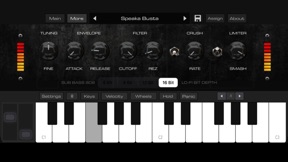
LE01 | Bass 808 Synth + AUv3 is a specialized 808 sub-bass synthesizer for iOS that functions as a standalone instrument and an AUv3 plugin.
The App DNA
What makes this app unique?
The app removes the technical friction of designing earth-shaking sub-bass on mobile devices, displacing the need for complex desktop-based synthesis for beatmakers.
For Electronic music producers and beatmakers requiring specialized 808 sub-bass synthesis for mobile or DAW-integrated workflows.
What does it look like?
Key features
Functions as an Audio Unit plugin within hosts like GarageBand and AUM.
Single purchase grants access to both iPhone and iPad versions.
Includes over 160 factory presets created by various producers.
How much does it cost?
Subscription model gates advanced features, supplementing the initial utility of the standalone instrument.
Velocity
Steady developmentShow more...
Who built it?
Audiobus Pty
9 apps tracked · Music
 Audiobus: Mixer for Music Apps
 AudioKit FM Player 2: DX Synth
 AudioKit Retro Piano
 Metronome Tracker & Tuner
 VHS Synth | 80s Synthwave
 LE05: Digitalism 2000 + AUv3
 Audiobus Remote
 AudioKit Digital D1 Synth
User Sentiment
What do users think recently?
Review voice lately leans excited. Users appreciate professional-grade sound quality, but report mono-instrument limitation.
How are ratings & reviews evolving?
What users say, by theme
- Professional-grade sound quality
- Mono-instrument limitation
Competition
Competitive landscape for LE01 | Bass 808 Synth + AUv3
How's the Music market?
LE01 | Bass 808 Synth + AUv3 maintains a 4.83 rating across 1,127 total ratings, signaling strong product-market fit for its specialized synthesis niche. The lack of recent store updates over 535 days suggests a maintenance-mode posture that risks losing ground to more active generative music rivals.
Read the market outlookThe rivals identified

By Suno, Inc.
Suno competes by capturing the broader 'music creation' market, shifting user intent from manual synthesis to generative AI-driven composition.
- Leverages massive generative AI models to create full songs from simple text prompts instantly
- Provides integrated stem separation tools that allow users to isolate and manipulate individual audio tracks
- Offers clear commercial usage rights, positioning the platform as a professional-grade production tool for creators
 SingUp: AI Music GeneratorContender
 AudioKit Synth One SynthesizerContender
 Neo-Soul Keys® Studio 2Contender
 AI Music & Song Generator *Contender
Unlock the head-to-head verdict: where this rival wins, and where it loses.
Access the full report for freeThe Analyst's Read
Key takeaways for LE01 | Bass 808 Synth + AUv3
Where is it heading?
The mobile music production market is consolidating around AI-driven composition, which puts manual synthesis tools like LE01 | Bass 808 Synth + AUv3 at a disadvantage for new user acquisition. The app's long update gap suggests a stable but stagnant outlook, requiring a focus on core workflow improvements to retain its professional user base.
- The 535-day update gap suggests a maintenance-mode posture, which limits growth but preserves the current professional-grade synthesis utility.
- Generative AI music platforms continue to lower the barrier to entry, which may siphon casual users away from manual synthesis tools.
The SWOT
- AUv3 plugin architecture enables integration into professional mobile DAW workflows
- Universal licensing removes friction for users across iPhone and iPad
- Localized pricing could capture high-ARPU markets where competitors charge higher premiums
Next best moves
Audit AUv3 stability because the 535-day update gap creates churn risk → maintain professional-grade reputation
+ 1 more prioritized moveThe counter-intuitive read
The 535-day update gap is not necessarily a weakness…
Read the full takeFeature gaps
Polyphonic support (available in AudioKit Synth One but absent here)
Since the last report: The app has entered a maintenance-mode posture characterized by a 535-day update gap, which now serves as the primary risk factor in its competitive outlook. This shift has forced a pivot in product strategy toward stability audits and polyphonic support to defend against generative AI rivals.
Bottom line
LE01 | Bass 808 Synth + AUv3 retains core beatmakers through high-fidelity synthesis, but the 535-day update gap threatens its professional standing. Addressing the mono-instrument limitation would unlock more complex production workflows and defend against generative AI alternatives.
Unlock 2 critical frictions, 1 market threat, 1 more prioritized move and the analyst’s take.
Access the full report for freeFAQ
Is LE01 | Bass 808 Synth + AUv3 good for beginners?
How does LE01 | Bass 808 Synth + AUv3 compare to Suno?
Does LE01 | Bass 808 Synth + AUv3 have intrusive ads?
What is a free alternative to LE01 | Bass 808 Synth + AUv3?
Sources
- [1] App Store, source
Report last updated