



Learn Brazilian Portuguese! is a vocabulary-focused language learning app for beginners, featuring offline games and native-speaker audio on iOS and Android.
The App DNA
What makes this app unique?
Users hire the app for low-stakes, offline-capable language acquisition that prioritizes practical, everyday phrases over complex grammar drills.
For Beginners and intermediate learners seeking practical, everyday vocabulary for travel or personal development.
What does it look like?
Key features
Vocabulary voiced by native speakers for pronunciation training, driving retention through high-quality learning outcomes.
In-app tool allowing users to mimic native speakers, reinforcing the daily habit through active engagement.
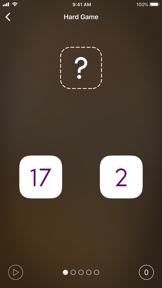
Five progressively challenging games using spaced repetition to increase long-term user value.
How much does it cost?
Paid-upfront model on iOS anchored at $7.99 per language, focusing on one-time purchase rather than subscription.
Velocity
Dormant developmentopaqueShow more...
The development momentum is classified as zombie status due to the extreme lack of activity. The most recent release on Android contains no descriptive notes, and the last iOS update dates back to August 2022. There is no evidence of active maintenance, feature development, or live operations. The app has not received a meaningful update in over 45 months.
Who built it?
EuroTalk
13+ apps tracked · Education
 Learn Swahili
 Learn Tibetan
 Learn Dari - EuroTalk
 Learn Flemish
 Learn Haitian Creole: EuroTalk
 Learn Maori - EuroTalk
 Learn Latin
 Learn Slovenian - EuroTalk
 Lernen Sie Rätoromanisch
 Learn Swiss German - EuroTalk
 Learn Quechua - EuroTalk
 Learn French - EuroTalk
User Sentiment
What do users think recently?
Review voice lately leans excited. Users appreciate the language learning curriculum provides a simple and entertaining experience for beginners starting their journey and voice recognition technology allows users to practice conversation skills effectively within the mobile interface, but report aggressive paywall implementation restricts access to core lessons and frustrates users seeking free content.
How are ratings & reviews evolving?
What users say, by theme
- The language learning curriculum provides a simple and entertaining experience for beginners starting their journey
- Voice recognition technology allows users to practice conversation skills effectively within the mobile interface
- Aggressive paywall implementation restricts access to core lessons and frustrates users seeking free content
51 of 51 recent reviews analyzed · high confidence · Excited overall
Read the full review analysisUnlock 2 more frustration themes, each backed by review evidence.
Access the full report for freeCompetition
Competitive landscape for Learn Brazilian Portuguese!
How's the Education market?
The app maintains a presence in the Education category, with new grossing entries in markets like AU and CA. The reliance on static, paid-upfront modules creates monetization friction relative to AI-driven rivals.
Read the market outlookThe rivals identified

By AIBY
Fluentika directly competes for the same language-learning audience by leveraging AI-driven conversational practice, which challenges uTalk's traditional, static vocabulary-based approach.
- Utilizes generative AI for dynamic role-play scenarios that adapt to user proficiency levels in real-time.
- Provides instant, personalized feedback on grammar and pronunciation, contrasting with uTalk's pre-recorded, static audio modules.
- Aggressive release cadence suggests a faster iteration cycle on core AI features compared to uTalk's legacy model.
 LP Ancient GreekContender
 Korean Dungeon: K-Word 1000Contender
 English Ear GameContender
 Talkback: AI Language LearningContender
Unlock the head-to-head verdict: where this rival wins, and where it loses.
Access the full report for freeThe Analyst's Read
Key takeaways for Learn Brazilian Portuguese!
Where is it heading?
The language learning market is consolidating around AI-driven conversational tools, leaving uTalk's static, vocabulary-based model exposed to faster-iterating rivals. The app must transition from passive vocabulary building to active AI-assisted practice to maintain its market share, or risk becoming a niche reference tool.
- The lack of feature updates since 2022 leaves the app vulnerable to AI-native rivals, accelerating churn pressure into the next quarter.
- Strong brand heritage and offline-first utility continue to drive organic installs in international markets, providing a stable foundation for potential pivots.
The SWOT
- 25-year pedagogical heritage sustains brand authority
- Offline-first architecture functions as a distribution barrier in low-connectivity regions
- Untapped B2B education partnerships for distribution
- Integration of wearable-based pronunciation drills
Next best moves
Integrate basic AI-driven conversational feedback because current static modules fail to meet user expectations for active speaking practice → reduce churn.
+ 1 more prioritized moveThe counter-intuitive read
The app's 25-year-old static content library is not a legacy burden…
Read the full takeFeature gaps
Real-time AI conversational feedback (available in Speak English with Fluentika but absent here) +1
Since the last report: The app's competitive profile shows a transition toward a more granular, platform-specific pricing model and the emergence of new user complaints regarding billing transparency and voice recognition reliability.
Bottom line
Learn Brazilian Portuguese! retains core users through a proven, simplified curriculum, but its reliance on static content and aggressive paywalls limits growth against AI-native competitors, so the PM should prioritize integrating basic AI-driven conversational feedback to prevent churn.
Unlock 2 critical frictions, 2 market threats, 1 more prioritized move and the analyst’s take.
Access the full report for freeFAQ
Is Learn Brazilian Portuguese! good for beginners?
Does the app work offline?
How does this app compare to AI language apps?
Are there hidden charges after the free trial?
Sources
Report last updated