


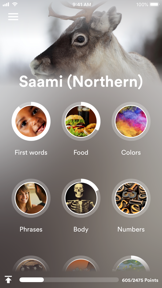
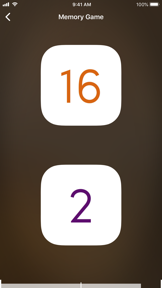
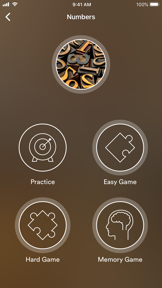

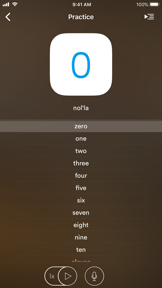
Learn Saami (Northern) is a phrase-based language learning app for beginners, focusing on practical vocabulary for endangered languages.
The App DNA
What makes this app unique?
Users hire this app for immediate, low-friction access to vocabulary in languages ignored by major platforms, allowing for quick travel-ready communication.
For Beginners and intermediate learners interested in practical vocabulary, including those focused on minority or endangered languages.
What does it look like?
Key features
Record and compare user pronunciation against native speaker audio
Links vocabulary words to images to engage both sides of the brain for memory retention
Dedicated apps for endangered languages like Southern Saami and Manx
How much does it cost?
Paid model anchored at $7.99 per language, focusing on one-time purchase rather than recurring subscription.
Velocity
Dormant developmentopaqueShow more...
The app has been inactive for an extended period, with no updates recorded since March 2019. Given that the last release occurred more than 12 months ago, the development momentum is classified as zombie status. There is no evidence of ongoing maintenance, feature development, or live operations.
Who built it?
EuroTalk
13+ apps tracked · Education
 Learn Swahili
 Learn Tibetan
 Learn Dari - EuroTalk
 Learn Flemish
 Learn Haitian Creole: EuroTalk
 Learn Maori - EuroTalk
 Learn Latin
 Learn Slovenian - EuroTalk
 Lernen Sie Rätoromanisch
 Learn Swiss German - EuroTalk
 Learn Quechua - EuroTalk
 Learn French - EuroTalk
User Sentiment
What do users think recently?
How are ratings & reviews evolving?
Not enough recent reviews to extract reliable themes yet.
Read the full review analysisCompetition
Competitive landscape for Learn Saami (Northern)
How's the Education market?
The app holds the #24 Paid position in the Education category (NO), maintaining a stable niche presence. The lack of a subscription model limits the grossing potential compared to category leaders.
Read the market outlookThe rivals identified

By Rosetta Stone, Ltd.
Rosetta Stone dominates the language learning market by leveraging a massive brand footprint and proprietary speech recognition technology that directly competes with uTalk's focus on essential vocabulary.
- TruAccent speech recognition provides real-time pronunciation feedback that uTalk's classic interface currently lacks entirely.
- Unlimited language subscription model offers significantly higher lifetime value compared to uTalk's individual language purchase structure.
- Dynamic immersion methodology creates a more comprehensive learning environment than uTalk's phrase-based, gamified approach.
 Learn Hmong. Speak Hmong. StudContender
 Learn Bengali (Beginners)Contender
 和Cindy一起學英文Contender
 Learn Catalan (Beginners)Contender
Unlock the head-to-head verdict: where this rival wins, and where it loses.
Access the full report for freeThe Analyst's Read
Key takeaways for Learn Saami (Northern)
Where is it heading?
The language learning market is shifting toward dynamic, AI-driven conversational practice, leaving static phrase-based apps like uTalk exposed to disruption. The team must leverage their unique minority-language catalog to secure B2B partnerships while integrating AI-feedback to defend their consumer-facing position.
- The emergence of AI-enabled conversation coaches pulls user attention toward dynamic practice, which directly threatens the utility of static phrase-based learning models.
- The app's focus on endangered languages provides a defensible B2B distribution channel that major, mass-market language apps cannot easily replicate.
The SWOT
- Minority language support functions as a B2B distribution moat into cultural preservation partnerships
- Dual-coding visual methodology accelerates vocabulary recall for casual learners
- Offline-first architecture ensures utility for travelers in remote regions
- Integrate AI-driven pronunciation feedback to match pedagogical depth of rivals
- Expand B2B partnerships with cultural institutions to subsidize content development
Next best moves
Integrate AI-driven pronunciation feedback because Articulate and other newcomers are commoditizing manual recording → increase pedagogical value
The counter-intuitive read
The app's lack of a subscription model is…
Read the full takeFeature gaps
Real-time AI pronunciation analysis (available in Articulate but absent here) +1
Since the last report: The competitive landscape and SWOT analysis were updated to reflect the threat posed by AI-driven conversational tutors, shifting the product focus toward AI-enhanced feedback.
Bottom line
Learn Saami (Northern) holds its niche through specialized language support but faces obsolescence from AI-driven conversational tools, so the team must pivot to AI-enhanced feedback to maintain pedagogical relevance.
Unlock 3 critical frictions, 2 market threats and the analyst’s take.
Access the full report for freeReport last updated