




Learning games for Kids. Bodo is an educational app for preschoolers offering alphabet, number, and logic games on iOS.
The App DNA
What makes this app unique?
The app removes the distraction of third-party advertisements, which addresses the primary concern of parents seeking safe digital environments for early childhood learning.
For Preschoolers and toddlers aged 2-6 years and their parents seeking school-readiness activities.
What does it look like?
Key features
Modules for alphabet, phonics, and numbers provide foundational academic skills.
Access to educational games without internet, reducing friction for mobile parents.
Removes third-party ads to ensure a safe, distraction-free experience.
How much does it cost?
The app operates as a free, ad-free utility, likely serving as a brand-building tool for the developer's broader portfolio.
Velocity
Steady developmentShow more...
Who built it?
Gamos Mobile
13+ apps tracked · Education
 Mahjong 3rd edition
 Mahjong Village Solitaire game
 Mahjong 3!
 Learning games for Kid&Toddler
 Solitaire Magic Cards
 Sudoku Puzzle game Number&math
 Spades: Classic Card Game
 Learn to Read. Reading Games
 Сoloring book Drawing games
 Mahjong One
 Spider Solitaire Daily
 Story World: Role-Playing Game
User Sentiment
What do users think recently?
How are ratings & reviews evolving?
Not enough recent reviews to extract reliable themes yet.
Read the full review analysisCompetition
Competitive landscape for Learning games for Kids. Bodo
How's the Education market?
Learning games for Kids. Bodo occupies a niche in the educational games category, currently ranking in the top 200 grossing charts across multiple international markets including Argentina and Bulgaria. The absence of monetization friction relative to established rivals signals a focus on user acquisition over immediate revenue.
Read the market outlookThe rivals identified

By Greysprings Software Solutions Pvt. Ltd.
This app is a direct nemesis due to its massive install base and comprehensive coverage of the same core educational curriculum, including letters, numbers, and phonics.
- Massive review volume creates a social proof barrier that is difficult for new apps to overcome
- Established decade-long presence in the App Store provides significant organic discovery advantages over newer market entrants
- Integrated quiz-based assessment modules provide parents with clearer tracking of child progress than our current offering
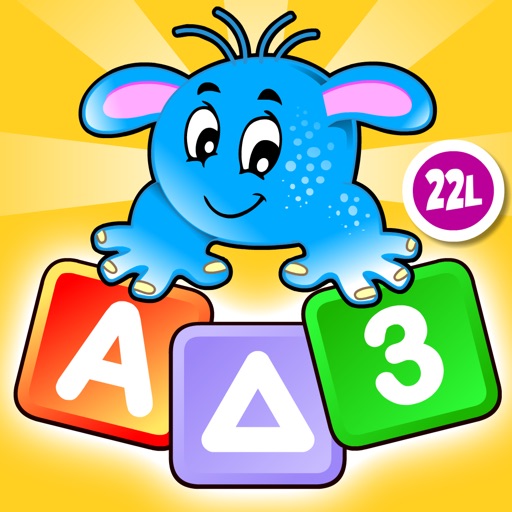 Preschool All In One Basic Skills Space Learning Adventure A to Z by Abby Monkey® Kids Clubhouse GamesContender
 ABC Alphabet Games for KidsContender
 CuteZooVoiceanimalsContender
 Kiddle PassContender
Unlock the head-to-head verdict: where this rival wins, and where it loses.
Access the full report for freeThe Analyst's Read
Key takeaways for Learning games for Kids. Bodo
Where is it heading?
The preschool education market is consolidating around apps that provide measurable progress tracking for parents. Learning games for Kids. Bodo remains stable due to its ad-free value proposition, but the lack of feature expansion leaves it vulnerable to rivals that offer more rigorous academic feedback.
- The 632-day update gap suggests a maintenance-mode strategy, which protects the ad-free promise but risks losing ground to rivals with active live-ops.
The SWOT
- Branded character-led engagement provides a stronger identity for child retention than generic educational apps.
- Localized pricing in non-English markets could capture share where competitors lack language support.
Next best moves
Ship parent-facing progress tracking dashboard because it is a key retention lever missing compared to the nemesis → increase parent loyalty
The counter-intuitive read
The lack of updates over the last 632…
Read the full takeFeature gaps
Quiz-based assessment modules (available in Preschool Learning Games Kids but missing here) +1
Since the last report: The app's outlook shifted from declining to stable, as the 632-day update gap is now framed as a strategic choice to maintain an ad-free environment rather than a sign of competitive decline.
Bottom line
Implementing a parent-facing progress dashboard would address the primary feature gap against established rivals, unlocking higher long-term retention for parents who prioritize measurable academic outcomes.
Unlock 1 critical friction, 1 market threat and the analyst’s take.
Access the full report for freeSources
- [1] App Store, source
Report last updated