




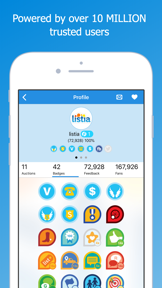

Listia is a peer-to-peer marketplace for trading pre-owned goods using an internal points system on iOS.
The App DNA
What makes this app unique?
Users hire Listia to declutter and acquire goods without cash transactions, serving the need for sustainable, low-cost consumption.
For Bargain hunters and individuals looking to declutter their homes by trading unwanted goods for new items without cash transactions.
What does it look like?
Key features
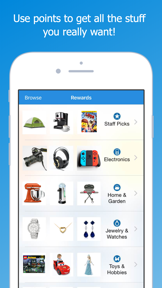
Internal currency system where users earn points by listing items and spend them to acquire goods from other members
Map-based interface showing items available for trade or sale in the user's immediate vicinity
Catalog of gift cards and digital goods purchasable with earned points
How much does it cost?
The platform operates on a zero-transaction-fee model, relying on user engagement and community-driven inventory to maintain the marketplace.
Velocity
Dormant developmentopaqueperformanceShow more...
The development cadence has decelerated significantly, with only one minor release in the last 30 months. The latest release provides only generic maintenance updates, and there has been no meaningful feature development or live operations activity since 2021. The app is currently in a zombie state due to the lack of updates for over two years.
Who built it?
User Sentiment
What do users think recently?
How are ratings & reviews evolving?
Not enough recent reviews to extract reliable themes yet.
Read the full review analysisCompetition
Competitive landscape for Listia: Buy, Sell, and Trade
How's the Shopping market?
Listia maintains a 4.43 rating across 4,610 reviews on iOS, though the lack of updates since late 2023 signals a stagnant competitive posture.
The rivals identified

By Lastbrand Inc
Quince competes for the same value-conscious consumer base by positioning itself as a high-quality, direct-to-consumer marketplace that challenges traditional retail pricing.
- Factory-direct pricing model eliminates retail markups, offering luxury goods at significantly lower price points.
- Industry-leading 365-day return policy builds immense consumer trust compared to standard marketplace return windows.
- Curated exclusive product drops create artificial scarcity and urgency that drives frequent app re-engagement.


Unlock the head-to-head verdict: where this rival wins, and where it loses.
Access the full report for freeThe Analyst's Read
Key takeaways for Listia: Buy, Sell, and Trade
Where is it heading?
The shopping category is consolidating around high-utility retail apps that offer predictable shipping and quality, leaving Listia’s peer-to-peer model exposed. Without a return to active feature development, the platform will likely see its user base slowly migrate to competitors that offer a more polished, reliable shopping experience.
- The absence of updates since late 2023 signals a maintenance-mode posture, which prevents the app from keeping pace with modern e-commerce standards.
- The platform's reliance on user-generated inventory provides a stable, low-cost supply, but limits the ability to guarantee quality for the end user.
The SWOT
- Circular economy model facilitates sustainable consumption without cash barriers
- Community-driven inventory creates a unique, non-retail marketplace dynamic
- Integrate B2B partnerships for rewards store gift cards to increase point utility
- Implement verified-seller badges to improve trust in peer-to-peer trades
Next best moves
Ship verified-seller badges because peer-to-peer trust is the primary barrier to conversion → increase trade volume
+ 1 more prioritized moveThe counter-intuitive read
Listia's lack of cash transactions is not a weakness but a moat…
Read the full takeFeature gaps
365-day return policy (available in Quince but absent here) +2
Since the last report: The competitive analysis shifted from benchmarking against peer-to-peer marketplaces to retail-heavy brands, highlighting a move toward defending the circular economy model against modern e-commerce standards.
Bottom line
Listia holds a unique niche in the circular economy but risks obsolescence due to a lack of feature updates, so the PM should prioritize trust-building features to defend against retail-heavy competitors.
Unlock 2 critical frictions, 2 market threats, 1 more prioritized move and the analyst’s take.
Access the full report for freeReport last updated